


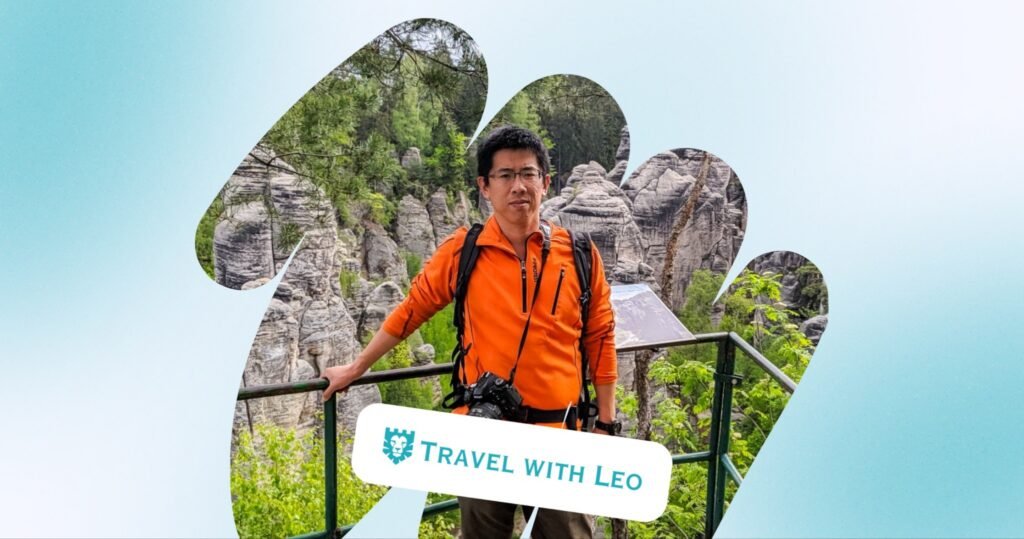
No paid SEO tools, no AI-generated content, and genuine interests that go against local trends. Travel with Leo is a blog with a unique approach – and it pays off. Being selective about automation is also part of the success: Leo earned 400 bookings thanks to an AI monetization system.
Sometimes, a portfolio project becomes a full-time job. That’s what happened for Leo, a Taiwanese blogger running Travel with Leo.
When Leo started his blog in Traditional Chinese in 2014, his goal was simply to practice website planning and SEO. Now, he is a full-time blogger, and his professional skills have helped him get to this point.
My previous work experience is closely tied to digital marketing and SEO, and I also have over ten years of experience using WordPress. Because of this background, I’m very familiar with information architecture and content organization. I also know how to build SEO-friendly websites and apply essential content editing skills, all of which have been super helpful in growing my travel blog.
History and culture instead of food and shopping
Leo’s blog doesn’t follow Taiwanese travel trends. The blogger writes about travel without centering food or shopping and focuses on Europe and Australia, destinations local tourists often overlook.
The reason behind this is Leo’s genuine interests that he’s eager to share. This passion kept him going for all these years, even before the blog became his full-time job.
Travel in Taiwan focuses too heavily on places like Japan, South Korea, and the US, with too much emphasis on eating and shopping rather than history, culture, and the humanities. People’s understanding of Europe and Australia also tends to be pretty surface-level. I’m genuinely interested in the history, culture, and humanities of Europe and Australia, and I feel that learning about them actually helps with life back in Taiwan.
That said, over his years of travel, Leo also gathered a lot of content about Japan and Taiwan. Now, he has a separate website dedicated to these destinations and his other area of expertise – digital marketing.
Returning again and again instead of shallow recommendations


For Leo, AI search isn’t a distant threat – he’s already feeling its impact.
Since Google started heavily pushing AI Overviews, it’s had a huge impact on me – my organic search traffic from Google has dropped by 30–40%.
That’s why Leo’s best SEO tool is actually a return ticket. His answer to AI search is earning readers’ trust and attention with thorough articles. That often means visiting a destination more than once for just one guide.
Building detailed guides requires not only deep familiarity with a city, but also a lot of research. Visiting these cities four to five times is completely normal – I’ve been to both Munich and Amsterdam at least five times each.
AI can’t replicate this depth, but it takes careful preparation to achieve. Leo researches his destinations beforehand, takes notes on what is unclear, and sets out on a journey with a clear plan in mind. As a result, he can start drafting the guides right away.
I also suggest thinking carefully before your trip about what materials you need and what questions you want to answer. That way, you can start gathering assets and outlining your article structure while you’re actually traveling.
Free frameworks instead of paid SEO tools
Perhaps most surprisingly for an SEO pro, Leo doesn’t use paid tools for keyword research. He comes up with his topics with a combination of free techniques.
For example, Leo uses the 5W1H framework, popular in journalism and business operations. It involves asking six key questions to brainstorm ideas, solve problems, and make decisions. Travel bloggers may ask:
| Question | What to ask | Example: a Munich city guide |
| Who | Who is the guide for? | First-time visitors planning 3–4 days in Munich |
| What | What core needs does it address? | Top sights, museums, getting around, and where to stay |
| When | When should readers go, and for how long? | May to September, 3–4 days plus a day trip |
| Where | Where are the main locations? | Old Town, Nymphenburg Palace, Deutsches Museum |
| Why | Why go there, and why read this guide? | Bavarian history and culture, all planned in one place |
| How | How do people get there and around? | Train or flight to Munich, then the U-Bahn and S-Bahn |
The blogger also relies on other strategies, like reading well-reviewed travel guidebooks, checking Google’s Related Searches, and using data from Google Search Console. Plus, planning the trip for yourself can give plenty of information, since you naturally understand what travelers want to know about a destination.
Besides, even a less popular place you highlight can interest readers if you present it well. Internal linking within the blog also helps your audience discover that content and enjoy it. Leo had quite a few unexpected successes like this.
As long as you truly enjoy it and introduce it well – combined with smart internal linking (like driving traffic from my Salzburg travel guide to the Hellbrunn Palace post) – you definitely have a chance to generate traffic!
Google search instead of social media
Most of Leo’s audience comes from organic search, followed by direct visits to his website. His website plays to his strengths – logical writing and information organization focused on solving readers’ problems.

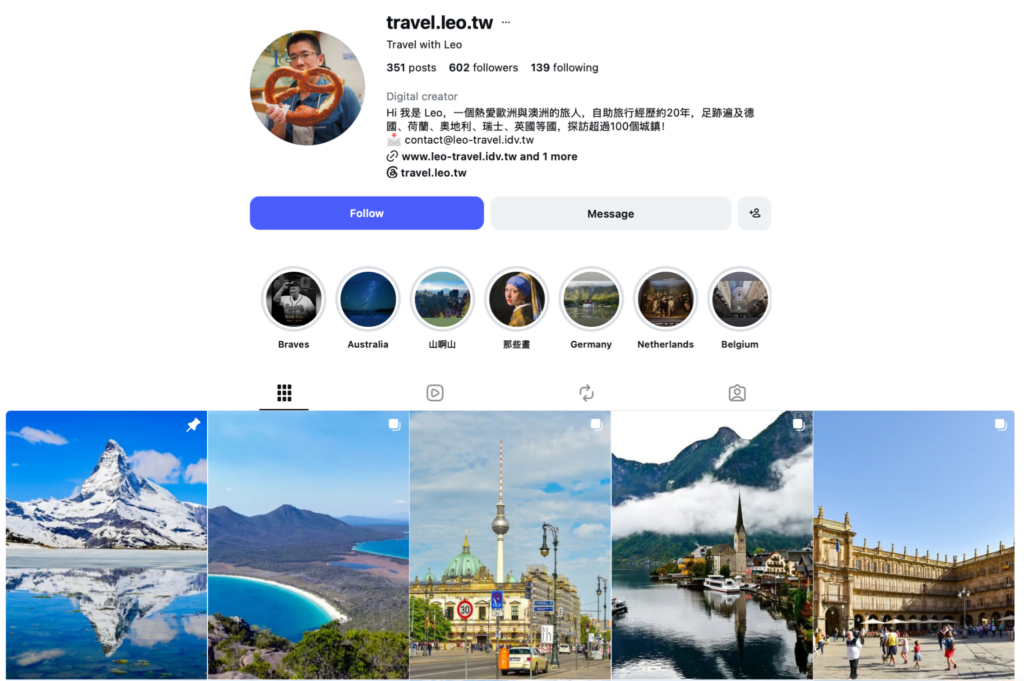
Despite the pitfalls of Google’s algorithm and AI cutting into traffic, the blogger isn’t very active on social media. Leo maintains his profiles on YouTube, Facebook, and Instagram without setting goals, since he has to juggle everything himself. Besides, though social media is definitely important, it can also be just as unpredictable.
Social media algorithms are super unstable, and your reach can disappear overnight. That often pushes creators to chase the algorithm instead of focusing on users, which is something I definitely want to avoid. On top of that, Meta is notorious for suddenly banning accounts, and that’s a risk you simply can’t ignore when relying on social media.
How to (not) use AI as a travel blogger
Trust is ever more important with the widespread use of AI, and Leo has clear rules for working with these tools.
He never uses AI to write, but he can ask Google Gemini to suggest improvements to what’s already drafted or published. Even so, Leo doesn’t blindly trust the chatbot: he decides whether to use the suggestions and how to add them himself. Leo also uses Google Lens to translate what he has trouble understanding, which keeps his content precise.

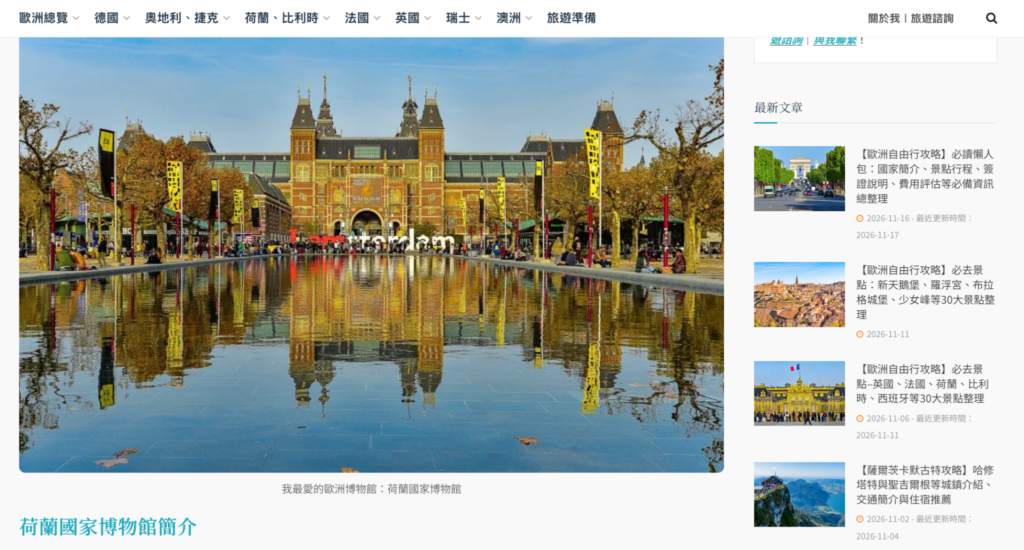
Leo’s photos play a big part in the blog’s popularity. Many people ask whether the blogger creates those himself, and some organizations even reached out to use them. Leo doesn’t heavily edit them and never generates photos, as realistic images help people decide whether to visit a destination.
I frequently use Lightroom to enhance my photo quality. Its AI features are super helpful, too, though I never use AI to generate images. AI-generated images can easily differ from reality and suffer from AI hallucinations, which I believe is completely unacceptable for a travel website!
Keeping AI out of creative decision-making maintains the authenticity of Leo’s content. But he’s not against using smart tools for monetization.
Affiliate marketing makes up 70-80% of Leo’s revenue from the blog. Since joining Travelpayouts, he decided to try its AI-powered monetization system and turned Drive on out of curiosity.
In a month, he generated over 400 bookings (including canceled ones), with potential earnings exceeding $1,500. Most of that came from Targeted Offers that open relevant background tabs for users who are ready to book. Since the offers appear in separate tabs, the feature doesn’t alter the website’s content or its SEO.

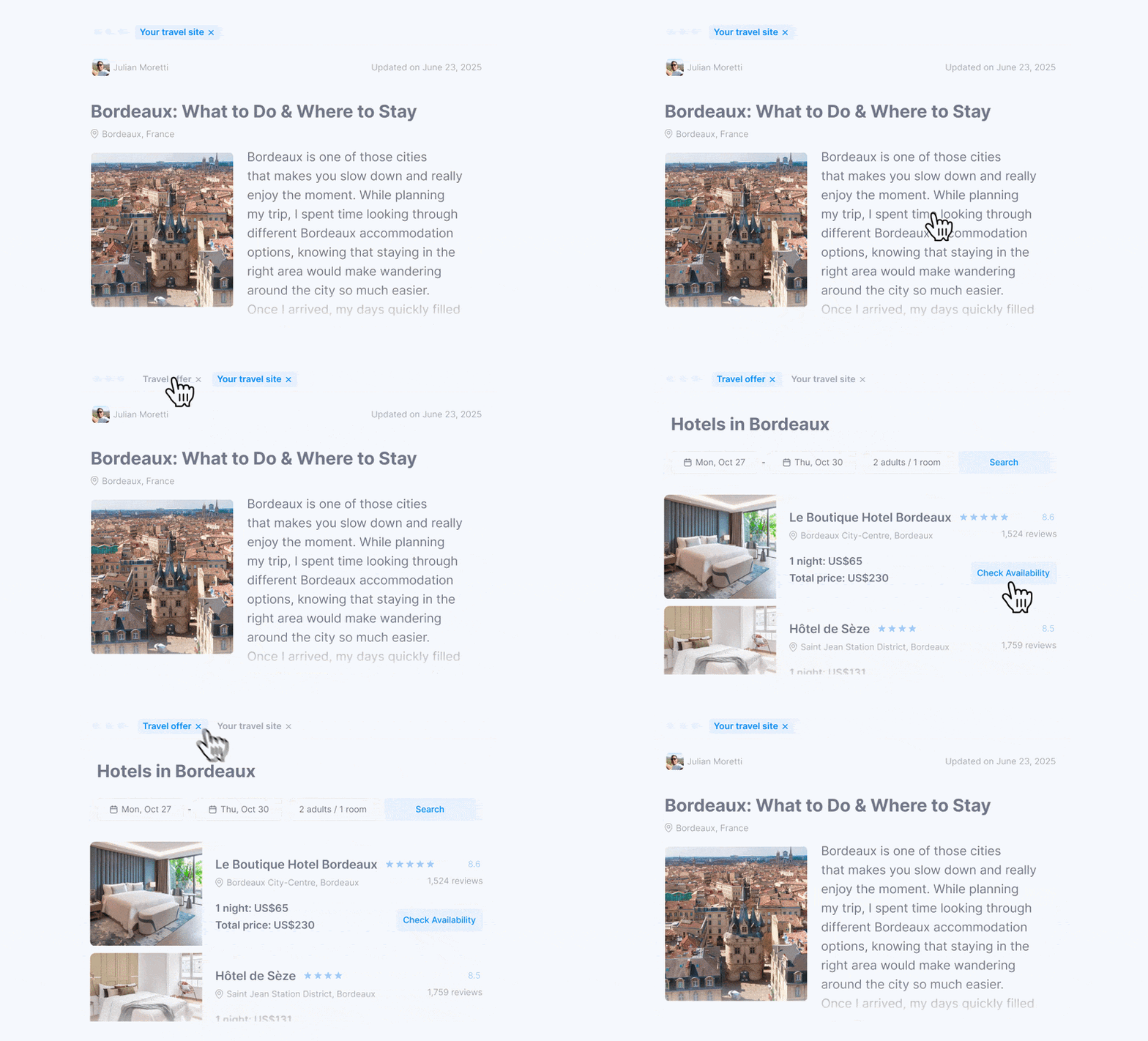
Plus, the offer in the background tab opens through Leo’s affiliate link and saves a cookie in the reader’s browser. If the reader books with that brand while the cookie is active (30 days for most brands on Travelpayouts), Leo earns a commission, even if they left his blog without clicking on any of his links.
Leo’s tips for travel content AI can’t replace
As a decade-long blogger, Leo has several recommendations:
- Create different websites for different content. A topical focus helps Google identify your website’s subject matter and authority and makes it easier for readers to navigate across your articles.
- Start with the places you know best. This helps you create comprehensive content and polish your article’s structure.
- Know your audience. Don’t assume everyone is reading you from one place, and keep an eye on Google Analytics and Google Search Console.
Last but not least, Leo suggests moving slowly.
Making money as a travel blogger is getting harder and harder due to the impact of AI. I recommend carefully considering your financial situation and starting out part-time before deciding whether to go full-time.
Travel with Leo’s story shows you don’t need paid tools to become successful. Deep passion and thoroughness resonate with readers. If you feel inspired, just try.
Join the Travelpayouts partnership platform
Join todaybrands