
Sometimes the guide you spent a whole weekend on barely gets any traffic, while a quick post you nearly didn’t publish becomes one of your most popular. For one Taiwanese blogger in Vancouver, that post was about groceries.
Rosalie, the blogger behind RosAroundTheWorld, never wrote shopping lists. No “10 things to buy in Japan,” no “must-buy souvenirs from Korea.” She felt there was no point: everyone needs different things, and her favorites wouldn’t necessarily work for anyone else.
Then her mom suggested she write about Trader Joe’s, the American grocery chain.
My mom encouraged me to give it a try, saying that older generations love searching for these kinds of things, haha. As a result, in less than a month, it became one of the highest-viewed recent articles on my blog!
Of all her posts, this is the one Ros remembers most. It showed her that her readers sometimes need things she would never search for herself. She still doesn’t chase trends or keyword tools, but she listens more closely to the people she writes for, and she isn’t afraid to try a format that seemed “not hers.”
We talked to Ros and broke down how she builds the content that now earns her four figures a month. Every step below is something you can try on your own blog right away.
Meet the little screw behind the success
Rosalie grew up in Taiwan and used to teach Chinese to foreigners, a job with nothing to do with blogging. She studied in Seoul, went to language school in Baguio in the Philippines, and visited more than 100 cities before she moved to Vancouver on her own.

Settling in turned out to be harder than any trip. The wait for her immigration papers dragged on, and she hadn’t seen her family in years.
I relied on looking at the beauty of the world to keep myself going in daily life.
During the pandemic, she taught herself how to build a website, and in January 2023 her blog went live. Its name translates as “Little Screw Sees the World.” Her nickname, Ros, sounds like the Chinese word for “screw,” and she liked the idea behind it: even the smallest screw keeps a big machine running.
Today, the blog has 500+ in-depth guides and more than 4 million visits in total, with up to 13,000 visitors on its busiest day. Ros writes for independent travelers from Taiwan, Hong Kong, Singapore and Australia who plan and book their trips themselves. Her guides are about comfort on a budget: spending smart without cutting corners.
She picked her niche by spotting a gap:
Since Mandarin is my native language, I can express myself much more naturally in it. Also, I noticed that while there are many English bloggers, detailed Mandarin guides for Western countries are relatively scarce.
So she started with Canada and the US and later expanded to destinations all over the world.
Until this year, the blog was a side project. For almost four years, Ros worked a full-time job and wrote in the evenings and on weekends, usually from a coffee shop.
To be honest, I wouldn’t say I balanced everything perfectly. I procrastinated at times too. It really comes down to self-discipline and genuine passion.
You probably won’t come across Ros’s guides in English-language search results. But her method works in any language, and you can borrow every step of it for your own blog. Here’s how she builds a guide and makes it earn.
Do what Ros does: 7 steps to a destination guide that earns
Banff is Canada’s oldest national park, high in the Rocky Mountains, famous for its turquoise lakes. Ros has written 55 articles about it.
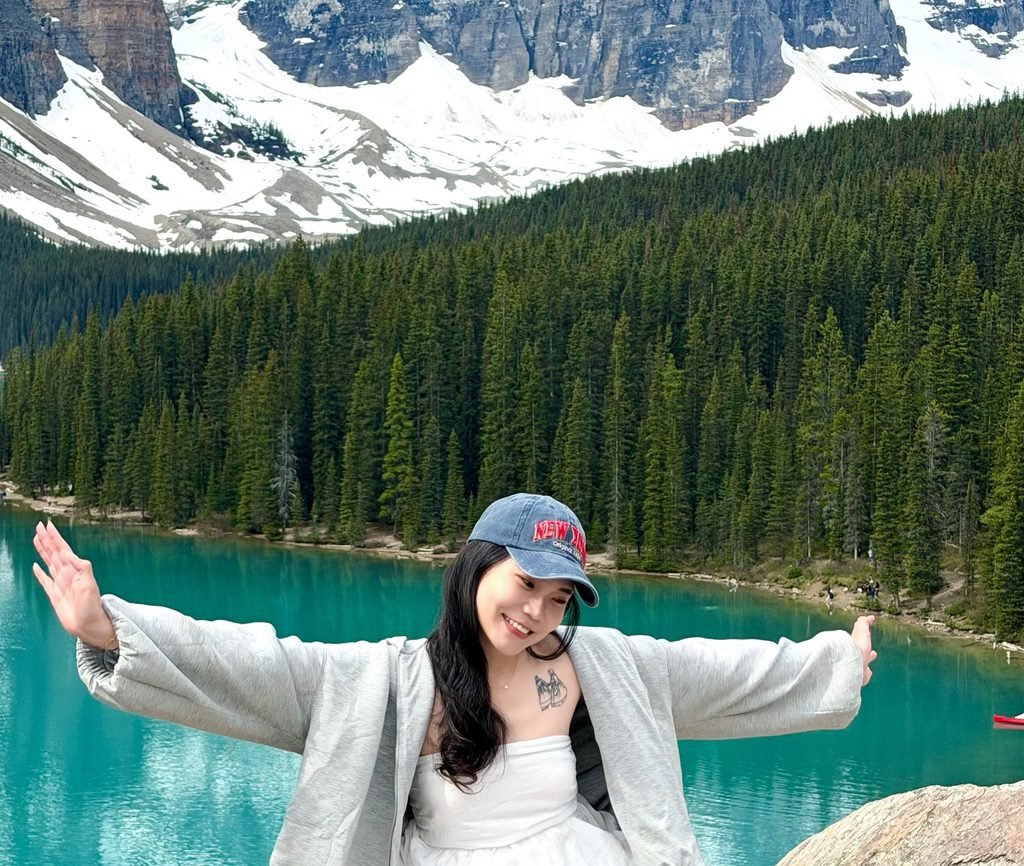
But she never sat down and planned 55 articles. Her approach is much simpler:
I don’t specifically chase high-traffic topics when writing. Instead, I write based on what I would personally need when traveling.
Her own questions as a traveler are still where every guide starts. The Trader Joe’s post showed her that her readers’ questions belong on that list too, even the ones she would never ask herself.
Step 1. Travel first, and recommend only where you’ve stayed
Ros plans her trips 6 to 8 months ahead. She takes every photo and writes every word herself, and she only recommends hotels she has stayed in. Her talent is finding affordable places with great ratings, and that’s what turns her guides into bookings:
The ones I share on my blog are places I’ve actually stayed at and that have high ratings. That’s why quite a few people end up booking through my recommendations.
Try it: when you book your next trip, pick hotels your readers would choose too, within their budget and with good ratings. There’s a good chance you’ll end up recommending them. A review of a place you slept in converts better than a list of places you found online.
Step 2. Write a separate post for every stop
Many bloggers write a big “complete guide” while researching before a trip. Ros starts small. After she gets back, she writes a separate post for each place, answering the questions travelers have once they’re actually there.
In her post about Herbert Lake, readers learn that the lake sits right off the Icefields Parkway, that there’s a free parking lot and toilets, and that 30–60 minutes is enough time. Her Lake Minnewanka Scenic Drive post gives the best order for visiting four lakes from Banff town, plus the bus to take if you don’t drive: Roam Transit No. 6, $2 a ride.
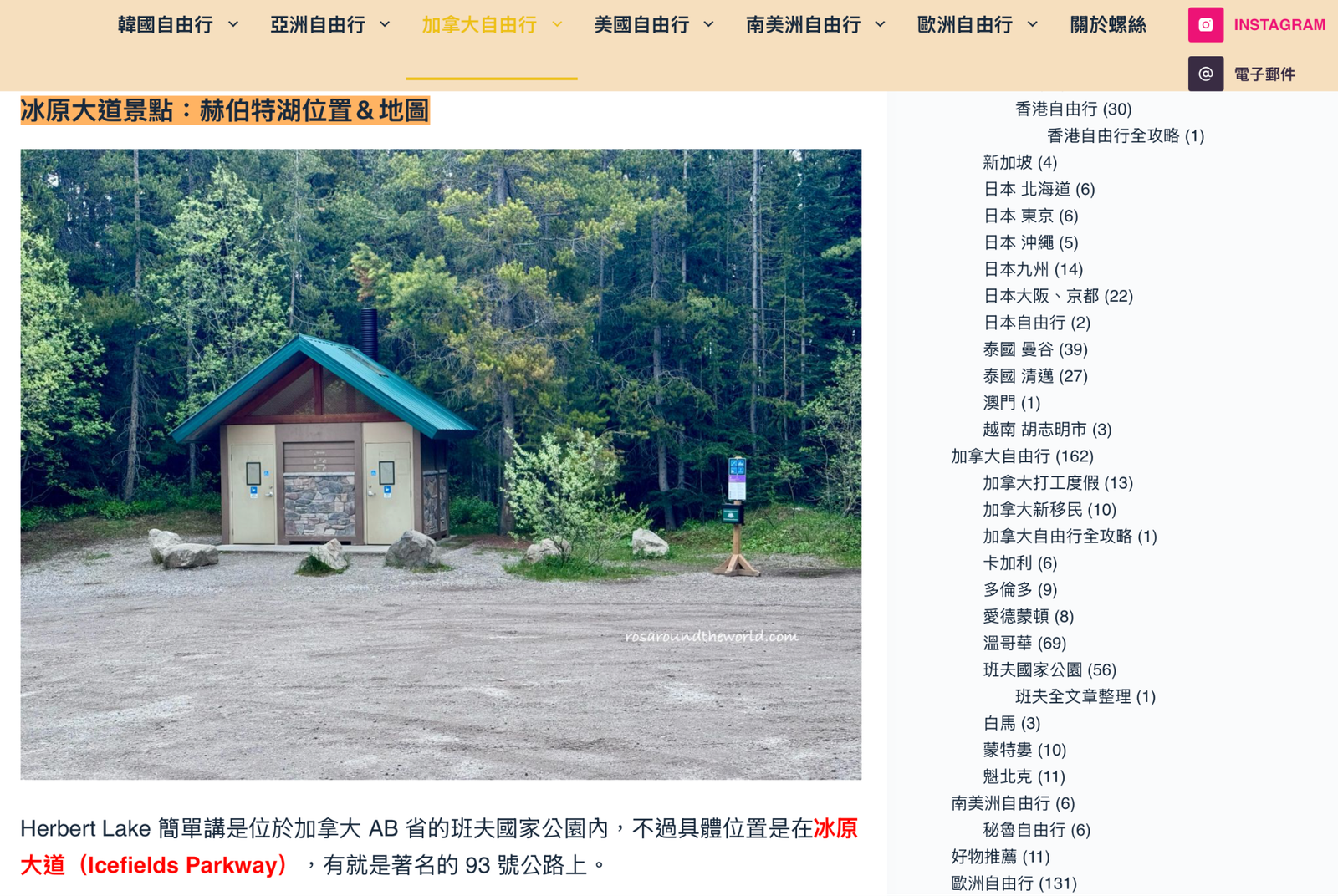
She also has posts on a steakhouse, Banff in winter, quieter lakes and local trails. Each one is short and practical, and each one can rank in search for its own query.
Try it: look at your longest destination guide. Which stops deserve a post of their own, with parking, timing, prices and transport?
Step 3. Say when something isn’t worth it
Ros is as open about her disappointments as she is about her favorites. When the JODD Fair night market in Bangkok moved to a new location, she started her post with a clear verdict: she didn’t like it and won’t go back. Then she suggested cheaper and more interesting markets nearby.
She never pushes a recommendation just to earn a commission:
All the content comes from my genuine experience, and I clearly share my true thoughts with my readers. Earning commission feels more like going with the flow for me 😅
Her readers trust those verdicts, so when she does recommend a place, quite a few of them book it.
Try it: the next time a place lets you down, say so early in the post and suggest something you’d actually recommend instead. A clear “skip this” makes your “book this” more convincing.
Step 4. Build the hub last
Once the individual posts are done, Ros puts together the overview pages: a 4-day Banff itinerary, a roundup of the top 10 sights and a page listing every Banff article.
I prefer to actually visit the places first, write all the individual articles, and then piece the hub together afterward. This helps me organize my thoughts better and allows me to naturally embed links to other related articles.
In the itinerary, each sight gets a short summary and a “Read also” block that leads to the detailed post. Readers can plan the whole trip from one page, then dive into the stops they care about.
Try it: when you have 5–10 posts about one destination, turn them into an itinerary that links to each of them.
Step 5. Start earning early, from one account
Ros didn’t think about money at first. She wanted somewhere to share useful tips and look back on her trips. Her first earnings were a few dollars from Google AdSense, and she only added affiliate links after more than a year of blogging regularly.
Today, affiliate marketing makes up most of her income. Ads bring in very little, and her brand collaborations mostly happen on social media.
When she started, she joined brand programs like Klook and KKday one by one, and each had its own dashboard and payout schedule. Now she works with all of them through one Travelpayouts account:
What I find most convenient is that I can just log into one platform to check everything, and I don’t have to chase down separate platforms every month for payouts.
Looking back, Ros says she would have started learning about affiliate marketing much sooner.
Try it: you don’t have to wait a year like Ros did, or even until your hub is ready. Add affiliate links to the posts where readers are already choosing hotels and tours, and start with one account instead of a separate one for every brand. Travelpayouts brings hotels, tours, eSIMs and more from top travel brands into one free account.
Step 6. Bring readers in from social media
When a guide is published or updated, Ros lets her followers know. On Threads, she reminds them when it’s time to book the free day pass for Joffre Lakes near Vancouver. Only 500 passes are available each day, and they go fast. The post links straight to her guide.
On Instagram, she uses another trick:
My strength still lies in writing articles, but nowadays, relying purely on writing alone can be a bit tough. Therefore, I often have followers comment to receive guides, which then funnels them over to my blog articles.
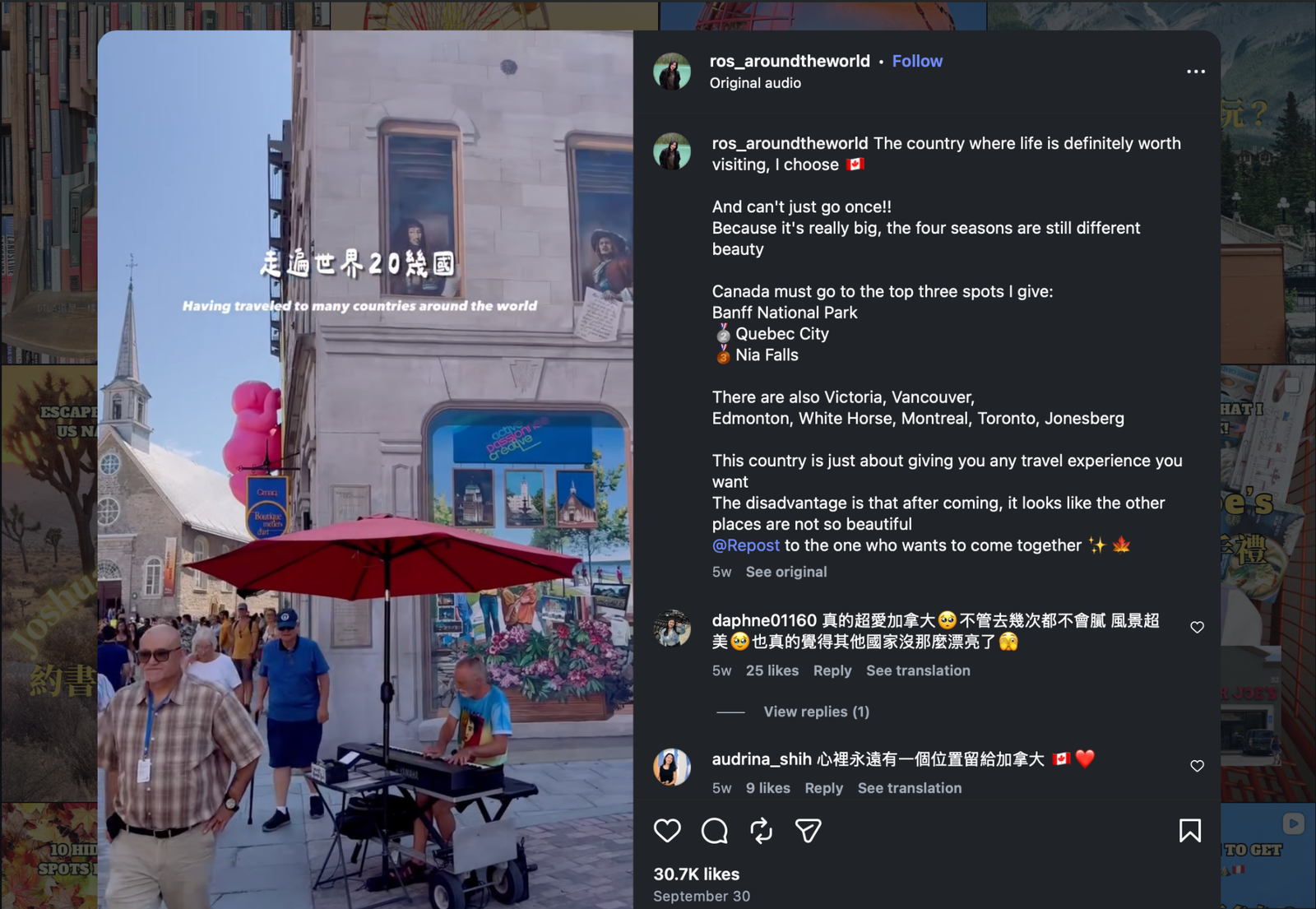
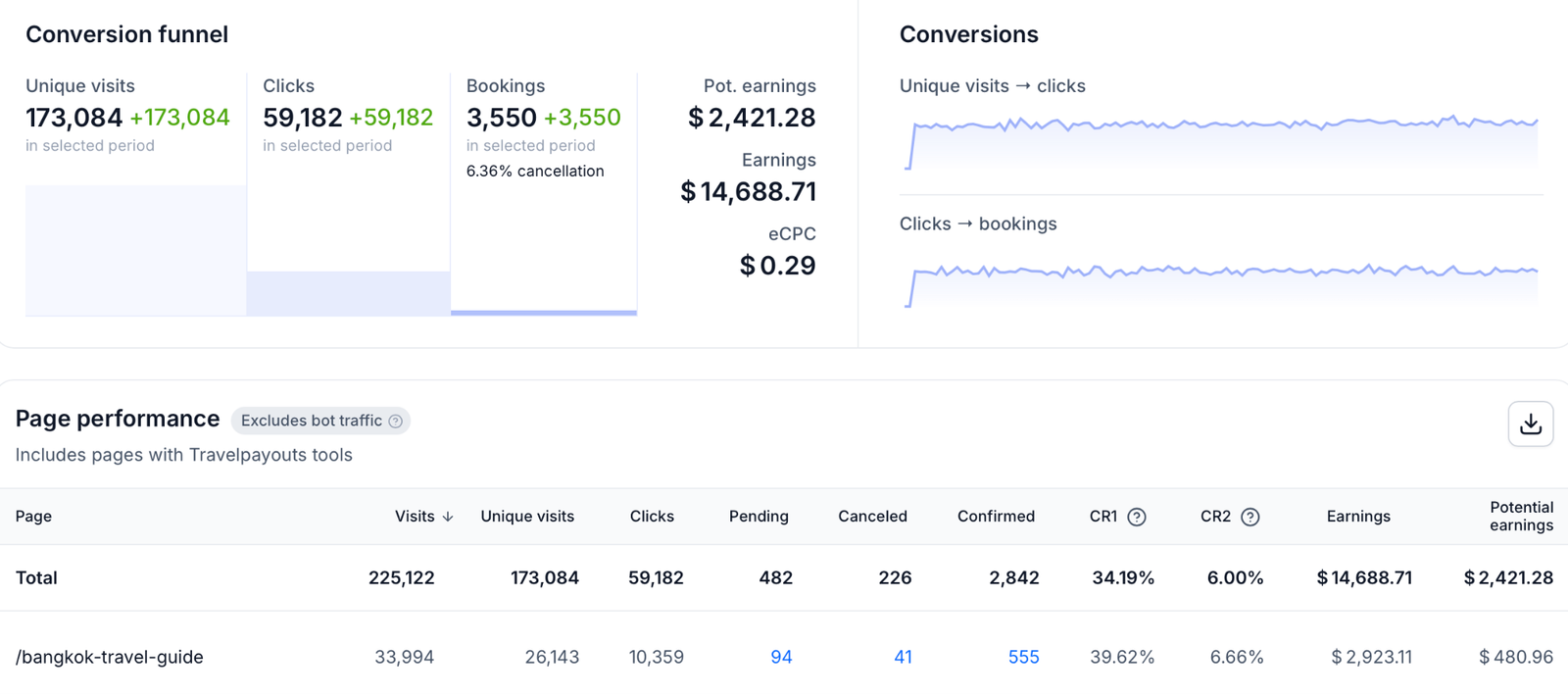
Try it: end your next reel with “Comment GUIDE and I’ll send you the link” or “Tag the friend you’re going with.” Tools like Manychat can send the link automatically to everyone who comments. Once readers land on your blog, see which posts turn those visits into bookings: free Travelpayouts Content Analytics shows the clicks and bookings each article brings.
Step 7. Refresh seasonal guides before the peak
Seasonal posts get a traffic spike at the same time every year. So 1–2 months before each peak, Ros updates them with new prices, opening hours and closures. Her guide to Banff in winter, for example, warns readers which places are closed for maintenance. Banff’s winter season starts in December, so this guide gets its update in October or November, while readers are still planning.
Living in Canada gives her an edge here:
Living in North America long-term seems to give my content more credibility, as I can stay on top of up-to-date prices, timing, and local information.
Try it: make a calendar of your seasonal posts and set a reminder to update each one two months before its peak.
The bonus step: a blog that earns while you write
At the end of July 2026, Ros connected Travelpayouts Drive. Drive is a free tool that monetizes your blog for you. You add one snippet of code to your site, and it adds links and offers to your articles, both old and new, in the places where readers are most likely to book. Partners who use it earn up to 30% more. By August, her first full month with Drive, Travelpayouts had become one of Ros’s main sources of affiliate income.
Smart Previews are just one of Drive’s automatic tools. The rest work alongside them, and Ros doesn’t manage any of them. She didn’t even learn their names:
The most convenient thing about Drive is that I literally don’t have to do anything! You just gave me a snippet of code to insert into my blog, and after that, I didn’t have to do a thing. It’s so seamless that I didn’t even need to know the technical terms. I just write my articles like I always do!
She still travels, writes small posts, builds hubs and updates them before the season. Drive takes care of the moment a reader is ready to book:
Drive makes it much easier to guide people to booking links!
Try it: do what Ros did. Add Drive to your site, then go back to writing. It will take care of the links on all your posts, old and new.
Three things Ros would tell every new blogger
Ros has thought about quitting more than once. She started blogging later than most, AI answers took a bite out of her traffic several times, and she knows fewer people read blogs these days. What kept her going were her readers:
Even when traffic was low and I wasn’t making much money, as long as I was satisfied with what I wrote and readers messaged me to say it was helpful, I got a huge boost of motivation to keep going.
If she could start over, here’s what she’d tell herself:
- Quality over quantity. Because of her full-time job, Ros wrote slowly. Her traffic still grew, because she never published a post just to have something new.
- Take advice from unexpected places. A family member or a reader may know your audience better than any keyword tool. Ros’s Trader Joe’s post was her mom’s idea.
- Keep learning. Ros didn’t come from marketing, so she learns affiliate marketing as she goes and plans to take more courses.
If you find a job you love, you’ll never work a day in your life. I really love what I do, and if possible, I want to keep doing this for the rest of my life.
Ros’s blog started as a way to get through a hard time and slowly became her job. We love stories like this, because that’s exactly what Travelpayouts is for: helping people who write about travel for the love of it earn from what they already do. You keep writing the guides only you can write, and we take care of the brands, the links and the payouts.
Joining is free, and we don’t take a cut from your commissions. Creators from 167+ countries already earn with us.
Join the Travelpayouts partnership platform
Join todaybrands