
When I first started with affiliate marketing, my approach was simple: sprinkle a few links here and there and hope readers clicked.
Unsurprisingly, the results were underwhelming. 😅
The turning point came when I started focused on creating content that naturally aligned with my mission, solved problems for my audience, and integrated affiliate recommendations in ways that felt authentic.
And today, I want to help you do the same. I’ll share the exact strategy that helped me grow my affiliate income without feeling salesy.
You’ll see how I choose the right programs, weave them seamlessly into my content plan, and optimize placements – on my blog and beyond!
Traffic isn’t everything when it comes to affiliate conversions
Before we dive into the strategy, let’s talk about traffic – because I don’t want you waiting until you have 10,000+ pageviews to get started with affiliate marketing.
Yes, traffic can help increase your affiliate earnings as it brings more eyes to your content; however, what matters more is your strategy.
For a bit of background, I have three sites:
- NYC Photo Journeys, where I sell my own NYC photo tours and shoots, and also monetize through affiliate marketing and ads in my blog content.
- Jessie on a Journey, my solo female and adventure travel blog.
- Epicure & Culture, my sustainable tourism and culture travel blog.
Over the past six months, NYC Photo Journeys got more tour and experience conversions – despite having less traffic and fewer posts (about 35 in total) than my other two blogs.
In my opinion, it’s because the content on NYC Photo Journeys is very niche and has a big focus on special occasions (like birthdays, anniversaries, and bachelorette parties) that attract people actively planning and booking experiences.
This content also helps me attract my ideal customer who would book my NYC photo tours and shoots – so I’m making sales and boosting affiliate income at the same time.

This being said, Jessie on a Journey and Epicure & Culture convert better for hotel bookings through programs like Expedia and Booking.com. This makes sense, as one of my main content pillars on Epicure & Culture, for instance, is “vegan hotels” – like this post on the Best Vegan Hotels in Mexico (a topic that is also likely to convert better than something like “things to do in Mexico” or “best time to visit Mexico”).
We’ll talk about why later on in the post!
My step-by-step affiliate marketing strategy
Okay, so how do you actually increase your affiliate earnings as a travel blogger? Here is the strategy that has worked for me:
Step 1: Apply to programs strategically
When I first got into affiliate marketing, I essentially said “yes” to every program invitation I received, whether it was a fit or not – which was a huge waste of time.
Interestingly, my affiliate income increased when I focused instead on the brands that would actually help my audience and fit into my content.
I recommend:
- Choosing affiliates that align with the regular purchase actions you promote (or could promote) – like tours, hotels, car rentals, travel insurance, etc.
- Don’t just think about the commission rate, but also the average cart order value. 100% of $1 is still just $1, while $10% of $100 is $10.
💡 Tip: Recurring commission programs can be tricky to find, but they can help you earn a steady income. For instance, NordVPN offers recurring commission and offers the opportunity to share about safe browsing on public WiFi while traveling.

Step 2: Create an affiliate-optimized SEO content plan
To better optimize your content plan for Search Engine Optimization (SEO), avoid creating just one post on a topic. Instead, create a series of related, interlinked blog posts – called a topic cluster.
While each article can include affiliate links, at least one of these articles should be optimized for buyer intent keywords. These are keywords people search for when they are looking to make a purchase.
A few words that you’ll typically find in a buyer-intent keyword include:
- best/top → “Best boutique hotels in NYC”
- review → “VisitorsCoverage travel insurance review”
- vs / comparison → “Saily or Airalo: which eSIM is better for long-term travel?”
- cheap / affordable → “Affordable wine tours in Tuscany”
- under [price] → “Best carry-on luggage under $150”
- deal / discount / save → “How I saved 50% on Broadway show tickets”
- buy / book / order → “How to book a Seine River dinner cruise (without overpaying)”
The Best Vegan Hotels in Mexico post as well as this guide to the Best Brooklyn Walking Tours are examples of this – and both posts bring me steady bookings.
💡 Tip: Another SEO concept that can help with affiliate conversions is E-E-A-T; as in, weaving experience, expertise, and authoritativeness into your content to build trust with your audience (and search engines).

Step 3: Be strategic with placements and CTAs
One big mistake I used to make was burying affiliate links at the bottom of my post, or using vague “Click here” anchor text.
Since then, I’ve become more strategic with how and where I promote my affiliate links.
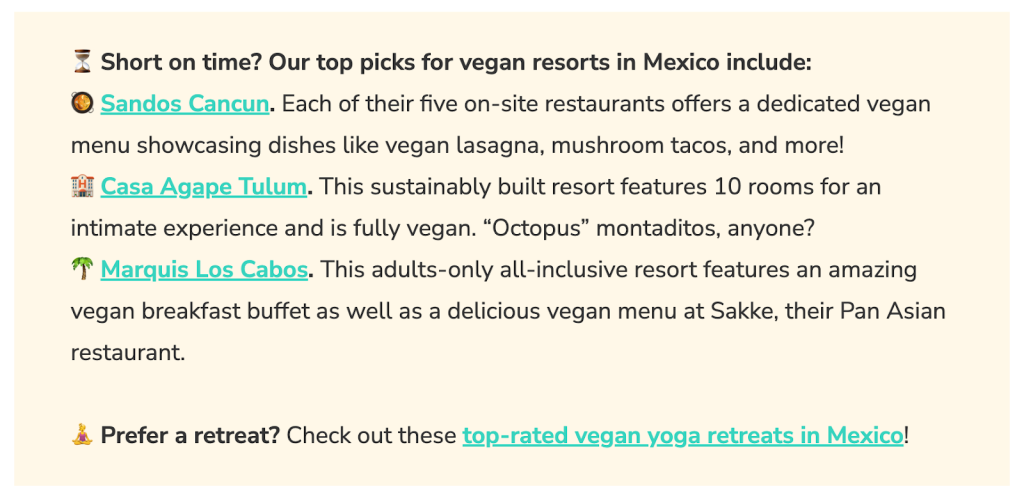
Going back to the guide to Mexico’s best vegan resorts on Epicure & Culture, I try to make my affiliate links visible and relevant by:
- Including a “Quick tips” box under the intro with helpful information and affiliate links.
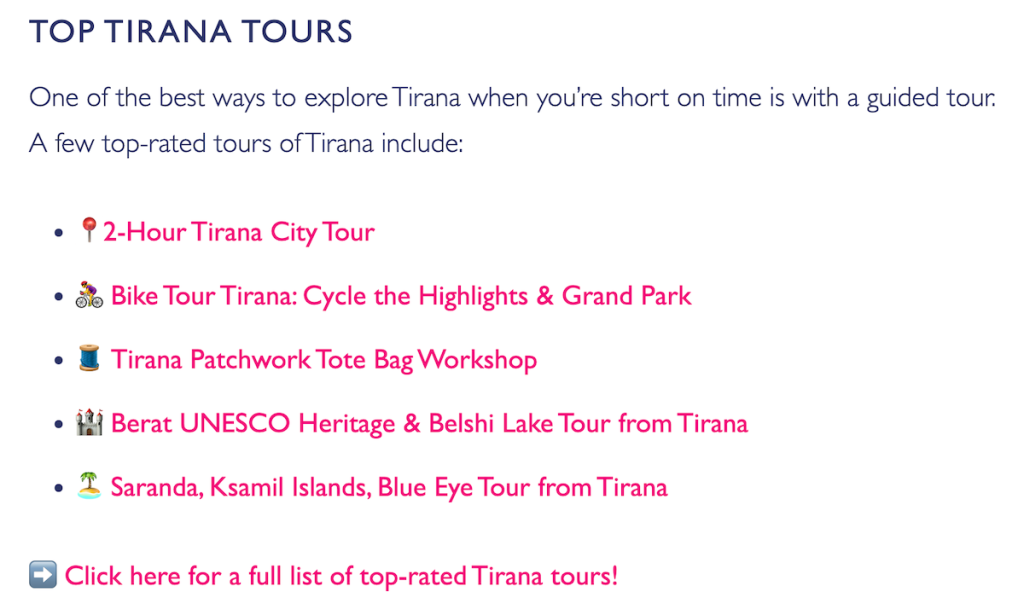
- Using visual cues like comparison charts, bold text, background colors, or emojis.
- Including strong calls to action like “➡️Click here for full information and pricing” under each hotel listing.
💡 Tip: Use SubIDs to track where people are converting in your post. For instance, if the core of your SubID for the post is “MexicoVeganResorts” you might create “MexicoVeganResorts_intro” to track who converts via the Quick Tips intro box.
Step 4: Use AI tools to scale without extra work
Using the powers of AI can help you save time as a blogger, and that includes your affiliate workflow.
Along with manually adding affiliate links, affiliate AI tools can run in the background to help increase conversions – even when you’re away from your laptop.
Travelpayouts specifically has several AI tools, including:
- Emerald, which scans your posts and inserts affiliate tools like info boxes and travel service previews where they’ll perform best.
- LinkSwitcher, which updates old or third-party links automatically so you don’t miss a commission.
- Content Analytics, which uses AI to pinpoint your best pages, funnels, and reader trends.
In a recent Instagram Reel, I shared a 3-step affiliate workflow that infuses these tools.
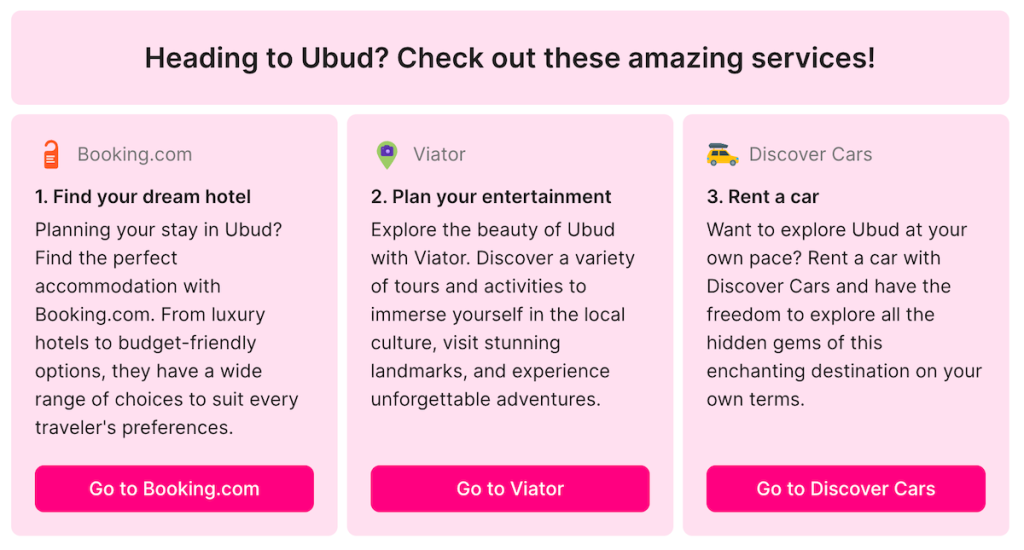
💡 Tip: These tools are also customizable. For instance, you can choose to exclude certain affiliate tools or pages from Emerald. With LinkSwitcher, you can pick which programs you want to switch over to Travelpayouts. Personally, I find having my programs all in one place makes tracking analytics much easier.
Step 5: Track your progress monthly
I set a recurring calendar reminder for the end of each month to review my affiliate performance to spot what’s working and what’s not, and where small changes can drive big results.
Travelpayouts’ Content Analytics has one of the more robust analytics dashboards I’ve seen, so I mainly look there. If you use outside programs, you can use a spreadsheet to keep everything together.
Looking at the data, I ask myself three simple questions:
- Which posts are top converters? Double down on what’s working by:
- Adding internal links to send more readers to the post.
- Building related topic clusters to boost visibility and authority.
- Which affiliate links get high clicks but no sales? The interest is there, but something’s blocking conversions:
- Check if links are broken or outdated.
- Test a different program (e.g., Americans may be more familiar with Expedia or Booking.com than Agoda).
- Add trust-builders like personal stories, photos, or social proof.
- Which posts have high traffic but low conversions? This is usually where my time is best spent when making updates:
- Add missed affiliate links. For example, did you mention a hotel but not link it? Did you write a city guide and not include a “Where to stay” section?
- Fix broken or outdated links.
- Strengthen CTAs with bold, clear boxes (e.g, “Check rates & book your stay here!”).
💡 Tip: If one affiliate program consistently drives bookings, use that data as leverage to request a commission increase or performance bonus – or a more creative partnership idea, like a co-hosted webinar. In your pitch, include performance numbers like sales and conversion rates to show how well their brand resonates with your audience and the value you bring as a partner.
My blog audit strategy for quick wins and consistent growth
Along with my monthly check-in, I also set aside time for a more in-depth “spring cleaning” audit.
These happen quarterly, biannually, or annually, depending on how much content you have. They go beyond small tweaks to systematically refresh, optimize, and re-monetize older posts.
To do this, I first export my posts from Google Analytics. From there, I go through my top traffic posts and ask myself:
- Are there missed opportunities to add affiliate links that match the reader’s intent?
- Can I test new placements?
- Can I infuse E-E-A-T signals to build trust?
- Can I strengthen CTAs?
- Can I build out a topic cluster to boost SEO, keep people on my site longer, and funnel more traffic to this post?
- Beyond affiliates, can I promote a relevant opt-in freebie to continuously grow my email list?
⚠️ Note: Some people avoid editing posts ranking in the top positions in Google for fear of ranking drops. Personally, I do update them – but I make changes slowly and focus only on improvements that add real value for the reader (not just sprinkling in extra keywords).
💡 Tip: If there is a topic that really resonates with your audience, consider if there is a relevant product you can create. From there, you can set up an automated sales funnel to increase your passive income through products! I share more about this in my free 5-day Digital Product Launch Challenge.
Weaving affiliates into the rest of my business
Keep in mind, creating affiliate-optimized blog content isn’t the only way to grow your earnings. In fact, much of my affiliate income comes from other avenues too, like:
- Email Marketing. For instance, where relevant and natural, I include affiliate links – and sometimes even write emails specifically aimed at promoting an affiliate partner.
- Digital Products. I include affiliate links directly in products – and I ask my affiliate program managers for discount codes I can share with customers. For example, in my Travel Blog Prosperity membership, I have a “Member Bonuses & Discounts” board that includes these types of deals, many of which aren’t available elsewhere because I negotiated them.
- Podcasting/YouTube. I like to share affiliate partners directly in episode show notes or video descriptions – as well as in text message marketing (podcasts) and QR codes (YouTube) to increase conversions. For instance, in my Profitable Travel Blogger Podcast episode on Instagram Reels, I promoted my ManyChat affiliate link with a 30-day free Pro Plan trial.
- Social Media. I personally don’t do this as much, but you can absolutely create Reels and posts reviewing products and experiences your audience would love!
- Collaboration. For example, I co-hosted an Amplify Your Email List list-building challenge with a popular email marketing platform. I created the content, and they provided an extended free trial for me to promote. To sweeten the deal, I included some bonuses for buyers too!
💡 Tip: Reminder that whether you’re promoting affiliates on your website or elsewhere, it’s important to include clear disclosures!
YOUR affiliate game plan
- Traffic isn’t everything. Conversions come from strategy and buyer intent, not just pageviews.
- Apply with purpose. Choose affiliates that fit your niche, align with reader needs, and have strong cart order values.
- Build clusters. Create interlinked posts, with at least one targeting buyer-intent keywords (best, review, vs, book).
- Prioritize trust (E-E-A-T). Use personal stories, original photos, and expertise to build credibility and boost conversions.
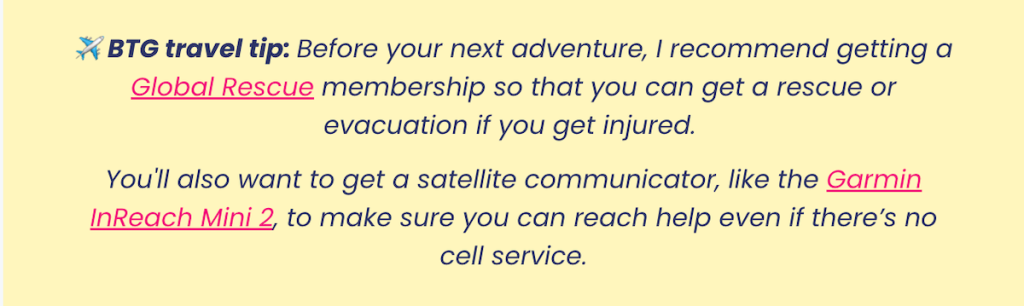
- Upgrade placements. Use intro boxes, comparison tables, and bold CTAs instead of buried “click here” links.
- Track and adapt. Review analytics monthly and audit quarterly – double down on what works, fix weak spots.
- Go beyond the blog. Integrate affiliates into emails, digital products, podcasts, YouTube, and collaborations.
I know it’s a lot of information, but don’t feel like you need to implement it all at once. Take it step by step, and use a spreadsheet or digital planner to build out your strategy and track your process.
Even a few small adjustments can make a big difference!