
Daisy and Marco met at work in Beijing. Both loved traveling, and both had studied abroad, in Paris and San Francisco.
After the pandemic, friends they’d made overseas started coming to China to visit – and asking a lot of questions. “How much is the train?” “Do they take Mastercard?” “Is there gluten in that?”
Answering those questions, Daisy and Marco kept noticing the same problem. A lot of the English-language information out there about traveling in China was outdated, or scattered across a dozen different sites.
We thought: there must be more people looking for this information. Why not build the kind of China travel site we would actually send to a friend – with current, first-hand, local tips, instead of stale advice?
And so Wander in China was born.
How to build an audience with noodles
At first, Marco and Daisy expected articles on classic attractions to get the most attention: Beijing’s Forbidden City, the Bund in Shanghai. Instead, people wanted to read about… noodles?
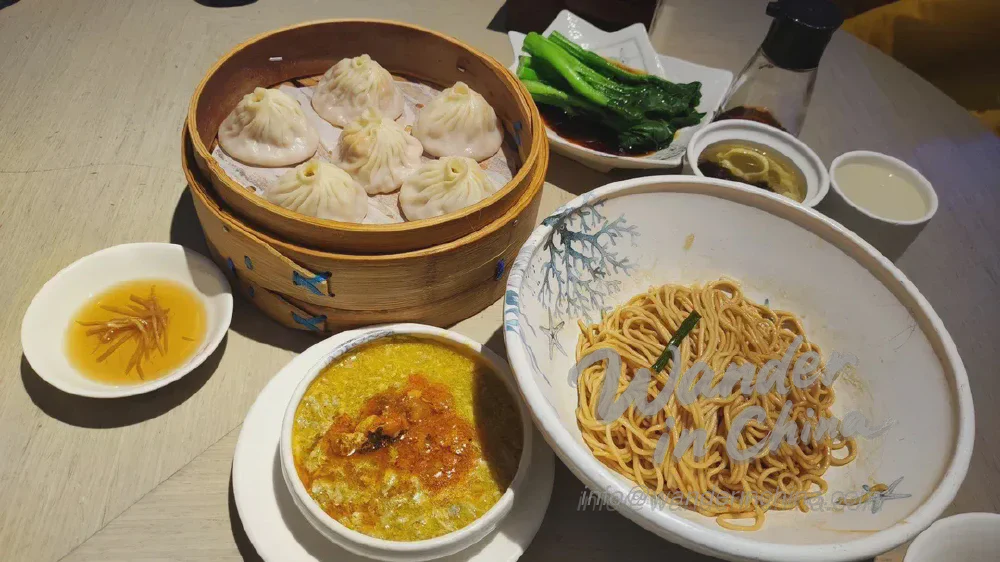
It’s true. A post on xie huang mian (crab roe noodles) was one of Wander in China’s first hits, and it nudged the pair to start writing more about food.
Daisy and Marco also learned to listen to travelers when planning new posts. For instance, a question on Reddit inspired them to write about trains from Fenghuang to Chongqing. It didn’t seem like a sexy topic, but it was exactly what readers needed.
Those kinds of articles taught us to pay much more attention to what travelers are actually asking, rather than what we assume they want to read. Over time, we realized that some of the most useful topics were very basic: payments, maps, ride-hailing, trains, hotels, and how to put the whole trip together.
This approach paid off. Within about three months, Wander in China had reliable traffic, and the pair started experimenting with affiliate marketing.
Monetizing the site (no noodles this time)
To get started, Marco and Daisy added a few widgets by hand. A couple of weeks later, they had their first booking: a Yu Garden entrance ticket for $5. It wasn’t quit-your-job money, but it was still exciting – this really could work.
But there was an issue. Wander in China’s audience was diverse, with families, couples, and solo travelers from many different countries. It’s nearly impossible for the same link to appeal to such a variety of readers. And Daisy and Marco didn’t have time to hand-pick offers for 11 different locales.
Then they learned about a possible solution: the free tool Drive. They were told that it automatically monetizes articles with deals relevant to the reader’s profile, as well as surrounding text.
They had just one worry, and a reasonable one. Would it work as advertised?
At first, we hesitated to use Drive, because we had never used anything like it before and weren’t sure what it would actually do.
Eventually, in November 2025, they decided to give it a go. Here’s what happened to their earnings through Travelpayouts:
- Bookings started coming in almost daily, rather than every few days.
- The site’s revenue rose 400% in just a week.
- Since November, their earnings have increased every single month.
- One Drive function, Targeted Offers, now accounts for 70% of their total revenue.
Meanwhile, Drive means they spend much less time manually adding or updating links and widgets – it automatically tries out new deals to find those that convert best.
Drive saves us from doing a lot of manual work: finding suitable products, checking different platforms, and converting links ourselves. Also, our site is multilingual, so Drive makes much more sense than placing the same widget everywhere and hoping people click it.
Beyond basic content
One thing that makes Wander in China special is interactive tools. Daisy has experience with web development, so she coded up an Allergy Assistant to help travelers with dietary restrictions navigate Chinese cuisine.
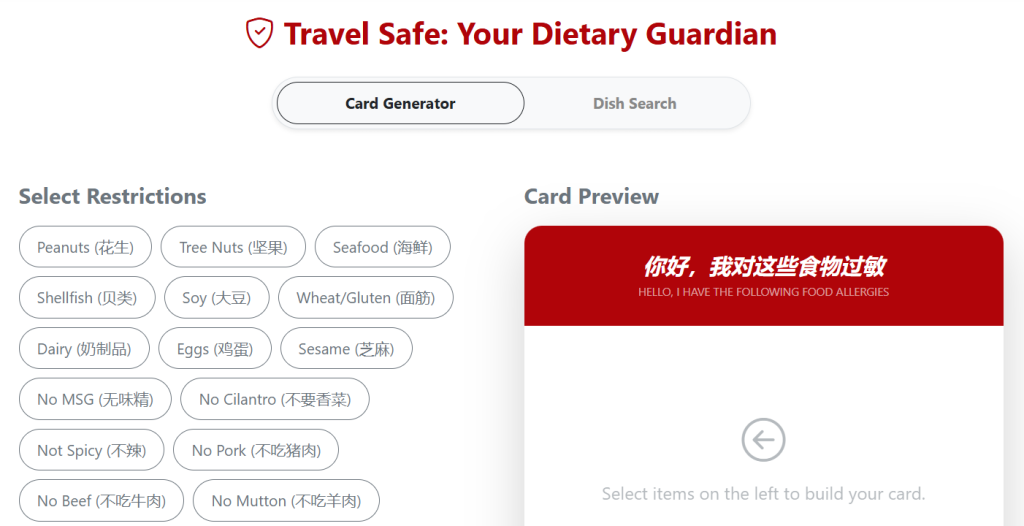
There’s also an Itinerary Builder and a Budget Calculator. The idea is simple, says Marco: “Sometimes people don’t need another long article. They just need something that helps them do the thing.” These tools don’t bring in revenue on their own, but Daisy and Marco see them as giving people more reasons to spend time on the blog.
The pair also recently started offering a digital product, the Free China Travel Guide, which readers get in exchange for subscribing to a newsletter. So far, organic search is serving Marco and Daisy well, but they know there are no guarantees – and it never hurts to have an owned audience that’s always one email away.
What’s next
High up on Daisy and Marco’s to-do list is to start introducing their audience to cities that foreigners don’t hear much about, like Datong, Luoyang, and Foshan. And if they find the right opportunity, they’d love to make the jump from the screen to real-life by offering their own local travel experiences.
For now, they plan to keep building it little by little. They see Wander in China as a long-term project, and there are still plenty of things they want to try.