
Many creators want to know how much YouTube pays for 1,000 views, but there is no fixed rate. Earnings depend on factors like CPM (Сost per mille), RPM (Revenue per mille), niche, audience location, and viewer retention.
A finance channel targeting U.S. viewers often earns more than an entertainment channel with the same viewership because advertisers pay different rates depending on the audience.
In this guide, we’ll break down how YouTube CPM and RPM work, explore average CPM rates across different niches, explain what affects your earnings, and show how to estimate your potential YouTube revenue.
YouTube CPM and earnings in 2026: TL;DR
| Views | Proximate earnings |
| 1,000 | $0,8 – $35 |
| 10,000 | $8 – $350 |
| 100,000 | $80 – $3,500 |
| 1M | $800 – $35,000 |
How much does YouTube pay per 1,000 Views in 2026?
Many creators search for answers to questions like “how much does YouTube pay per 1,000 views” or what the average YouTube CPM is. However, YouTube does not pay a fixed amount for views. In reality, your earnings depend on factors such as niche, audience location, advertiser demand, audience retention, and the percentage of views that are monetized.
This means that two channels with the same number of views can generate completely different amounts of revenue. For example, a finance creator targeting viewers in the United States may earn significantly more than a gaming channel with a global audience. That’s because advertisers are willing to pay higher rates to reach audiences with stronger buyer intent.
| CPM category | Average CPM range |
| Low CPM | Under $5 |
| Medium CPM | $5 – $15 |
| High CPM | $15 – $65 |
As a result, the RPM that creators actually receive varies widely across industries. Even your video performance can affect revenue, since stronger audience retention often leads to more ad impressions and higher overall ad revenue. This is also why YouTube Shorts typically generate significantly lower RPM than long-form videos (usually $0.03–$0.10 per 1,000 views, compared to $2–$35 for long-form content), despite attracting large view counts.

In the following sections, we’ll explore the average YouTube CPM 2026 figures across different niches and explain how to increase your YouTube earnings over time.
What is CPM on YouTube?
While YouTube CPC refers to the amount earned per click on an ad, CPM (Cost per mille, where “mille” means 1,000) represents what advertisers pay for every 1,000 ad impressions on your content. It is one of the key metrics for understanding your YouTube channel monetization potential.
However, CPM is not what creators actually take home. YouTube keeps 45% of all ad revenue, meaning creators receive 55% of CPM. In practice though, your earnings will be even lower than 55% of CPM, because not every view generates an ad impression: some viewers use ad blockers, some videos are too short for mid-roll ads, and some views come from regions with low ad inventory. As a result, your actual earnings are measured by RPM (Revenue per mille).
For example, a $20 CPM does not mean you earn $20 per 1,000 views. After YouTube’s cut and non-monetized views, your RPM might realistically be $8 – $12. We’ll cover RPM in detail further below.
A view is counted for monetization purposes only if the ad is watched for at least 30 seconds (or clicked). Views from mobile devices count as well, though ad rates can vary by device and region.
What affects YouTube CPM and earnings?
Audience location
Where your viewers are located can have a major impact on your YouTube earnings. Audiences from countries with higher CPM typically generate more ad revenue than audiences from lower-CPM regions. For example, a video viewed in Germany may earn more than a video with the same number of views in India because advertisers are willing to pay different rates in different markets.
Niche
Your niche strongly affects your YouTube earnings. Some topics get higher advertising rates, so the same number of views can produce very different revenue. Picking a niche with strong advertiser demand can boost your earning potential.
Retention
Create original, valuable content to improve retention. High retention signals to YouTube that your videos should be promoted more widely.
Ad inventory
Regularly audit your channel. Use YouTube Analytics to review metrics such as the subscribers-to-views ratio, engagement, audience retention, suggested video stats, and watch time. If a video performs well, try to replicate its success with others.
Seasonality
Plan your content around seasonal trends. For example, release gift guides before holidays and travel tips before vacations.

Seasonality affects viewership and ad spend. CPM and earnings can rise or fall throughout the year.
Video length
YouTube content includes Shorts (up to 3 minutes) and long-form videos (several minutes to hours).
There is no perfect video length for all channels. Many creators find that videos of 10–15 minutes balance audience retention and monetization. Longer videos may get more ad impressions if they maintain viewer engagement.
Buyer intent
Advertisers pay more for audiences with strong purchase intent – such as viewers searching for investing, insurance, software, or product comparisons.
Channels with high-intent audiences typically command higher CPMs and better monetization.
CPM vs RPM: what’s the difference?
An important factor is the difference between CPM and RPM. While CPM represents how much advertisers pay per 1,000 ad impressions, RPM reflects the creator’s actual earnings after YouTube takes its share and includes all revenue sources. Understanding RPM vs CPM is essential when estimating YouTube earnings per 1,000 views.
| Characteristic | CPM | RPM |
| Description | How much do advertisers pay per 1,000 impressions | How much does a creator earn per 1,000 views |
| Target audience | For advertisers, it’s important for estimating campaign budgets | For bloggers and website owners, it’s essential for evaluating potential earnings |
A simplified formula looks like this:
Estimated earnings = (Monetized views ÷ 1,000) × RPM
For example:
- 100,000 monetized views with a $4 RPM = approximately $400
- 100,000 monetized views with a $15 RPM = approximately $1,500
The difference between low CPM and high CPM niches can be substantial. Topics such as entertainment, memes, or general gaming often attract lower advertising rates, while finance, software, business, and insurance content typically command higher CPM.
Average YouTube CPM in 2026: rates by niche, country, and content type
Average YouTube CPM by niche
Some external factors are independent of the creator’s efforts. For example, educational content tends to have higher CPMs than entertainment content. In this case, CPM is based on the niche.
| Niche | Approximate CPM |
| Finance | $25 – $65 |
| Insurance | $30 – $60 |
| Legal | $20 – $55 |
| Technology (B2B) | $15 – $45 |
| Education | $10 – $28 |
| Travel | $6 – $20 |
| Gaming | $3 – $10 |
Average YouTube CPM by country
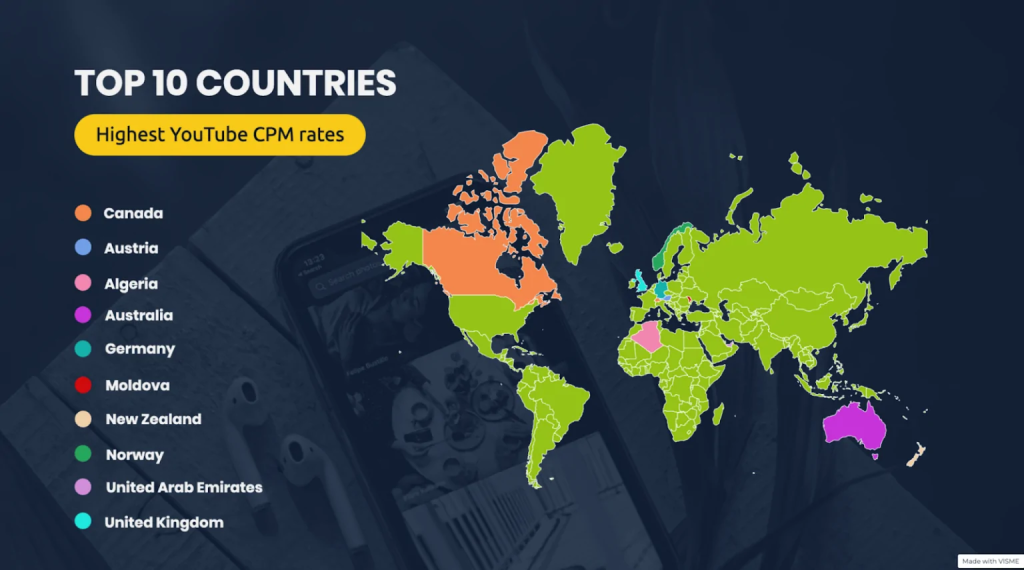
CPM also depends on location. The list of countries with the highest YouTube advertising CPMs remains fairly stable, though rankings can shift from year to year. Here are the 2026 leaders:
| Country | Approximate CPM |
| United States of America | $36.03 |
| Australia | $39.83 |
| Switzerland | $25.44 |
| Canada | $32.07 |
| New Zealand | $30.97 |
Average YouTube CPM for Shorts vs long-form videos
YouTube pays Shorts creators through the Partner Program, but Shorts usually earn significantly less than long-form videos. Shorts RPM typically ranges from $0.03 to $0.10 per 1,000 views, compared to $2 to $35 for long-form content, due to different revenue models and lower ad engagement.
How to Increase YouTube CPM and earnings
Create longer videos
Use Shorts to attract viewers, but prioritize long-form content for higher revenue. Videos over 8 minutes are eligible for mid-roll ads, which can significantly increase total ad impressions and RPM. Drive channel traffic with Shorts, then lead viewers to long-form videos for better monetization.
Target high-CPM niches
If starting fresh, weigh your expertise and monetization potential. High-CPM niches like finance, insurance, or B2B technology mean more income per view, even with a smaller audience.
Improve audience retention
Higher retention increases your chances of attracting new viewers and performing well in search results. YouTube’s ad-serving algorithm also favors videos with strong retention, which leads to more ad placements and higher RPM.
Focus on one country
If possible, tailor videos to specific audiences and target high-value markets like the US, Australia, or the UK. This can help raise both CPM and RPM over time.
Use mid-roll ads correctly
Mid-roll ads in long-form videos can increase revenue, but too many may lower retention.
Other ways youtubers make money
Affiliate marketing
Recommending goods via affiliate links can be profitable. Add the associated website to your channel, obtain an affiliate link, and direct your audience to a URL on your platform that redirects to the affiliate’s site. Finally, insert affiliate links in your content. Seek programs for YouTubers or explore the travel niche.

You can earn 100% on flights, hotels, and other services travelers need, such as excursions, through partner programs with well-known brands like GetYourGuide, Viator, Tiqets, and many others. After all, people don’t need to go far to visit the sights or listen to interesting stories from a guide. They can be tourists in their hometown or explore the suburbs. To earn from these services, join the Travelpayouts partnership platform for free today.
Sponsorships
Sponsorships are one of the most popular revenue streams for established YouTubers. In a sponsorship deal, a brand pays a creator to feature its products or services in a video.
Their rates vary based on audience size, engagement, niche, and content format. In many cases, sponsorships can generate more revenue than YouTube ads alone.
Memberships
Take advantage of paid subscriptions for your channel and offer extra benefits to your subscribers. For example, this can be exclusive content, support, custom emojis and stickers, live chat access, and so on. This option is open to YouTube creators who are part of the YouTube Partner Program, have at least 1,000 subscribers, make content that is not labeled as “created for children”, and meet a few more criteria.
Digital products
This method is effective if you’ve built your brand. You can create and sell original educational courses, e-books, and classes.
FAQ about YouTube CPM and earnings
How much does YouTube pay for 1,000 views?
Typically from $0.80 to $35 per 1,000 views, depending on niche, audience location, and monetization factors. Finance creators targeting US audiences can reach the higher end, while music or gaming channels with global audiences sit near the lower end.
What is a good CPM on YouTube?
Generally, a CPM above $15 is considered good, although top niches like finance and insurance regularly exceed $40. Rates vary significantly by niche, audience location, and advertiser demand.
Does YouTube pay for Shorts?
Yes, YouTube pays creators for Shorts views, but RPM is significantly lower than for long-form content, typically $0.03 to $0.10 per 1,000 views.
Which YouTube niche has the highest CPM?
Finance, insurance, and legal content typically have the highest CPM on YouTube, due to strong advertiser demand and high buyer intent. Finance CPMs can reach $65 or more.
Which countries have the highest YouTube CPM?
In 2026, Australia, the United States, Switzerland, Norway, and the United Kingdom are among the countries with the highest YouTube CPM.
Why is my YouTube CPM low?
This can depend on many factors: try analyzing which countries your viewers are from, reconsidering your niche, improving content quality, and ensuring your videos are long enough to include mid-roll ads.
Final thoughts on YouTube CPM and earnings
YouTube does not pay a fixed amount per 1,000 views, which is why earnings can vary dramatically from one channel to another. While view count certainly matters, it is only one piece of the puzzle.
In most cases, RPM is a better indicator of earning potential because it reflects the revenue creators actually receive. Your niche, audience quality, and audience location often have a greater impact on earnings than views alone. For example, channels in finance, business, or software typically earn higher rates than channels focused on general entertainment.
Long-form content also tends to monetize better than Shorts because it can generate more ad impressions and create additional revenue opportunities. Ultimately, growing your YouTube income is not just about getting more views – it’s about attracting the right audience and creating content that advertisers value.