
Both beginners and experienced marketers are asking: What is the difference between affiliate marketing and dropshipping? In this article, we’ll compare the two models and see which is more profitable.
What is affiliate marketing
In lay terms, affiliate marketing refers to when you attract a buyer who pays and receives a product or service directly from a supplier, and the supplier shares a commission with you. For example, you can recommend:
- Flight tickets on Trip.com: your audience visits the supplier’s website, purchases a ticket, and you receive a reward from the brand.
- Various products on Amazon: your audience visits the supplier’s website, buys, for example, a carpet or headphones, and Amazon shares a certain percentage of the price with you (the exact commission depends on the category).
- eSIM from Airalo: your audience visits the supplier’s website to buy a travel SIM card, and Airalo shares 16% of the SIM’s cost with you.
We are not making a casual claim that your audience visits the supplier’s website; this is a key distinction between affiliate marketing and dropshipping. In dropshipping, the audience is unaware of the real supplier and purchases all products from your store.
All the examples above are united by the fact that they have affiliate programs, which you can join to earn money by recommending services and products from a particular brand. These are only a small part of the examples. Thousands of brands work this way, but they are united by one thing: you attract a client, and everything else is handled by the product or service supplier. You don’t deal with payments, returns, or anything other than customer acquisition.
Commonly, we call a person who does affiliate marketing an affiliate partner or publisher. Cookies and other technologies assign each sale to the publisher who attracted the client. You can learn more about how affiliate marketing works here.
For example, on the Travelpayouts Partnership Platform, each affiliate tool includes a unique affiliate identifier (marker) that allows the platform to attribute a sale to an affiliate. For example:
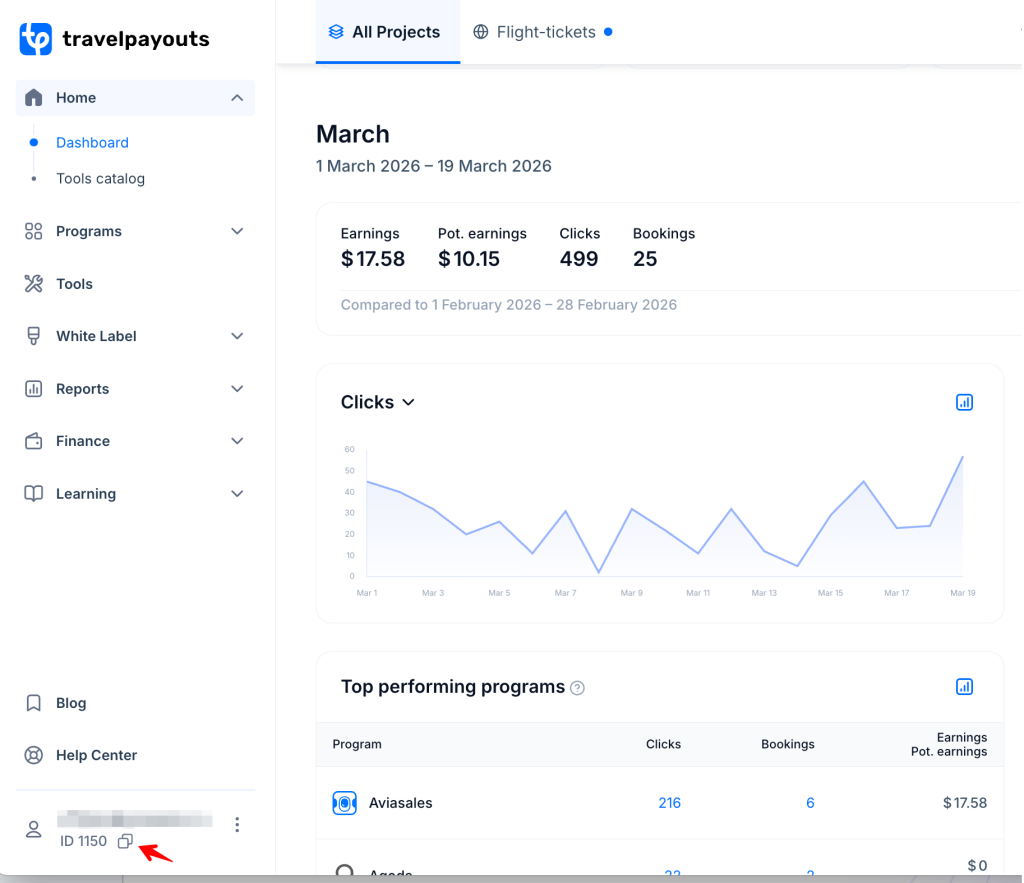
The personal account reflects each sale and lets partners access various work tools (links, widgets, and others). Platforms like Travelpayouts operate not just in the travel niche but also across many other niches, such as eCommerce, education, and health.
What is dropshipping
In lay terms, dropshipping means you sell a product to a client at one price, then pay a lower price to the actual supplier, who ships the goods directly to the client. This business model lets you focus on customer acquisition since you delegate logistics and most other tasks to the supplier.
The underlying concept of dropshipping is that you find a product at a bargain price and sell it to the final buyer at a higher price. Under the dropshipping model, you can sell and earn from almost anything you can ship by mail or a courier service. At the same time, you can even run dropshipping between continents; for example, you can order goods cheaply in China and sell them at a higher price in the USA.
Unlike classical trade, in dropshipping, you do not need to maintain your own warehouse or stock. The supplier holds and manages all goods. You purchase the goods as needed (when you make a sale), and the supplier sends them to the client. One of the main disadvantages of the dropshipping model is that a supplier may sometimes stop selling goods after you have already accepted payment from the buyer.
A person involved in dropshipping is most commonly referred to as a dropshipper. The main role of a dropshipper is to find customers and sell products. Some dropshippers also handle payments themselves, while others pass payments through specialized platforms such as Shopify.
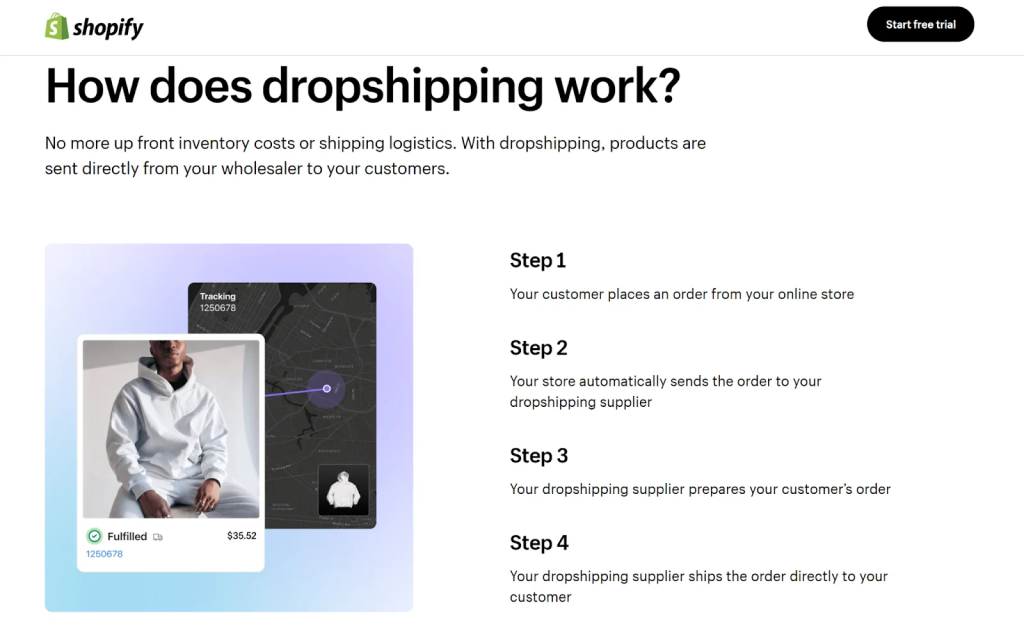
Unlike in affiliate marketing, where the supplier provides the service or product, in dropshipping, the dropshipper manages the entire process. For example, if a customer returns goods, the dropshipper handles the client’s request and resolves the issue with the supplier.
Difference between dropshipping and affiliate marketing
There are many similarities between affiliate marketing and dropshipping:
- You make money by selling someone else’s services or products.
- Sales are generated online.
- Similar skills are required to start earning with each model.
- Both are low-risk earning models.
Affiliate marketing and dropshipping often confuse people, as these models share many similarities most notably, that you sell other people’s goods or services. However, despite this similarity, the essence of each business model differs significantly. Therefore, consider affiliate marketing and dropshipping as distinct business models.
Let’s break down the difference between dropshipping and affiliate marketing step by step, by examining several crucial aspects.
Startup cost
When you compare dropshipping and affiliate marketing, you can easily spot a key difference: startup costs. Affiliate marketing needs little or no upfront investment. You can start even without a website by creating content on platforms like TikTok, Instagram, or YouTube. Here, you focus on attracting traffic, while brands manage payments, delivery, and customer support.
In contrast, dropshipping usually requires building an online store, finding suppliers, and investing in ads to generate sales. This is the key difference between the two models: whereas in affiliate marketing you simply refer customers to a brand, in dropshipping you act as the seller and manage the entire customer experience.perience.
To get started with affiliate marketing, you can join Travelpayouts, connect to partner programs, and monetize your content without upfront costs.
Business model
Affiliate marketing tasks you with building and growing an audience with specific intents and interests. You succeed when you align content with user needs and deliver it at the best moment. You boost potential earnings through conversions by increasing audience engagement and strengthening your distribution channels (SEO, email, social, or content platforms).
Dropshipping requires more complex work at launch and throughout operations because you serve as the seller of goods, not just someone attracting buyers.
Ownership and control
In affiliate marketing, you do not own the product, pricing, or booking process. You control the content, audience, and traffic sources you build and manage. You decide how to attract users and how to convert their intent through SEO, content, or other distribution channels, while the partner handles each transaction.
At the same time, affiliate tools simplify how you execute and track campaigns. For example, in Travelpayouts, tools like Drive streamline affiliate link placement, while the dashboard shows you key metrics such as clicks, bookings, and conversions. This helps you optimize performance, even if you don’t control the underlying product or fulfillment process.
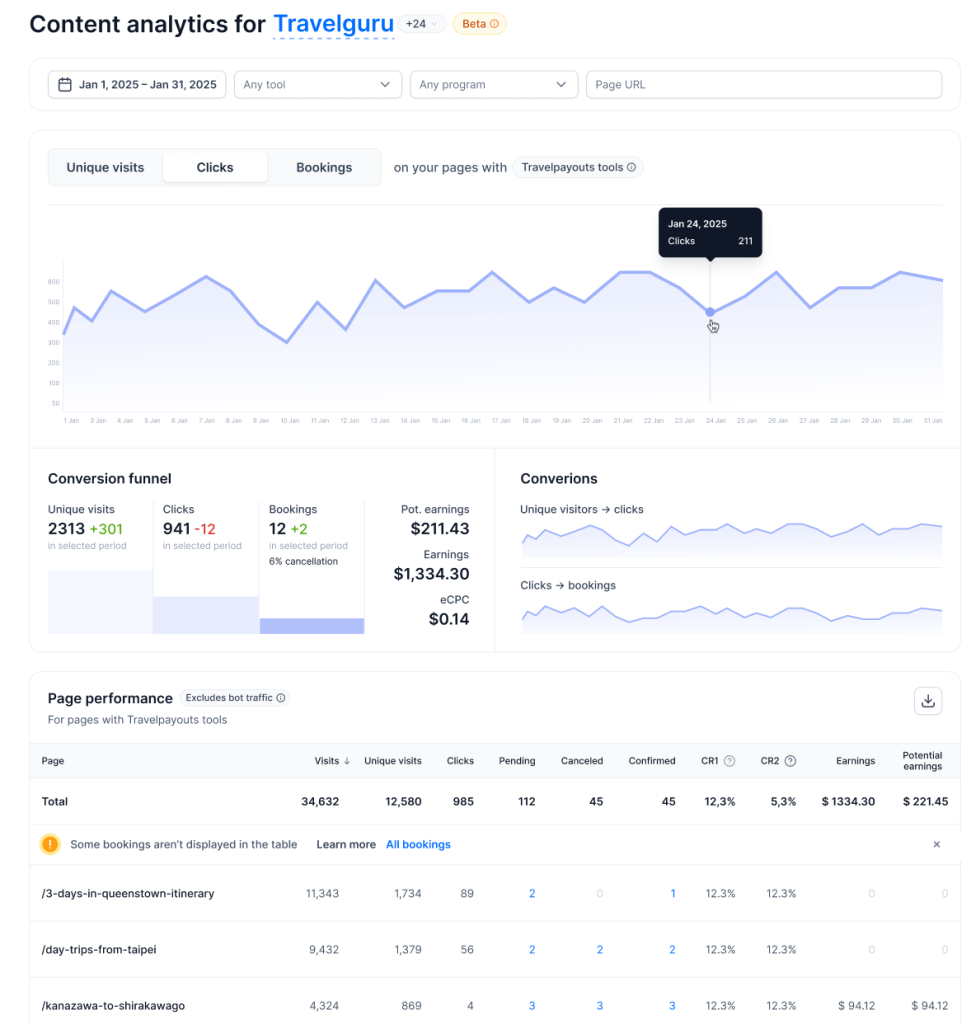
For dropshipping, you typically create an e-shop or an online marketplace. You can operate a completely standalone dropshipping store or build a website, for example, on WooCommerce.
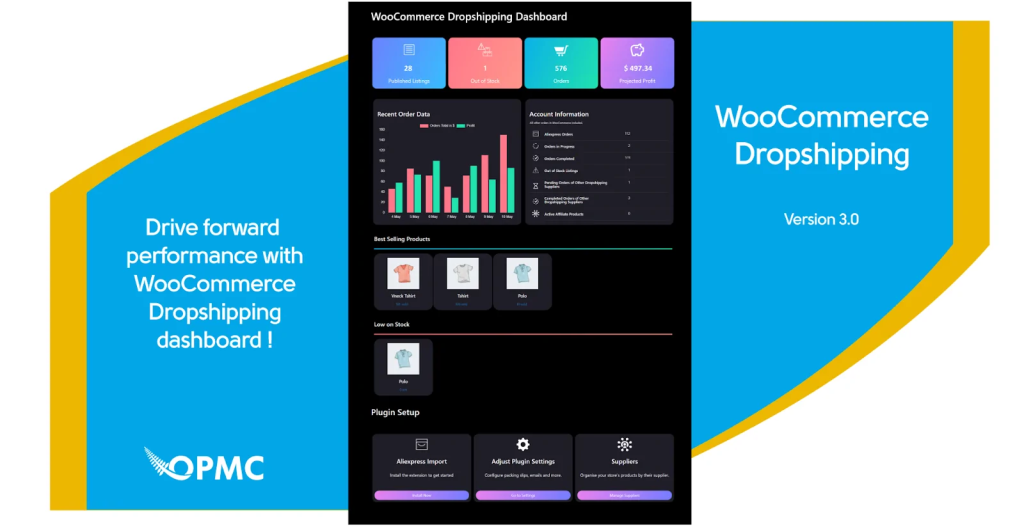
You can simplify the process by using platforms like Shopify or Amazon for dropshipping, but you still must do more than in affiliate marketing, including:
- Conduct market analysis
- Find a supplier
- Create an online platform for selling goods.
- Process incoming requests and receive payments.
- Pay for goods to the supplier.
- Resolve returns and other customer issues.
Revenue model
In affiliate marketing, the first step is attracting traffic. After that, a user clicks your affiliate link, which redirects them to the brand’s website through your unique tracking URL. If the user completes a purchase and it meets the affiliate program’s conditions, it is counted as a conversion. The commission is then recorded in your account and reflected in your performance statistics.
A dropshipper earns revenue on each completed sale, typically as the difference between the retail price the customer pays and the supplier’s wholesale price. Income is directly tied to the store’s transaction volume and conversion performance.
Risk level
- Affiliate marketing poses low financial risk because you invest little upfront and avoid inventory and fulfillment costs. The main risks stem from performance, such as traffic fluctuations and changes to affiliate program terms or commissions.
- Dropshipping exposes you to higher operational risk, including customer acquisition costs, supplier reliability, product quality issues, and returns. You also take responsibility for the customer experience, although third-party suppliers handle fulfillment.
Time and effort required
While affiliate marketing is easier than dropshipping, don’t be fooled into thinking that it’s an easy method that will allow you to earn money effortlessly. You still need to invest your time, find the right products, and reach the right audience. However, in terms of time and effort, affiliate marketing is often easier than dropshipping both at the start and throughout the process.
Scalability
In affiliate marketing, scalability comes from growing your audience, expanding into new traffic channels, and working with additional brands or affiliate programs. As your content footprint increases, you can drive more conversions without changing the underlying business model.
In dropshipping, scalability is driven by acquiring more customers and expanding your supplier base to increase product variety and availability. Growth depends on your ability to consistently generate demand and maintain efficient acquisition costs across competitive markets.
Quick comparison of affiliate marketing and dropshipping
| Feature | Affiliate marketing | Dropshipping |
| Startup cost | 0$ | 500$ |
| Profit potential | From $500 to $7,000 each month | From $1,000 to $5,000 each month |
| Risk level | Low | Medium |
| Ownership and control | Content, audience, and traffic sources | Complex process |
| Time and effort required | A few hours per week to create and optimize content and manage | Demands daily involvement to handle ads, suppliers, customer service, and operations |
Pros and cons of affiliate marketing
Affiliate marketing allows you to earn money by recommending high-quality, relevant products and services to others. Affiliate marketers are responsible for attracting customers. The rest is done by the service or product provider. Curious about the realistic income potential? We’ve broken down how much affiliate marketers make at every stage, from beginner to industry leader, with real examples from content creators. The main pros and cons of affiliate marketing are outlined below:
Pros
- Quick start: You can start affiliate marketing today. It does not require complex technical development, payment acceptance settings, or other setup to get started.
- Large selection of products: Affiliate marketing works effectively for both products and services. That being said, you can find an affiliate program in almost any niche. For example, in the travel niche, you can use Travelpayouts. Meanwhile, you can find similar platforms and affiliate programs in e-commerce, education, law, and other industries.
- Simplicity: attracting customers isn’t easy, but that’s your primary responsibility in affiliate marketing. However, compared to dropshipping, affiliate marketing can be considered a simpler way to make money online, since you do not have other main duties. For example, you do not need to handle returns, process payments, or resolve other issues.
- Not only products: dropshipping is primarily for products, while in affiliate marketing, you can earn on both products and services. For example, by selling legal services and earning a commission on them.
Cons
- No impact on the price: even if the client is willing to pay more, the supplier sets the commission price and size. There are a few affiliate programs with dynamic commissions and prices, but not many.
- Returning customers: since you are sending the client to the service or product provider’s official website, they can make their next purchases directly, bypassing you. This can be partially addressed by building a loyal community around your personal brand and by providing your audience with additional value beyond links to providers.
Pros and cons of dropshipping
Dropshipping is a modern model that can be compared not only to affiliate marketing but also to traditional retail. Compared to these other approaches, dropshipping has additional advantages. To determine whether affiliate marketing is better than dropshipping, you need to consider the pros and cons of dropshipping:
Pros
- Control over the price: you set the final price, which affects your income. You can increase sales by lowering the price, raising the price to earn more revenue, or switching suppliers to take advantage of a lower purchase price. This flexibility gives you more space for your marketing strategy.
- Low start-up costs: unlike a traditional store, you do not need to maintain your own warehouse stock, so you do not need to rent space or purchase inventory.
- Returning customers: because customers buy from you and don’t know the real supplier, you can generate more repeat sales. In particular, if you build a marketing strategy on returning customers, for example, by using an email newsletter, you can build a nearly passive income stream.
Cons
- Long start: even with dropshipping platforms like Shopify, it takes longer to launch your online shop than it does to earn money through affiliate marketing.
- High competition: this niche is overly competitive. However, you may be able to find the right product with little competition.
- Greater involvement in the process: if, in affiliate marketing, your actions are limited to creating content and attracting the right audience, with dropshipping, in addition to attracting a client, you also have to deal with other issues, such as payment processing, handling returns of defective goods, and more.
- Lack of control over the products: you can only choose a supplier; you have no control over their quality or characteristics. At the same time, you are responsible to your buyers. Lack of control over products can lead to significant problems with dissatisfied customers, which, in the case of the dropshipping model, cannot always be resolved.
Affiliate marketing vs dropshipping: which is more profitable?
Affiliate marketing revenue is capped by the brand’s commission structure. In the short term, income depends on traffic and conversion efficiency: each booking generates a fixed commission defined by the affiliate program, regardless of how much value the customer ultimately brings to the brand. This creates predictable but limited margins per conversion.
In the long term, affiliate earnings scale through audience growth, content performance, and distribution channels such as SEO, social media, or email. Since commission rates remain fixed, revenue growth is driven primarily by higher traffic volume and improved conversion rates rather than pricing flexibility.
In dropshipping, short-term profitability is less stable, as margins depend on the difference between supplier pricing, retail price, and customer acquisition costs. Early results often fluctuate due to advertising expenses and limited access to optimized supplier rates.
In the long term, scaling is possible through higher order volume and improved supplier terms, which can reduce unit costs and improve margins. However, sustainable growth requires consistent demand and efficient traffic acquisition, since competition and advertising costs directly impact overall profitability.
Dropshipping or affiliate marketing: which should you choose?
Let’s answer the main question briefly: in affiliate marketing vs dropshipping, which model should you choose in 2026 and why? In this comparison, it all comes down to your budget, risk tolerance, and the level of control you want over the process. Understanding the key differences will help you make a more informed decision.
Choose affiliate marketing if
- want to start a business with little to no upfront investment
- want to minimize financial and reputational risks
- we are just getting started with website promotion and traffic generation.
For beginners, the difference between these models is especially noticeable: affiliate marketing is simpler to launch and doesn’t require handling products or customer support.
Choose dropshipping if
- you’re ready to build and manage your own store.
- are ready to invest money in ads and scaling
- are prepared to take responsibility for product quality and customer experience
In the ongoing comparison between dropshipping and affiliate marketing, dropshipping offers greater control over pricing and branding but also carries higher risks. That’s one of the key differences between the two approaches.
Overall, when comparing dropshipping and affiliate marketing, affiliate marketing is often the safer starting point, while dropshipping may be better suited for those ready to operate a full-scale eCommerce business.
FAQ
What is the key difference between dropshipping and affiliate marketing?
Dropshipping offers more control over pricing and branding, but also carries higher risks. Affiliate marketing is simpler to launch and doesn’t require handling products or customer support.
Is affiliate marketing better than dropshipping?
Affiliate marketing is often a better starting point for beginners because it requires little to no upfront investment, involves fewer risks, and doesn’t require managing products or customer support.
Which is easier to start?
It is relatively easy to get started with both affiliate marketing and dropshipping, but affiliate marketing still wins. You can start earning from affiliate programs right now.
Which is more profitable long term?
Both affiliate marketing and dropshipping models are profitable, but cannot be compared in isolation from your traffic. Literally everything affects your final income, from the choice of the niche in which you work to the initial conditions, how much traffic costs you, etc.
Can you do affiliate marketing and dropshipping together?
Yes, they can be combined, but they operate best as separate revenue streams. Affiliate marketing can be used to monetize content and traffic, while dropshipping can function as a parallel e-commerce layer if you are prepared to manage operations, suppliers, and customer support.
Affiliate marketing vs dropshipping: final verdict
It is impossible to definitively say whether affiliate marketing is better than dropshipping, since everything depends on your data. These are two independent models, each with its own advantages and disadvantages.
Anyone who starts their online money-making journey in 2026 should pay attention to affiliate marketing. With a quick start and a large selection of products and services, affiliate marketing can be a lucrative choice. In addition, you can earn not only by selling goods, but also by recommending services.
You can start your affiliate marketing journey in the travel industry, an attractive niche with significant earning potential. Earn from the sale of flight tickets, hotels, car rentals, and other services for tourists. In the Travelpayouts Partnership platform, you will find over 90 brands and earn up to 40% of the cost of travel services.
Join the Travelpayouts partnership platform
Join todaybrands