Remember when “optimizing content” just meant adding keywords and sprinkling in a few affiliate links? 🫠
Between rollercoaster algorithm updates and the sudden AI takeover, the past few years have proven one thing: the old blogging playbook is officially retired.
That’s why, in 2026, I’ve completely changed up my strategy.
Instead of just writing for Google, I’m creating for busy travelers who want instant value. I’m also hyper-focused on building trust – because let’s be real, most readers now assume a post is AI-generated unless you prove otherwise.
The goal?
To increase my visibility and affiliate earnings with fewer pageviews and less manual labor so that my blog survives (and thrives) even when Google traffic is down.
To give some insight, here is the 6-step framework I’m using to make that happen.
Step 0: Establish your expertise
Before diving into our content optimization strategy, there are a few things you need to clarify:
- Niche. Having a specific topic you cover will help keep everything cohesive in your blogging business.
- Expertise. Pinpoint what you want to be an expert in and make it clear across your content and platforms.
- Mission. Define who you help and how and have every post and paid offer be an extension of this.
Once you have these in place, it’ll be easier to create content that truly resonates with an audience, grows a community, and builds your brand.
Step 1: Monetize on autopilot with Drive
In the past, increasing your affiliate income meant hours on your laptop updating and optimizing.
The good news: in 2026, a lot of the work can be optimized – especially if you install Travelpayouts Drive, an AI-powered engine that finds missed monetization opportunities in your content and automatically applies the most effective monetization tools at the right time.
I’ve already turned it on, and am loving the hands-off approach to affiliate marketing (such a time-saver) and how they’ve simplified their various AI tool offerings.
Instead of clicking into each tool individually, their various tools are improved and now work together in one unified system.
How it works:
- It identifies high-intent users and shows relevant offers through linked keywords, inserted recommendations, smart previews on links, and targeted offers.
- You retain full control and can toggle specific AI modules on/off or exclude certain pages anytime. For instance, I turn Drive off on all of my landing and sales pages.
- It simplifies your workflow with a single-script solution that replaces the need for multiple plugins.
💡 Tip: To install it, head to your Travelpayouts dashboard and click “Tools” -> “Drive.” Once you turn it on, you’ll be given a script to insert in the Header section of your website (you can use the free WP Headers and Footers plugin to do this quickly without tech experience).
From there, Drive will start optimizing your content for affiliate conversions right away – no extra work on your part needed!
Step 2: Map out your content by outcome
One important piece of Search Engine Optimization (SEO) is having an organized site structure, which also includes organizing your content in a logical way.
To start, create pillar pages for your main topics, and then build out relevant topic clusters; as in, groups of articles that are related and interlink.
Personally, I like to create these around the following types of content:
- Foundational: These are typically the broadest posts (e.g., “Yosemite National Park Guide”).
- Informational: These posts answer the how-to and logistical questions (e.g., “Hiking trails in Yosemite National Park”).
- Seasonal: Capturing intent during specific windows (e.g., “Visiting Yosemite in Winter”).
- Buyer Intent: These attract people looking to make a purchase (e.g., “Hotels near Yosemite National Park”).
Having this mix of evergreen and seasonal content can help you attract people with different intents – including buyers who are more likely to click an affiliate link – and keep traffic steady throughout the year.
💡 Tip: For 2026, I’d add that you can stand out by considering the outcome travelers want – such as small-group experiences perfect for solo travelers looking to socialize or secondary cities in Italy to avoid the crowds.
These more focused topics that go beyond the general “top 10” lists can also help you build your brand and stand out as an expert! Telling people to visit the Eiffel Tower in Paris has been done, but recommending a locally-owned bistro where you watched the sunset without the crowds is a unique lived experience.
Step 3: Build trust by showing your humanity
With AI taking over everything and ChatGPT making it easy for bloggers to create (not so great) content in one click, building trust with your audience is harder but more important than ever.
If you want people to trust your affiliate recommendations, you need to prove that you truly had the experience or used the product you’re sharing.
Speaking of experience, this leads me to the topic of E-E-A-T – or Experience, Expertise, Authoritativeness, and Trustworthiness. In short, when you showcase the first three, it leads to the fourth.
A few things to include:
- Why they should listen to you: It could be that you spent time in a place or did a certain thing, though if you can go beyond that, do it. For instance, I always share that I’m a local when writing about New York, and that I’m a certified sommelier when writing about wine.
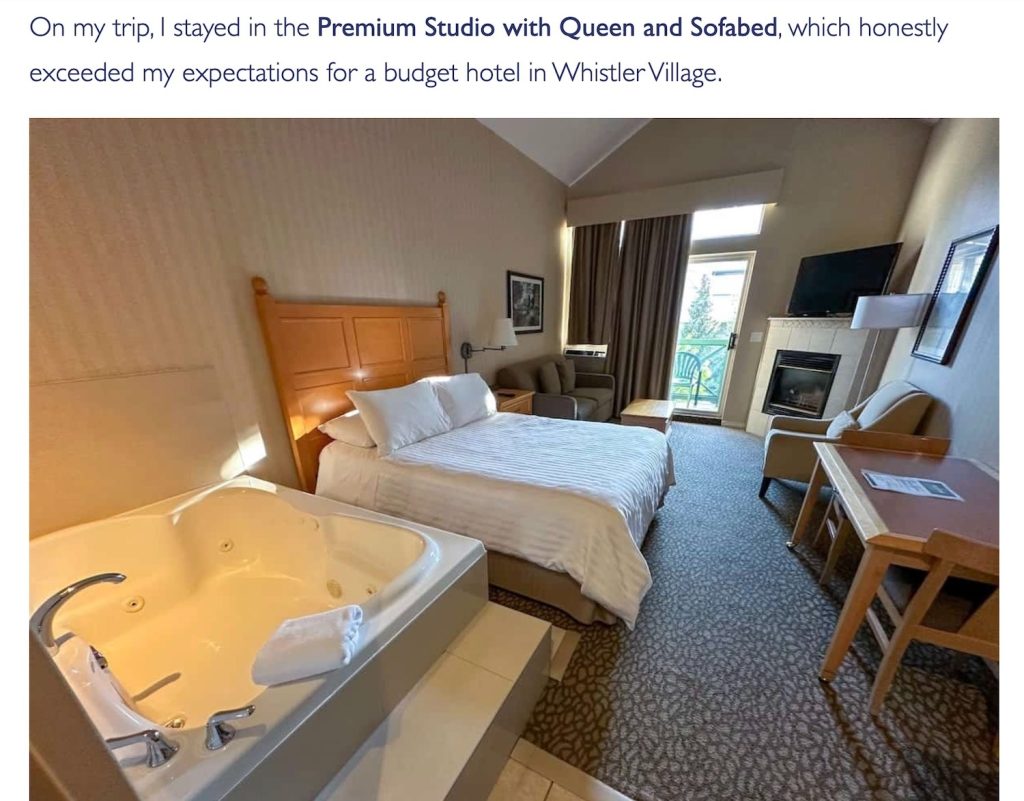
- Personal anecdotes: Instead of just saying that a particular hotel is great because the rooms are “clean and spacious,” share details about your specific room, how the staff made your stay extra special, and how you’re vegan and their onsite restaurant had plenty of options.
- Low lights: Weaving in what you’d do differently or things you didn’t love also adds authenticity. For instance, while I loved the Alaska cruise I went on last summer, I also shared that I didn’t love my room choice and the room type I’d recommend instead.
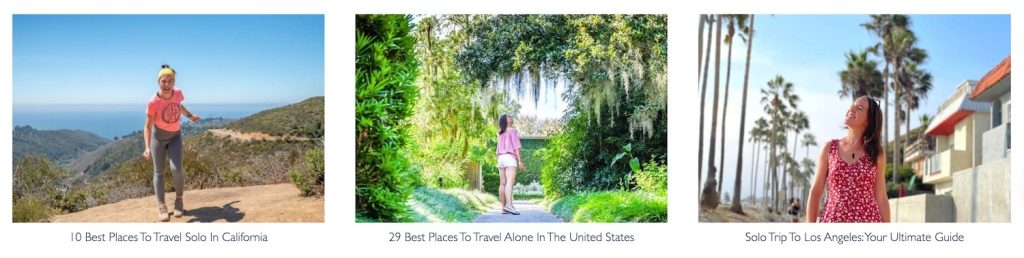
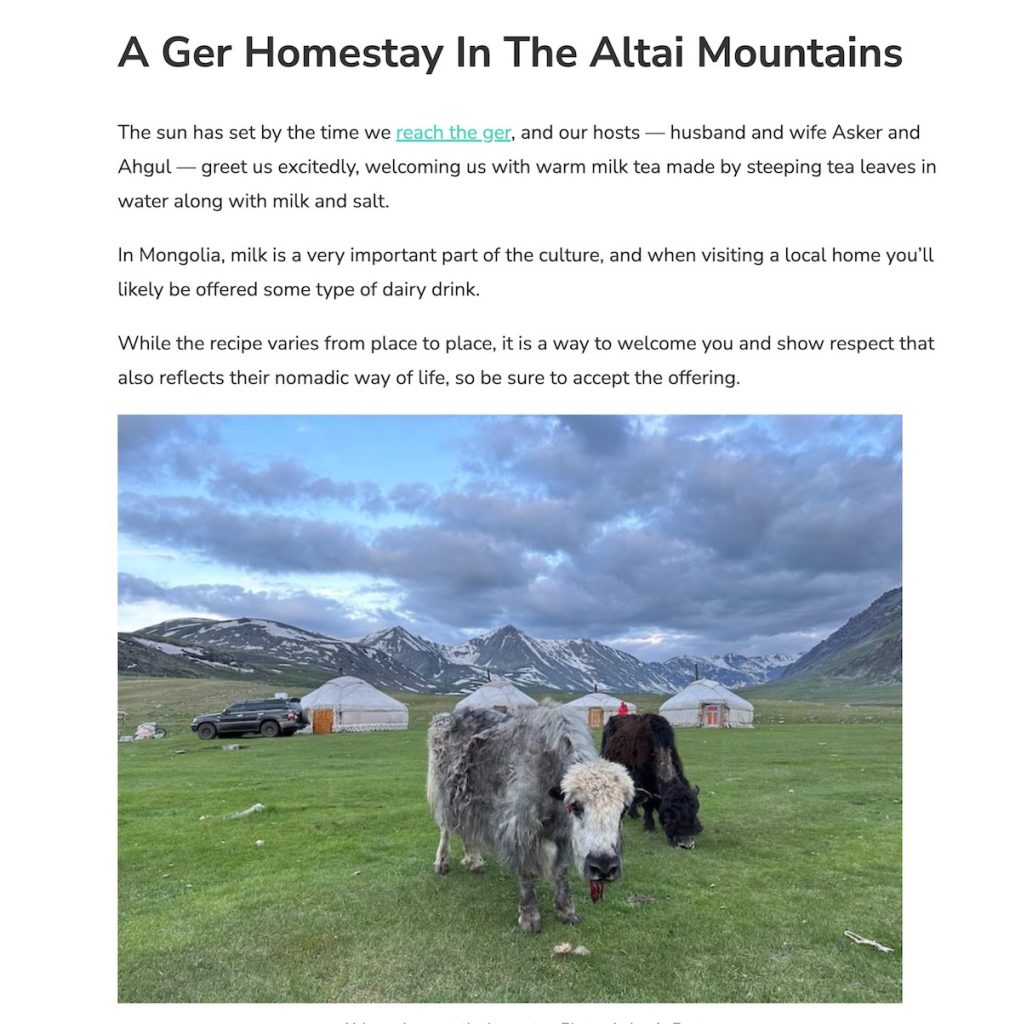
- Original photos: Don’t worry if you’re not a pro photographer. Even simple phone shots can help prove your humanity. Plus, this is the best way to avoid pricey copyright infringement claims!
- Original video: Embed a YouTube video (even if it’s a Short) to bring a piece of your blog post to life, like an affiliate CTA – such as a hotel tour, a tour recap, or an eSIM installation tutorial. This is also great for SEO and increasing post engagement and time on site!
💡 Tip: Something else to test in 2026 is POV titles. For instance, instead of “10 Budget Paris Hotels” you might do “The Only Budget Paris Hotel I’d Actually Book.”
Step 4: Optimize content for skimmers
Over the past two decades, people’s attention spans have decreased significantly.
As a blogger, this means you shouldn’t assume everyone is going to read your entire 2,000-word blog post.
To help continue increasing your affiliate conversions, you need to create skimmable content and make it easy for readers to make a decision.
My favorite ways to do this include:
- TL;DR summary box: Put this right under your introduction, and let people know the most important quick tips or your top recommendations, such as your favorite hotel in a hotel roundup – with affiliate links. You can see how I do this in my post about vegan hotels in Greece.
- Comparison tables: Consider the most important things people would need to know to make a decision, and put them into an easy-to-scan table with an affiliate link for each item. ChatGPT is great at coding these!
- High-converting micro copy: Instead of a generic “Book Now” button, try phrases like “Check availability for my dates” or addressing fears with notes like “Free cancellation” next to an affiliate link.
- Standout CTAs: Bold links, emojis, and buttons are a few ways to make your affiliate links pop.
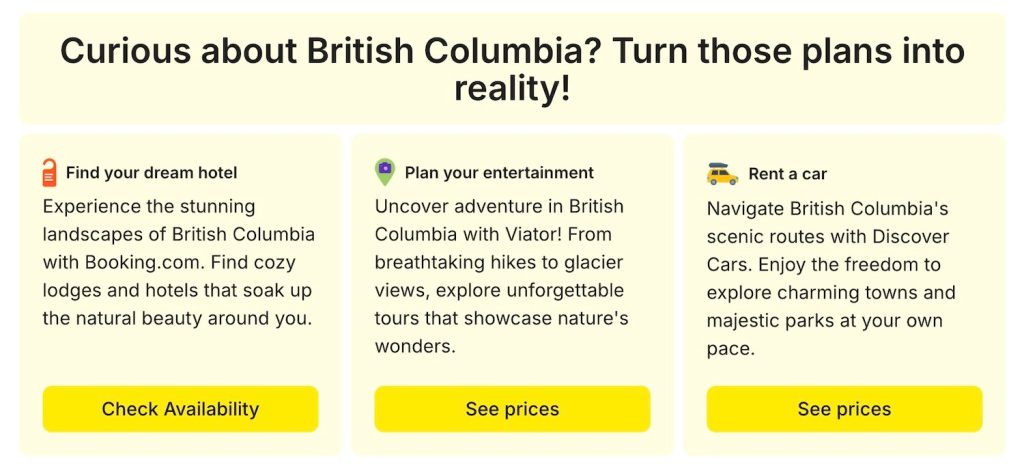
By the way, Travelpayouts Drive can be helpful for creating CTAs that standout. One of my favorite features is the inserted recommendations, which automatically adds relevant suggestions for hotels, tours, car rentals, and more!
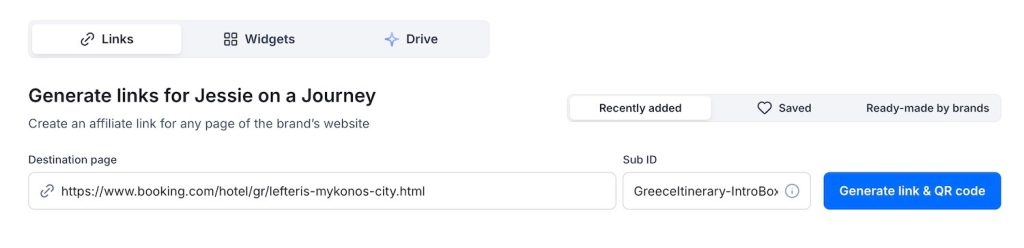
💡 Tip: Use SubIDs to track which specific placements are converting. This way, you can do more of what is working in future content and when auditing and updating past blog posts.
Step 5: Optimize for search, AI & social media
Bloggers have long been optimizing to rank in Google; however, in 2026, we want to also be thinking about how to get cited by AI agents like AI Overviews, ChatGPT, and Perplexity as well as how to go beyond blog posts to get seen in search results.
In terms of AI, you can increase your chances of getting cited by using clear formatting like descriptive headings, short paragraphs, and bullet lists.
Also, getting mentioned by other platforms and publications – even if there isn’t a backlink– can help you build brand authority in the eyes of AI platforms and search engines.
☝️ Quick note: If you don’t like the idea of AI pulling from your content, you can also block AI crawlers. Just consider the implications of this and what level of blocking you want to do.
Speaking of, your videos, social posts, and even Pinterest pins now show up in Google search results, giving you another chance to build visibility.
You can use a content repurposing workflow to quickly turn a blog post into video scripts, carousels, and social media shares, though a smart strategy is to also weave into content that promotes affiliate partners.
It doesn’t have be a salesy “buy this!” video. Instead, take people along with you on bookable trip experiences and share tutorials of how you use your favorite travel products.
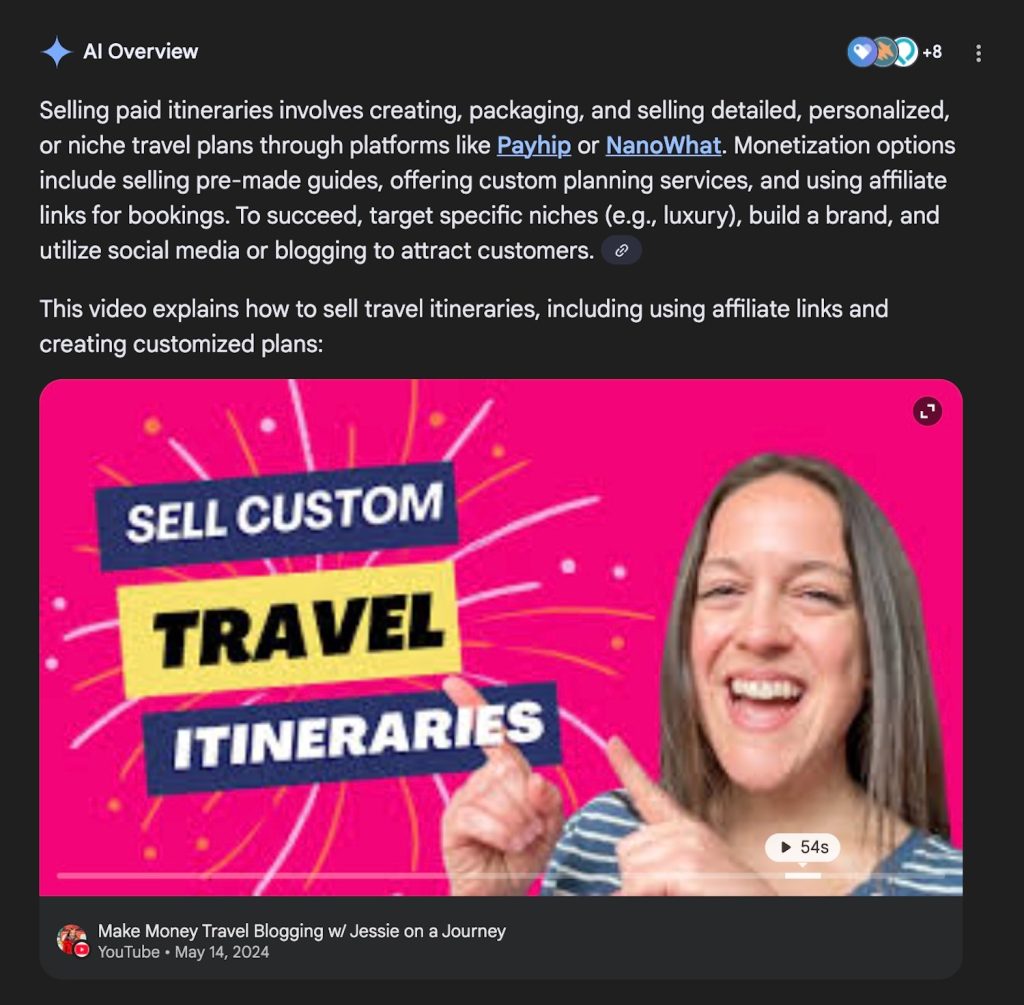
When creating this social content, make sure you’re creating CTAs that align with each platform – such as QR codes on YouTube or DM marketing on Instagram.
💡 Tip: If this sounds like a lot to create, you can save time with a content repurposing strategy. In short, you’ll start with a long-form piece of content, like a blog post, and pulling from that to create video scripts, carousels, pins, and social posts.
Step 6: Future-proof your blog with an email opt-in
One of the best ways to be protect your blogging business is to grow an email list.
I discuss this in-depth in my free Algorithm-Proof Blogging workshop, but essentially, you own your email list.
And while there are best practices for getting into people’s inboxes, you don’t have to battle ever-changing algorithms where you’re lucky if 10% of your followers see your content.
With this in mind, make sure you’re consistently asking people to join your email list. My favorite way to do this is to offer an opt-in freebie, which is a free resource you give your audience in exchange for their email address.
In 2026, when ChatGPT can quickly answer questions, aim to create opt-in freebies that align with your mission and offer quick wins in ways that AI can’t – like a free Cityscape Lightroom Preset Pack or Kids Eat Free Restaurant Map of NYC.
Personally, I find it helpful to think about the information as well as the implementation aspect; as in, how can I really make sure my subscriber can implement this quickly and easily – which also builds trust!
I know, I know. I’ve mentioned building trust a lot. But it’s extra important in the age of AI! 💪
In terms of optimization, you can organically link to your opt-in freebie, embed subscribe forms, create eye-catching graphics in Canva, or even use a free plugin like Grow by Mediavine to automatically add email subscribe CTAs.
💡 Tip: Remember, too, that you can monetize your email list, including with affiliate links. Along with naturally weaving affiliates into your newsletter, utilize the ps section of your emails to include relevant affiliates your audience will love. For instance, if you blog about RV travel, you might share your favorite RV essentials.
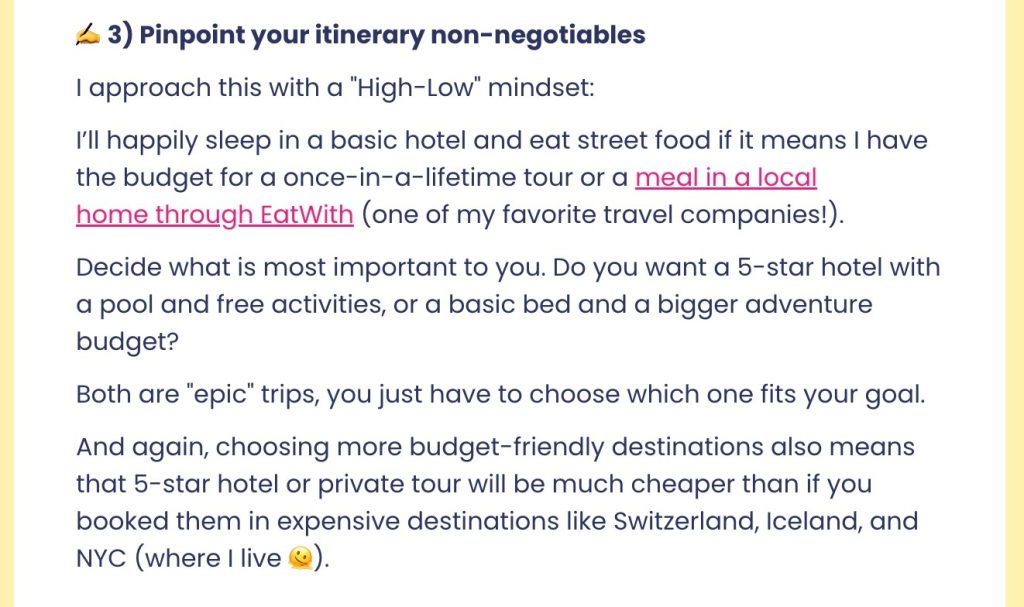
I hope you found this helpful! Ultimately, optimizing content for 2026 isn’t about outsmarting algorithms or AI, but being the most helpful human in the room.
When you automate income generation, increase your visibility beyond Google, and build trust in a way that turns one-time readers into community members, you help to future-proof your blogging business!