
What are affiliate ads?
Affiliate ads are paid advertisements on various platforms that affiliate marketers use to promote a product or service for a commission.
A marketer joins an affiliate program, chooses an affiliate offer that allows for paid traffic, and places an ad on a platform. The ad includes a link leading to either the affiliate offer or a landing page. When those who’ve interacted with an ad complete a target action, also known as a conversion, the affiliate marketer gets a commission.
Both brand ads and affiliate ads aim to increase sales, but they have a lot of differences. While brand ads promote the products directly, affiliate ads often promote content about the product and highlight the creator’s personal experience. The brand pays for its own ad regardless of the results and only pays a commission to an affiliate partner who placed an ad for it.
How affiliate marketing with paid ads works
Using affiliate marketing ads involves several stages:
- Joining one of the affiliate programs in your niche and choosing an offer.
- Making sure the program terms allow for paid traffic.
- Creating an ad directing users to a landing page or an affiliate offer page.
- Tracking ad clicks, conversions, and commission earned.
- Optimizing the ad campaign to make it more effective.
Not every program accepts paid ads as a traffic source. Those programs that don’t prohibit ads, however, can impose other limitations, like direct linking, brand bidding on Google, usage of trademarks, specific traffic sources, or certain promotional wording. Before running an ad, make sure you do it in compliance with the affiliate program terms and conditions.
Types of affiliate marketing ads
Depending on the platform, there are different types of affiliate ads. Let’s take a look at the most popular ones.
Search ads
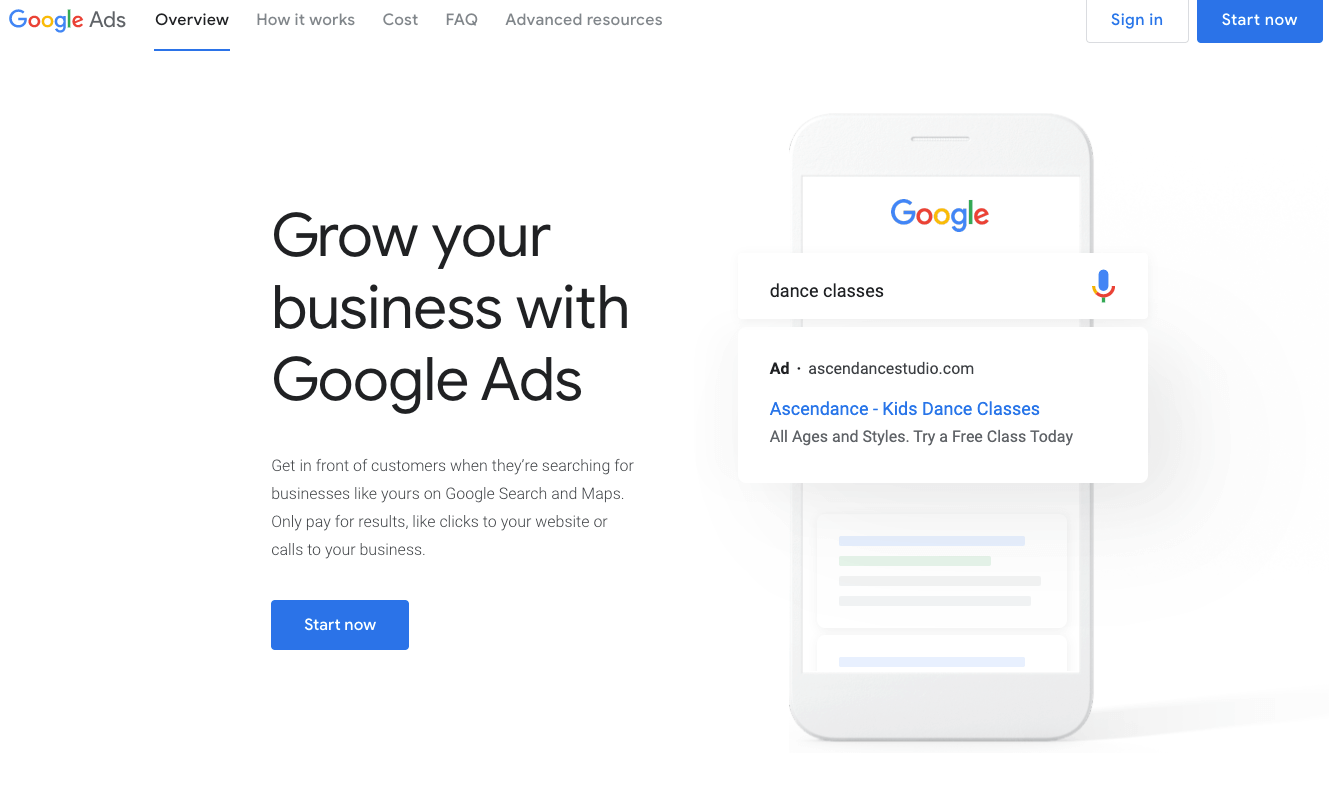
Google Ads, or search ads, appear as sponsored results on search pages when users type specific keywords. As an affiliate marketer, you choose the keywords associated with the product or service you want to promote and prioritize those with commercial intent.
Social media ads
You can post affiliate marketing ads on social media platforms, like Facebook, Instagram, LinkedIn, etc. The ads mimic the platform’s content formats and appear on users’ feeds, search pages, and on stories without disrupting engagement. You can target specific audiences based on interests, behavior, and demographics.
Display ads
Display ads are banners, animations, or interactive elements placed on webpages or in apps. They are designed to stand out and attract your target audience’s attention.
Video ads
Video ads can be long or short and appear on platforms like YouTube and TikTok or on social media. While typical ads are static, videos are moving and can show the promoted content or product in more detail. On YouTube, for example, the ads can appear on the homepage, in search results, and at various moments while other videos are playing.
Native ads
Native ads are ads placed on websites via an advertising platform, like Taboola, Outbrain, or others. Unlike display ads, native ads don’t disrupt user experience and match surrounding content.
How to run ads for affiliate marketing: step-by-step guide
Standing out in the digital world is a constant uphill climb, especially as people are continually bombarded with ads every day. In fact, some marketing experts believe people are exposed to hundreds of ads daily!
New York City advertisements pale compared to how many we see on our phones
So how do you become successful amidst the crowds and get through to your audience? How do you convert views to clicks using ads for affiliate marketing? The key is to create memorable advertisements. Ones that stick out in people’s minds. Let’s take a look at some top tips about how to create ads for affiliate marketing.
Step 1: Choose the right affiliate offer
A successful affiliate marketing funnel starts with the right affiliate offer. This step is especially important for ads, as you’re going to invest money into promotion. Plus, not every brand allows its partners to use paid traffic.
Here are key aspects of the offer you need to check:
- Offer to audience match. The product or service you’ll be promoting needs to be relevant to your target audience. It should correspond with their need and wants, fit their lifestyle and goals. If it’s something they won’t be able to afford, your ad won’t get the recognition you hope for.
- Commission size. As you’ll be using a paid channel, make sure the commission you’ll get covers the expenses, allowing you to make money with affiliate marketing.
- Conversion rate. This metric plays into the calculations you need to do before committing to an affiliate offer. Get expected earnings per click (EPC) by multiplying conversion rate by commission. Then compare it to the cost per click (CPC) of an ad to estimate profitability.
- Cookie duration. Typical customer journey includes multiple steps, and an ad rarely results in an immediate sale, so opt for offers with a longer cookie duration. When the attribution window is longer, you can get paid for delayed conversions.
- Permitted traffic sources. As we’ve established, some programs prohibit using paid traffic to promote affiliate links, and others prohibit specific ad types, like paid search. Make sure there are no limitations on the promotion methods you want to use.
- Promotion restrictions. Some affiliate offers don’t allow you to use the brand’s name or logo for search ads; others may prohibit specific terminology. Thoroughly read the program’s terms and conditions to make sure your way of advertising the offer will be compliant.
- Advertiser’s landing page quality. Make sure the checkout process is user-friendly and straightforward, so that nothing can negatively influence conversions.
- Offer’s geography. Some programs only work in specific countries. Make sure these parameters make sense for your audience and promotion method.
If you’re looking for affiliate offers in the travel niche, join the Travelpayouts Partnership Platform. You’ll get access to 90+ programs, from hotels to tours and car rentals. Travelpayouts also offers smart monetization tools to help you optimize your process and see your earnings in one place.
Join the Travelpayouts partnership platform
Join todaybrands
Step 2: Define your target audience
Before making an ad, it’s essential to know who you’re targeting. If your ads don’t resonate or aren’t relevant to your audience, then why would they click on them? Understanding who they are, their values, interests, and their behavior is crucial when developing effective advertisements.
The ad you’re going to make should correspond to a particular subset of all the product’s potential audience. Being too general here means being generic and getting ignored. That’s why you need to be clear about who you’re targeting.
Focus on these parameters during your research process:
- Needs. What do your customers want? Taking a hotel affiliate program as an example, do they need somewhere to stay for a relaxing or active vacation? This might determine your future ad copy and angle.
- Issues. What do they struggle with? What do they need fixed? For example, high prices, cancellation policies, or ease of booking.
- Motivation. What’s their goal for this purchase? For a hotel, do they look for the most affordable option or the most memorable experience?
- Awareness level. Think of whether your potential audience already knows about a product or service you’re promoting. You likely won’t have to introduce big brands, like Tripadvisor or Agoda, but might need to if the brand is smaller or the audience is less knowledgeable.
- Location. Where is your audience? Which countries do they live in? This might determine the language, prices, and other context of your ad.
- Devices. Does your audience browse from mobile or desktop? This ties into your ad’s presentation and level of detail.
- Search and buying intent. Search intent refers to different demands a customer can have when they search on the web, like informational, commercial, transactional, etc. Buying intent refers to whether they are ready or not to make a purchase. For your campaign to be successful, you need to make sure you find an audience whose search intent shows purchase readiness and signals that you can bring them to conversion.
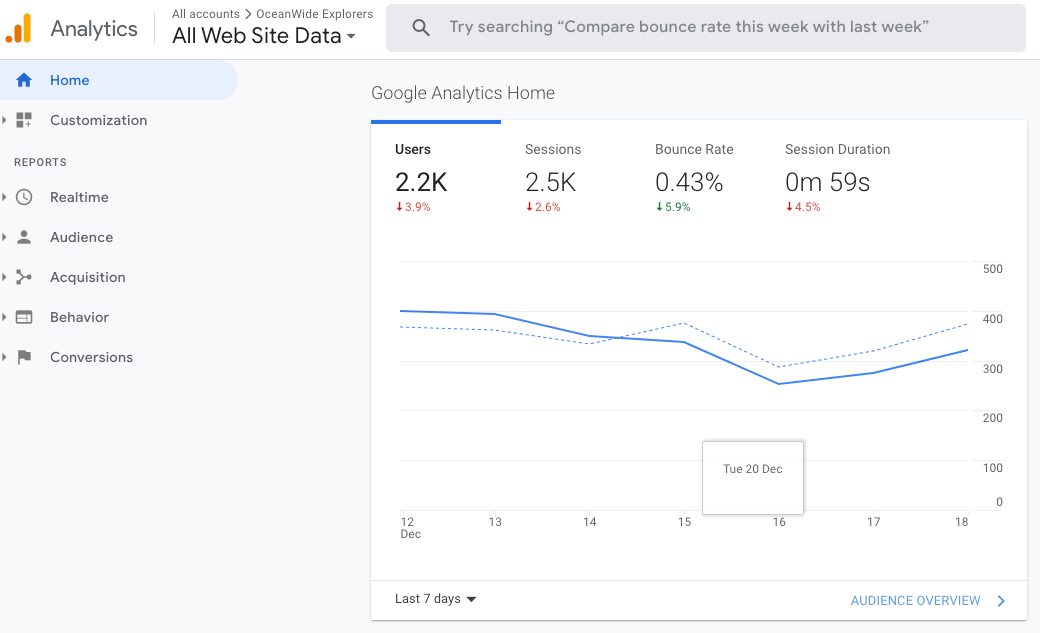
Travelpayouts recommends a few strategies to learn more about your audience, with the most helpful tool being Google Analytics. It’s a great place to begin learning more about your audience. You might even create audience profiles based on demographics, locations, behaviors, or other noticeable characteristics.
Another way to learn about your audience is to note what your most successful competitors are doing. Take a deep dive into their content and discover what works well for them, how and where they place their advertisements, etc.
Other strategies to better understand your audience include monitoring feedback and comments from users of the affiliate product or site, conducting surveys or focus groups, and continual experimentation on your content to see what resonates most.
Step 3: Choose the right advertising platform
This step is crucial for a successful ads-based affiliate marketing strategy. It’s not just about the budget, although you should definitely consider it.
Start by checking the affiliate program’s terms and conditions. What are the allowed and prohibited platforms? Make a list of those you can use and narrow it down based on other important aspects.
Think about your affiliate marketing niche – does the platform make sense for it? For example, promoting a product in the AI and SaaS niche on LinkedIn makes sense, but it doesn’t for travel.
Next, what’s a typical behavior for your target audience when it comes to this product? Maybe they tend to watch YouTube reviews before booking a hotel? Or maybe they only search for information on Google or Instagram? This might differ based on location, age, and other demographic characteristics.
Last but not least, consider your content format. If you’re not a videoblogger, making a video ad might be difficult and less appealing to your audience. Use your strengths and personal brand to determine which platform fits best.
Here are some examples to make your choice easier:
| Platform type | Ad examples | Best for | Main consideration |
| Google Search Ads | Sponsored search results | Capturing users with a strong buyer’s intent, promoting high-ticket products | Thought-out keyword strategy, possible brand name and logo use limitations |
| Meta Ads (Instagram, Facebook) | Single image and carousels, stories, video ads (Reels) | Granular audience targeting, broad reach, beauty, lifestyle, fitness, and e-commerce niches | Creating and testing effective creatives |
| YouTube ads | Mid-stream videos, pre-roll, and search | Varied targeting options, users with buyer’s intent | Producing videos or thumbnails that capture attention quickly |
| TikTok ads | Mid-stream videos | Reaching younger audiences, e-commerce products, trendy products, mobile games and apps | Making ads that feel like organic content |
| Pinterest ads | Promoted pins in the feed | DIY, travel, lifestyle niches, getting users with buyer’s intent | Creating a good keyword strategy and appealing creatives |
| LinkedIn ads | In-feed ads, message, and conversation ads | B2B products, high-ticket services, like coaching or professional education | Calculating the costs and profits |
| Native advertisement | Recommended reading-style ads | Leading traffic to your content first, finance and health niches | Finding the right content to promote, calculating the costs and profits |
Each platform has its nuances, and some may be more advantageous to you than others. Carefully select the most effective ones and then create effective ads for your affiliate marketing campaigns. Test, experiment, and tweak.
Step 4: Create a high-converting affiliate ad
An affiliate marketing ad should first and foremost be relevant to the landing page it leads to. Make sure the ad gives an accurate teaser of the page’s content and has a similar visual style for consistency.
Overall, your ad should quickly state the value of the product or service you’re promoting without overpromising. Focus on real benefits to earn the audience’s trust and stay compliant with ad regulations.
Your advertisement also needs to match the customer’s demand or interest. For example, if you’re promoting a guide to a relaxing vacation in Thailand, target people who are into leisurely travel and not hikers or active tourists.
Although ads may seem easier to make than your average pieces of content, they consist of several elements:
- Hook – the first sentences of your ad, designed to interest customers and motivate them to read or watch the rest. It needs to be both interesting and also get to the point quickly.
- Headline – the biggest text of the ad should be the most impactful. Make it memorable, value-driven, and clear.
- Value proposition – the main draw of your ad needs to be stated clearly, correspond to the customers’ pain points and needs, and be transparent about the offer’s terms and conditions. Best ads also add a layer of exclusivity, for example, with a limited discount code.
- Ad copy – no matter the offer, aim for a straightforward and easy-to-understand text. If you link to a landing page, you can provide more context there, so it’s best to keep it short.
- Visual or video – this is just as important, if not more important than the ad copy. Check trending approaches and your competitors’ strategies and be ready to test multiple versions as part of campaign optimization.
- Call to action (CTA) – an action verb informing users what their next step should be. Here, you should be direct, showcase the benefits, and create a sense of urgency. For your ad to be effective, include only one CTA. Otherwise, you risk confusing the viewers and decreasing conversions.
Follow these principles when writing your ads to increase their effectiveness:
- Use possessive determiners such as you and your.
- Use actionable words, including “now,” “here,” or “click.”
- Create urgency using words like “limited,” “soon,” or “today only.”
One of the easiest ways to create a well-designed ad is to use pre-made banners from your affiliate partnerships. For example, on Travelpayouts, most affiliate programs provide partners with free banners that often feature aesthetically pleasing graphics and actionable copy. Banners are an excellent option for bloggers and other websites.
You can also design eye-catching graphics using tools like Canva. If you want to make images or videos for your ad yourself, check out these 20 design tips.
Step 5: Create or choose a relevant landing page
In some cases, you can lead customers who see your ad directly to an affiliate offer. But this strategy isn’t universal. A landing page, also known as a bridge page, can help convince your audience and facilitate conversions.
A landing page is necessary if the affiliate programs or advertisement platforms prohibit direct linking, but that’s not the only situation when having one can be beneficial.
Customers aren’t always eager to immediately make a purchase. A landing page can give them more context about the product or service, easing the uncertainty. This is especially important for high-ticket affiliate programs. For example, if you’re promoting a laptop, on a landing page, you can compare it to other options in the category, provide technical specs and use cases, add your review, and other valuable information. Content like this builds trust and also guides users to conversion.
One of your existing blog or website pages can serve as a bridge page. Or, if you don’t have one, you can create a landing page using a free builder. Most feature drag-and-drop editors and templates to speed up the process. If you need some inspiration, check out our hand-picked affiliate marketing website examples.
Step 6: Set a test budget and launch the campaign
Once you’ve made your ads, it’s time to launch your affiliate marketing ad campaigns.
Start with a small test budget to see how the ad is performing before scaling it. Set a daily dollar amount or a campaign amount that you won’t regret losing. If you’re an affiliate marketing beginner, prepare to tweak your approach and don’t expect immediate success.
The test budget shouldn’t be too big or too small. You can use in-platform recommendations, like the one on Google Ads, to find out what you should spend. Alternatively, calculate an approximate budget using the conversion and cost-per-click (CPC) data. For example, if the conversion rate is 5%, you’ll need around 20 clicks on your Google ad for one conversion. Multiply the number of clicks by CPC, and you’ll get your daily budget.
You also need to choose the target action for your ad in advance. For example, you can choose link clicks, landing page views, conversions, messages, etc. If your ad funnel includes a bridge page, it makes sense to set landing page views or clicks as your goal, while conversions are better for direct affiliate links.
Separate different audiences and ad creatives. If a product you’re promoting offers distinct benefits, don’t mix them in one set of ads. The same applies to audiences – you can create distinct ad variations for each subsegment. That said, you should avoid going overly granular, especially in your first campaign.
Don’t use too many variations for your first campaign – that will make it harder to assess the results. If you’re using several creatives, only change one aspect, like headline or color scheme, not both at the same time.
Before you launch, take time to check all the links, tracking, and the mobile version of the ad and your landing page. This will help you avoid any potential mishaps.
Step 7: Track results and optimize
Once you’ve successfully created ads for your affiliate marketing campaigns, it’s time to analyze the results and test your strategies. It’s important to examine your methods from time to time, as algorithms and consumer behavior constantly change.
Key metrics to keep an eye on are:
- Impressions – how many people have seen your ad.
- CTR (click-through rate) – the share of people seeing your ad who actually clicked on it.
- CPC (cost-per-click) – how much you’re paying for a user’s click on the ad.
- Conversion rate – the share of people who have made a purchase or completed another target action. This is your main success indicator.
- CPA (cost-per-acquisition) – how much each conversion costs you.
- Revenue – the amount of money you earned, not excluding the expenses.
- ROAS (return on ad spend) – the amount of money you make for every dollar spent on ads. This measures how profitable your ads are.
- Affiliate commission – how much money you earned from each affiliate program.
Note that a high CTR doesn’t automatically mean that the campaign is profitable. You also need to account for other metrics and consider the whole customer journey all the way to a verified conversion.
Looking at the data you’ve collected, ask yourself:
- What ads are working? What copy or images could I improve?
- Has my audience profile changed? If so, how can I better target them?
- What projects have been most successful? Blog? Social media? Email list? Videos?
Other informal research cues to monitor include comments, social media interactions, questions your audience asks, and competitor trends. What questions are your social media followers asking? What strategies are your successful competitors utilizing? Analyzing all of these aspects is vital in your testing.
Crunch the data, answer those questions, and adjust your affiliate marketing strategy accordingly. Pay attention to both the ad and the bridge page and use landing page optimization strategies to increase its effectiveness. Getting complacent once your ads are up and running is easy, but constant experimentation and testing are crucial for success.
Affiliate ads examples
Now, let’s take a look at some affiliate ad examples you can use for inspiration.
Search ad
Ad format: search ad linking to an article.
Target audience: camping enthusiasts looking to plan their short journeys.
Hook: one of the UK’s biggest camping clubs.
Main benefit: website reputation and content freshness.
CTA: no.
Why it works:
The ad uses two distinct popular keywords right in the headline to attract both paid and organic search traffic. It emphasizes recency, mentioning the year, and earns viewers’ trust with the website’s reputation. This is a good example to use for promoting outdoor affiliate programs.
Video ad
Ad format: LinkedIn post with a video.
Target audience: marketing professionals.
Hook: “The playbook I use to see trends early.”
Main benefit: $500 in ad credit when spending $500.
CTA: sign up.
Why it works:
The post combines video’s visibility and virality with an informative caption. It presents the Reddit strategy organically, without overselling it, and gives concrete examples of the author’s process. The $500 bonus seals the deal.
YouTube ad
Ad format: YouTube search ad.
Target audience: fitness enthusiasts.
Hook: “Complete Your Fitbit Air.”
Main benefit: distraction-free workout with a screenless device.
CTA: visit site.
Why it works:
The ad is personalized and features a specific product the user has previously searched for, which makes the experience seamless. The headline and ad copy include action verbs and address the user directly to motivate them to make the next step.
Common mistakes when running ads for affiliate marketing
Running ads for affiliate marketing has a lot of nuances, and if you’re not following the best practices, you risk losing money. Here are some mistakes you should avoid to make sure your strategy is effective:
- Launching a campaign without learning the terms of the affiliate offer. Read through the conditions and limitations of a program first, as paid promotion tactics might be prohibited.
- Direct linking to the product without considering the terms and conditions. The same principle applies: many programs don’t allow direct linking and require you to use a bridge page.
- Choosing a low-quality or unsuitable product. The product determines the success of your efforts even more than the ad itself. Don’t rush the process and pick a product that will resonate with your audience.
- Targeting too wide an audience. In marketing, speaking to everyone means speaking to no one. Make sure to have a specific audience profile to target if you want to see the results.
- Ad and landing page mismatch. Your ad and landing page should complement each other. Remember that they are both stages in a unified customer journey, so the content and visuals should align.
- Presenting misleading claims. Be honest about the product you’re promoting. Don’t advertise something it won’t be able to deliver – this will erode your audience’s trust.
- Not tracking the ads. You can’t be sure how well your ads are working without proper tracking.
- Only considering the clicks. Clicks don’t always translate into conversions and won’t give you the full understanding of how well your strategy is working. Track different metrics, like impressions, CPA, ROAS, etc., to get a holistic view of the customer journey and ad performance.
- Scaling too early. If your ad has been bringing good results for a day, it doesn’t mean that you should increase your budget right away. Give it some time. Don’t rush to use the same successful tactic for another product, either. Test small and only scale when you’re sure about the strategy.
- Stopping a test before you get enough data. A/B testing takes time, and if your sample size is too narrow, the results won’t be informative.
Pros and cons of paid ads for affiliate marketing
Launching affiliate marketing ads is a great strategy, but it has its limitations. Here are the benefits and drawbacks you need to be aware of before you commit to it:
| Pros | Cons |
| Fast traffic | Requires an upfront budget |
| Precise targeting | Results are not guaranteed |
| Easy to scale successful campaigns | Advertising rules can be strict |
| Measurable performance | Costs may rise quickly |
| Useful for testing offers | Poor tracking can erase profits |
FAQ about affiliate marketing ads
Can beginners run affiliate ads?
Affiliate marketing beginners can run ads, but should start small and consider the pros and cons of the strategy first. In general, attracting paid traffic is a more advanced technique, as it requires a good understanding of analytics and campaign optimization methods.
How much money do you need to start running affiliate ads?
Depending on the platform and your setup, you can start with as little as $50 – $100, but a general recommendation is to set aside at least $500 per campaign.
Can you run ads directly to an affiliate link?
No, in most cases, you can’t link directly to an affiliate offer. Major platforms and many affiliate marketing programs prohibit direct linking. Check the terms and conditions to figure out which limitations apply.
Do you need a website to use paid ads for affiliate marketing?
You don’t need a website to run affiliate marketing ads. However, the best practice is to link to a bridge page instead of linking directly to the advertiser’s website. You can use a free landing page as a connector.
How do you know whether an affiliate ad is profitable?
To understand whether an ad is profitable, calculate your ROAS (return on ad spend) by dividing what you’ve earned from a campaign by what you’ve spent on it. If the number is bigger than one, your efforts were profitable.
How long should you test an affiliate ad before making changes?
Wait at least 7–10 days before making any changes. You can also wait until you hit over 1,000 impressions and 50 conversions to get enough information.
Can you use the advertiser’s images in your affiliate ads?
In general, you can use authorized advertisers’ images for your affiliate ads. Check the affiliate program terms to ensure that it’s not limited.
Final thoughts
Creating effective ads for affiliate marketing campaigns requires careful thought and research. Without any consideration, it’s challenging to produce a memorable advertisement. However, creating ads that resonate with people is easier if you utilize the strategies we discussed above:
- A deep understanding of your audience goes a long way.
- Quality copy with concise language and clear calls to action is highly effective.
- Emotional appeals through stories, humor, and real-life experiences can steer consumer decision-making.
- Implement, experiment, and test continually to stay ahead of the competition.
Combining these aspects will likely increase your audience engagement, click-through rates, and your profits.