



Affiliate marketing strategy: TL;DR
| Step | Goal |
| Choose a niche and affiliate programs | Find the right audience and assess profitability |
| Create content | Build trust with the audience |
| Collect leads | Grow your email list |
| Promote offers | Generate sales |
| Analyze results | Improve performance and optimize your strategy |
What is an affiliate marketing strategy?
An affiliate marketing strategy is a strategy of promoting brand products or services to earn a commission. A successful strategy includes:
- What niche to work in and which affiliate programs to join
- Where to get traffic
- How to monetize the traffic
A detailed strategy creates a structured approach to work from the very first day and helps you make the most of your time and skills in affiliate marketing to get the maximum profit.
What are the advantages of an affiliate marketing strategy? Here’s a list of some of the most important benefits it brings:
- Starting from the best point. If you take the time to research affiliate marketing niches and content strategies, you’ll increase your chances of succeeding and your potential income, too.
- Getting a structured plan. An affiliate marketing strategy is a logical plan, so you’ll know exactly what to do and how to allocate your time.
- Boosting your efficiency. A good strategy only includes the most necessary and effective steps, so you’ll know what to focus on. No guesswork, no wasted efforts.
How to build a successful affiliate marketing strategy step by step
It’s important to note that for all its advantages, having a strategy is not a guarantee of immediate success. However, your strategy is the foundation of a successful affiliate marketing business. Let’s take a closer look at what a successful strategy should include.
1. Choose a niche
The starting point of any successful affiliate marketing strategy is choosing the right niche. A perfect niche combines your personal wishes, opportunities, and your highest potential affiliate marketing earnings. When making a choice, consider whether:
- The niche is interesting to you
- You have enough skills or tools to work in the desired niche
- Niche has as low a competition rate as possible
- Niche has a high earning potential
Travel and tourism is a growing niche with a lot of opportunities for both beginners and established affiliate marketers. On average, every US resident travels at least once a year, including vacation trips, business trips, visits to relatives, and more. This creates a large market, with the U.S. Travel Association projecting that the total spending will reach $1.42 trillion in 2027. At the same time, in the travel niche, you can find a sub-niche with moderate competition, as did Kieran, the creator of Ticketsibiza.co.uk.
In addition, the travel niche provides access to convenient tools. For example, you can join the Travelpayouts Partnership Platform and access over 90 travel brands, including Booking.com, TripAdvisor, and many others.
Join the Travelpayouts partnership platform
Join todaybrands
2. Pick the right affiliate programs
Even though the choice of affiliate programs is second in our guide, it has an impact on various stages of the process. For example, you can compare different affiliate programs to make a final decision on your niche (step 1). Or, after attracting traffic and testing the program (step 6), you can switch to another affiliate program.
To choose the best affiliate programs, compare them based on these criteria:
- Product or service match with your target audience. What sells best is what your target audience needs.
- Product or service conditions for the client. Customers are more likely to choose what’s best for them financially, so evaluate the brand’s offerings from the customer’s perspective and compare them to competitors. If a brand is willing to share a high percentage of revenue with you but offers overpriced products or services to customers, then your revenue potential may be limited.
- Conditions of the affiliate program. If you have several programs to choose from, look at the fees, cookie lifetime, allowed types of traffic, and available tools.
- Brand reputation and visibility in your target country. Research the market and choose an affiliate program of a brand that is well-known in your target country. For example, if you work in one country with the GetYourGuide Affiliate Program, this does not mean it is popular somewhere else.
Continually evaluate the success of your affiliate programs and adjust your criteria accordingly.
In addition to individual affiliate programs, you can work with affiliate networks or platforms, like the Travelpayouts Partnership Platform. These have a wider selection of brands and programs.
3. Create optimized affiliate content
If you are a complete beginner, create your own blog or page on social media platforms.
Your next step is content creation. However, not just any content, but optimized content. By “optimized,” we mean content that has the potential to attract an audience and, more importantly, an audience that is likely to purchase products and services.
To start making optimized content, focus on the following:
- Do keyword research in the selected niche. For example, you can use Keysearch.co or other tools.

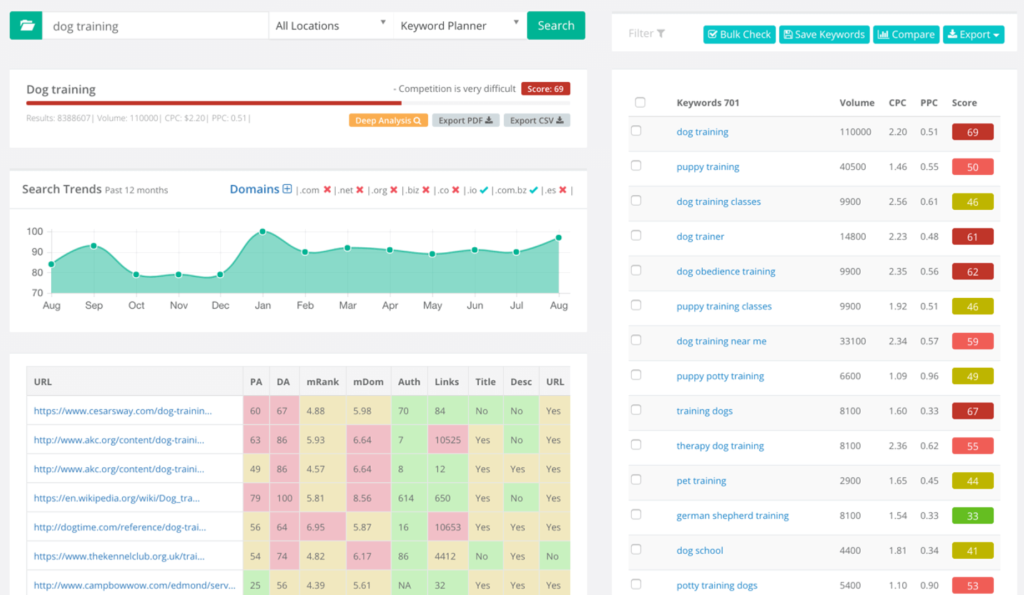
- Select search queries with commercial intent. “Is it possible to take a hair dryer in hand luggage?” is an informational query, while “Buy a cabin-size suitcase” is a transactional or commercial query that is more likely to attract a potential buyer.
- Sort your search queries based on how difficult it is to promote them. Consider the competitiveness of the query and the parameters of your website. Established websites with high domain authority (DA) can target more competitive search queries. However, if you’re just starting affiliate marketing, target less difficult queries.
When creating content, make sure yours is at least as good as your competitor’s content. This includes both the length and quality. If the top-ranking pages on Google for your chosen keywords are long-form articles with lots of images, you won’t attract much traffic with short, text-only content. You can also experiment with different types of content, such as:
- Blog posts with personal opinions
- Product reviews
- Tutorials
- Comparisons
4. Build your audience
Affiliate marketing works by attracting an audience that will purchase the products or services you endorse. Many affiliate marketers rely on SEO and organic traffic as their main source of website traffic. For instance, Travelbybrit.com founder Brittany Sawyer’s website traffic is distributed as follows:
As you can see from the example, Google and other search engines are not the only sources of traffic. You can also attract traffic from:
- Social media
- Newsletters
- Third-party websites
- Video platforms (YouTube, TikTok, and others)
- Paid ads
- Direct (people who save your website and come back on their own)
Moreover, you can drive traffic both to your site and directly to the advertiser’s site if this is not prohibited in the rules of the affiliate program.
Successful affiliate marketers usually combine multiple channels to drive traffic from different sources simultaneously. This reduces the reliance on a single platform and can increase the overall traffic volume when content on different channels works in combination. For example, you can build your email list from organic traffic and eventually get a boost in traffic from it.
5. Promote affiliate products
Promoting affiliate products is a crucial point for all the most effective affiliate marketing strategies. Here are some fundamental practices you should follow:
- Ensure that any affiliate products or services you promote are relevant and useful to your audience. The goal is to help your audience solve a problem or fulfill a need. For instance, if you’re writing an article about the top attractions in Paris, you could include links to tickets for those attractions through the Viator Affiliate Program.
- Place affiliate tools in the right place for the reader. Simply adding a link at the beginning of an article may not always be effective. The tools should appear where the reader needs them the most for maximum impact. If you don’t want to figure out the best placements manually, Travelpayouts Drive can do it for you. Drive analyzes your website content and visitor behavior, then automatically adds affiliate tools where visitors are most likely to book.
- Make affiliate links visible and clear. This is a basic rule for any link: they should be visually different from the other text (for example, by color and underlining). Links should also clearly communicate what users can expect when they click on them. So include a descriptive anchor text, such as “Book cheap flights to Dallas,” or provide context for the link in the surrounding text.
- Use different affiliate tools. In addition to links, there are other tools, such as widgets. Experiment with different formats to identify the most effective approach.
6. Monitor, test, and optimize
As part of any successful strategy, make room for three essential things: monitoring, testing, and optimization.
You can monitor the results of your work both within the affiliate account and using third-party tools like Google Analytics. With analytics, you can make data-driven decisions that lead to better results. By monitoring the performance of your affiliate marketing efforts, you can identify the most effective ideas and abandon less successful ones.
If your blog uses WordPress CMS, you don’t even need to set anything up manually. You can simply use the official Google Site Kit plugin. Here’s what it can look like:

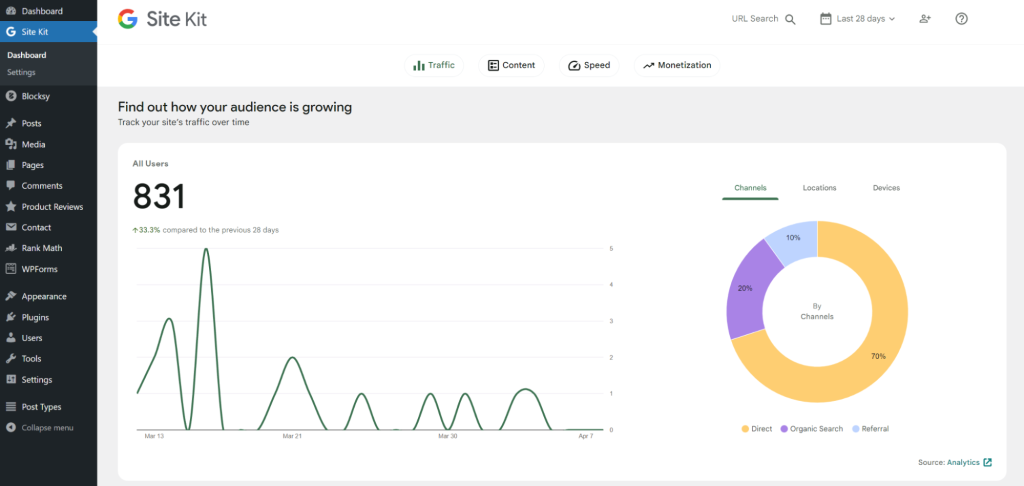
Additionally, testing should be part of your strategy to explore different products, promotional tactics, and content formats. Based on the monitoring and testing data, you can optimize your marketing strategy. For example, you might opt out of some affiliate programs or improve the depth of your content as a result.
Affiliate marketing strategy examples
Depending on your niche, you may use different affiliate strategies or even combine them. Let’s take a look at some of the most popular examples.
Content marketing strategy
Content marketing strategy uses SEO blog or website content to attract organic traffic from Google, AI chatbots, and other sources.
A typical customer journey in this affiliate marketing funnel starts from a search query. Then the user visits your blog, reads a review or another post. From the review, the user clicks on an affiliate link and makes a purchase. Conversions happen at the advertiser’s website.
For example, someone searches for “best boat trips in Porto” and clicks on the Olá Daniela blog. The article includes affiliate links to GetYourGuide, following which the readers book tours and bring the blogger affiliate commissions.


Why this strategy is effective: Blog content allows for placing affiliate links natively, and it’s easy for the customers to then continue to the advertiser’s website. You also have an opportunity to build trust with the audience with helpful content, which makes your readers more likely to convert. You can target various stages of the buyer’s journey and enjoy the long-term benefits of evergreen content that never stops bringing new visitors.
Email marketing strategy
Essentially, you convert organic traffic or traffic from social media to your email subscribers. You can then promote affiliate products to your audience right in the email newsletters.
The customer journey starts from a lead magnet page, which website visitors discover from search or social media. There, they fill in their personal information to get the checklist, guide, e-book, or any other useful content you offer. Once they do that, they start receiving an email sequence.
The first email includes the lead magnet, and the subsequent ones nurture the audience and promote affiliate products or services. You can use automation to personalize email series for different lead magnets and audiences. In this strategy, conversion also happens on the advertiser’s website.
For example, Danny in the North blog article about a Northern European itinerary includes a subscription form. Readers who found the article in search results can become email subscribers and get affiliate offers directly into their inboxes.

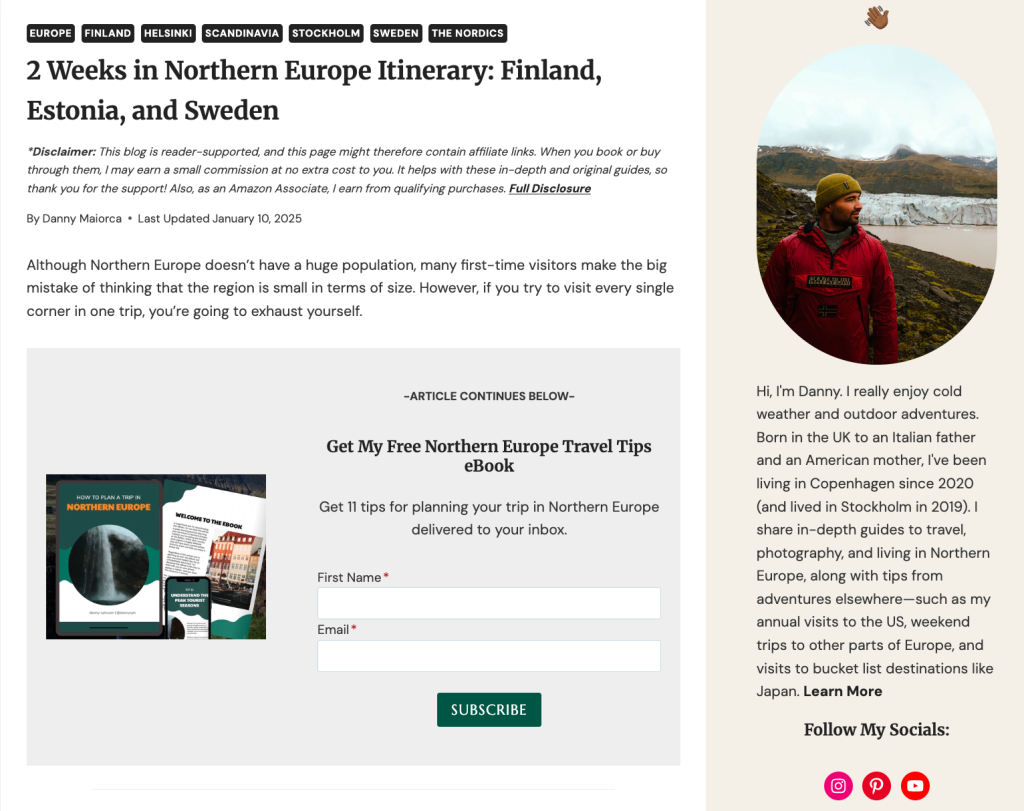
Why this strategy is effective: While search traffic and social media are prone to change, email is consistent. You can reliably reach your subscribers’ inboxes, no matter what. With email marketing, your messages can be personalized to target different audience segments.
Social media strategy
When people discover you on social media, you can lead them to a landing page with an affiliate offer.
For example, you create a TikTok video or an Instagram post with an affiliate product review and add a link to a dedicated landing page to your profile. Your followers then follow this link, get more information about the offer, and buy the product or service on the advertiser’s website. Just like with other strategies we mentioned, conversion doesn’t happen on your side, but later in the customer journey.
Katie Caf is a great example of using Instagram for affiliate marketing. The blogger posted a video about her trip to Japan, asking users to comment a keyword to get a link to the experiences she showed. Thanks to automation, the commenters got affiliate links, and Katie earned commissions. She also used a personal discount code for sales attribution.


Why this strategy is effective: Social media algorithms promote content, so your posts may be seen by more than just your followers. Video and image-based content dominate the internet and can be more persuasive, especially when it comes to lifestyle niches.
YouTube strategy
People searching for videos on YouTube or Google can find your tutorial. If you interest them, a typical customer journey continues to a product review video, where users get more information. They access affiliate links in the video description. Clicking on them, they go to the advertiser’s website, where conversion happens.
This journey can also be shorter. For example, if someone searches for the best waffles and finds this video, they get several options to choose from and several corresponding affiliate links at the bottom. Thanks to search, even affiliate marketing beginners with a small following can get viewers and make money if they produce good content.


Why this strategy is effective: YouTube acts as another search engine, attracting motivated buyers and helping you make money with affiliate marketing. Just like with other social media platforms, video content is persuasive and builds trust with the audience. Plus, your content will bring you ad revenue and continue to attract traffic even after the publication date.
Affiliate marketing strategy tips for beginners
Affiliate marketing is a great source of passive income. With a strategic approach, you can start earning commissions even without an initial investment. Follow the recommendations below to achieve your goals more quickly.
Start with one niche
Even if you’re really interested in several niches, limit yourself to one. This will focus your attention and efforts, help build a recognizable personal brand, and create a trusting relationship with your audience.
Plus, if the results don’t match your expectations, you’ll clearly know that you need to pivot. Whereas if you tried working in both parenting and travel, for example, you won’t be able to understand which was more effective.
Often, it’s better to go even more granular. Tokyo Chapter, one of the successful affiliate website examples, is dedicated to the eponymous city and other Japanese destinations.


Diversify traffic sources
Your blog article can attract a lot of visitors today, but suddenly lose traffic tomorrow. Google updates, AI search, and changes to social media algorithms can damage your affiliate marketing strategy if you rely on just one channel. Diversify your traffic sources instead.
You don’t have to come up with a custom strategy for every platform, though. Focus on several major ones and repurpose content as much as possible. For example, if you posted an article about your trip, you can use photos from it for an Instagram carousel.
Promote products you have used
Customers seek out reviews to get a real-life feel for what they’re considering, and they don’t need generic product information. Therein lies your competitive advantage – if you know what you’re talking about, they’ll listen to your recommendation.
People trust marketers who share their first-hand knowledge and experience. When you’ve become familiar with a product or service, you can better promote it. For example, if you’ve been to a hotel yourself, you’ll be able to share more details about your stay, from the taste of breakfast to the friendliness of the staff.
For example, Jessica Lynn emphasizes the personal nature of her content right in the articles’ titles.


Build an email list early
Even if you only have two subscribers, your email list is your biggest asset. It’s a foundation for your long-term success that allows you not to worry about social media or Google algorithm changes.
Create a lead magnet to go with your best-performing content, make a simple email sequence, and send occasional updates to keep in touch with your subscribers. This is already a good start and an additional channel you can use to promote affiliate links.
Track performance metrics
Measuring your content performance gives you perspective. You can see whether you’re improving and whether you need to try something new with your approach.
Compare content performance to see which topics and products appeal to your readers the most and track your earnings from various affiliate programs to understand which one brings the best bang for your buck.
What is the most effective affiliate marketing strategy?
There’s no single most effective affiliate marketing strategy. It depends on your skills, target audience, niche, and other factors.
Some of the best strategies that work for a range of products and services include:
- Content marketing and SEO
- Email marketing
- YouTube reviews
- Comparison articles
These strategies are tried and tested and bring stable traffic and conversions.
How to measure affiliate marketing strategy success
Depending on the channels you use, you should track the following metrics:
- CTR (click-through rate) is the percentage of your audience that clicked on an affiliate link. Low CTR indicates that your content, link placement, or design might need improvement. It can also show that your readers don’t understand where the link will lead them.
- Conversion rate is the portion of your audience that performed the desired action, for example, bought a product or booked a tour. A low conversion rate can be a sign of an offer and audience mismatch.
- EPC (earnings per click) shows how much money you get from a single click. You can use this metric to compare high-ticket affiliate programs to low-ticket and high-volume ones to see which one is worth it for you.
- Revenue measures your overall affiliate marketing earnings. Tracking revenue helps to see which factors affect your income, for example, seasonality, algorithm or program requirement changes, etc.
- ROI (return on investment) is a universal metric used to assess how profitable your strategy is. Low ROI indicates that you spend too much on marketing and aren’t getting enough from it, while high ROI can indicate that your strategy is effective.
- Email Subscriber Growth is the net increase in your subscribers over a certain period. It takes into account both those added to your list and those who unsubscribed. If subscriber growth is low, you will need to look into your newsletter promotion tactics or the email content itself.
Common affiliate marketing strategy mistakes
You might accidentally make your affiliate marketing strategy less effective, especially if you’re new to it. Make sure you avoid these typical mistakes:
- Promoting too many products. When you promote too many offers at once, your content may become less targeted, and you risk alienating your audience with too many ads. You need to build trust and your personal brand first, and only then explore more products.
- Ignoring audience intent. Your customers won’t click on a link if it’s irrelevant to them. Affiliate offers should complement the customer journey and come at the right moment. If you want high conversions, target keywords with commercial intent and don’t squeeze in ads into strictly informational content.
- Relying only on social media. Limiting yourself to just one channel is risky: if the social media algorithm changes, your income might take a significant hit. Combine social media with email and blog content. This way you’re investing in content that stays relevant longer and get direct access to your email subscribers.
- Not collecting emails. Ignoring email marketing is detrimental to your affiliate marketing strategy. If a social media platform limits your reach or your website goes down, you lose contact with your audience. Email is easier than you might think, and it’s worth setting up even if you won’t have a lot of subscribers.
- Choosing offers based only on commissions. Only promote the products and services that are relevant and genuinely beneficial for your audience. If you make a decision on commissions alone, you won’t get a lot of conversions and may annoy the customers.
- Not tracking conversions. Conversions show the strength of your relationship with the audience. If you ignore the analytics, you won’t see the warning signs and won’t understand when your strategy needs tweaking.
FAQ about affiliate marketing strategies
What are the advantages of an affiliate marketing strategy?
An affiliate marketing strategy gives structure to your efforts. With a detailed plan, you know exactly what to do and how to do it, focus your efforts, and can adjust if something doesn’t work.
Which affiliate marketing strategies work best for beginners?
Best affiliate marketing strategies for beginners include building a presence on social media and using SEO blog content. If you don’t have a website, you can start with Instagram, TikTok, or YouTube.
How long does it take to see results?
It can take your affiliate marketing strategy to start bringing results from one month to up to a year. This depends on your chosen strategy and niche. Affiliate marketing ads bring results the fastest, while blog content tends to take more time to get traction.
Final thoughts about affiliate marketing strategy
Not every affiliate has a clear strategy, which often makes the work significantly more difficult. But if you’re thinking about creating your own, you’re on the right track.
A trusted partner can make your strategy even more effective. Join the Travelpayouts partnership Program and see your favorite travel affiliate programs in one place, complete with statistics and AI tools for smart monetization.
Join the Travelpayouts partnership platform
Join todaybrands