
Why AI matters for affiliate marketing
According to Impact’s report on affiliate marketing, 96% of creators integrated AI-powered tools into their work. While the same research shows marketers feel pressured by this broad adoption, AI also brings many opportunities.
Here are some of the ways affiliate marketing AI tools can benefit your strategy:
- Save time on repetitive tasks. When you need to create tens of pin descriptions for your Pinterest marketing or write several YouTube or TikTok captions weekly, AI can get the job done quicker with good templates and prompts.
- Speed up content creation. Competitor research, trend watching, and creating SEO-friendly article outlines can be challenging, but AI can support these processes.
- Improve SEO research. Specialized tools ease keyword and backlink research, provide insights into competitors’ performance, and more.
- Help optimize conversions. With the help of AI, you can identify which segments of your target audience are ready to make a purchase, use on-site personalization, and launch A/B tests faster for conversion optimization.
- Automate marketing workflows. Affiliate marketing automation can help you streamline your strategy from choosing the right offers to promote and doing research to editing, repurposing, and updating your content.
- Support data-driven decisions. AI tools can help you analyze your performance metrics, get actionable, data-backed recommendations, and produce content that will resonate with your target audience.
Quick comparison of the best AI tools for affiliate marketing
| Tool | Main purpose | Free plan | Ease of use |
| ChatGPT | Content marketing and SEO-related tasks | Yes | Easy to use |
| Surfer SEO | SEO optimization | No | Easy to use |
| Manychat | Conversational marketing automation on social media platforms | Yes | Complex automations might be harder to build |
| HubSpot | Content and customer management, email marketing | Yes | Has a learning curve |
| GetResponse | Email marketing, course and webinar creation | Yes | Easy to use |
| Travelpayouts Drive | Content monetization | Yes | Easy to use |
| Canva | Image generation, image and video editing | Yes | Easy to use |
| Midjourney | Image and short video generation | No | Requires good prompt engineering skills |
| invideo | Video generation and editing | Yes | Easy to use |
| Claude | Content marketing and SEO-related tasks | Yes | Easy to use, but requires learning for advanced use cases |
1. ChatGPT
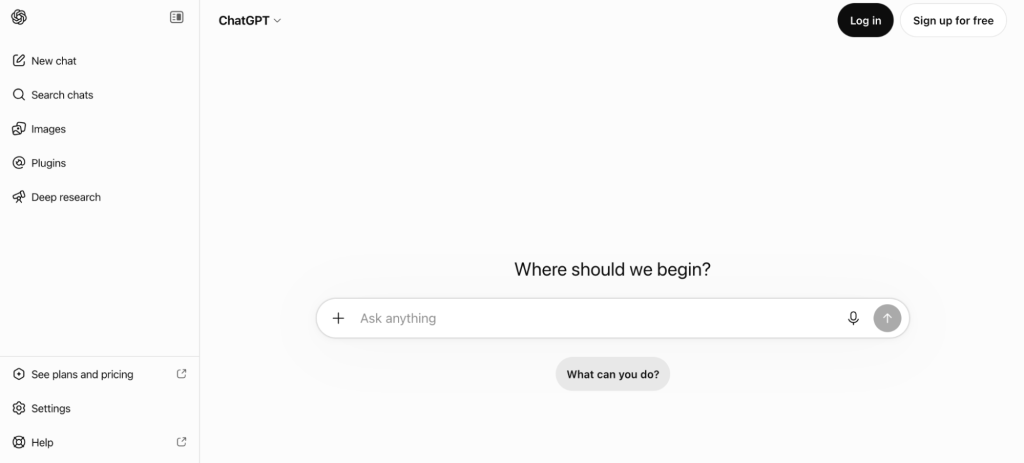
ChatGPT is OpenAI’s chatbot used by millions of people, including marketers, for work and organization.
Best for: keyword ideas, generating content ideas and outlines, brainstorming, summarizing market research and competitor insights.
Key features: web search, AI image generation, image and video analysis, voice conversation, coding, integration with other tools (Clay, Slack, Google Drive, etc.).
Free plan: yes. Comes with unlimited text chats with GPT-5.6 Luna; other capabilities are limited.
Pricing: starts at $8 per month for longer memory, more advanced models, custom GPTs, early access to new features, and more.
Pros:
- Wide variety of use cases for content optimization and automation
- One of the industry leaders
Cons:
- Not a specialized tool, so requires more prompting and tailoring
- Prone to hallucinations
- Ethical concerns when it comes to the company’s policies and personal data
2. Surfer SEO
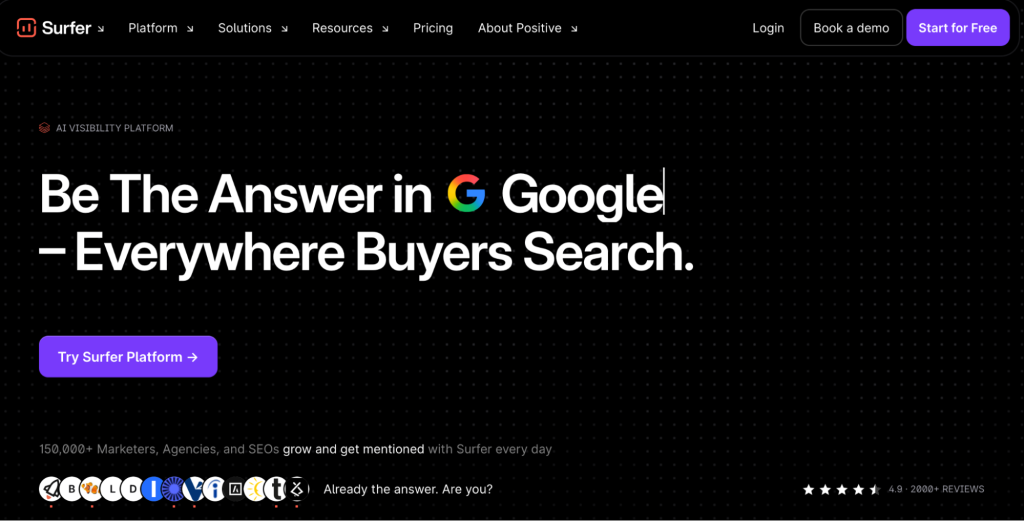
Surfer is an online visibility platform with SEO and GEO-focused tools for businesses and marketers.
Best for: optimizing your content marketing efforts for search engine and AI visibility.
Key features: SEO audit, keyword suggestions, content and competitor monitoring, content and article outline generation.
Free plan: no, only a trial.
Pricing: starts at $49 per month (billed yearly), with content generation and optimization features for 120 documents, content audit, and tracking. Higher tiers provide access to AI visibility tracking and optimization, AI writing customization, and collaboration features.
Pros:
- Specializes in AI search visibility – a growing organic traffic source
- Provides a full set of tools for content marketing management
Cons:
- Costly for individuals
- Rank tracking is a paid add-on
3. Manychat
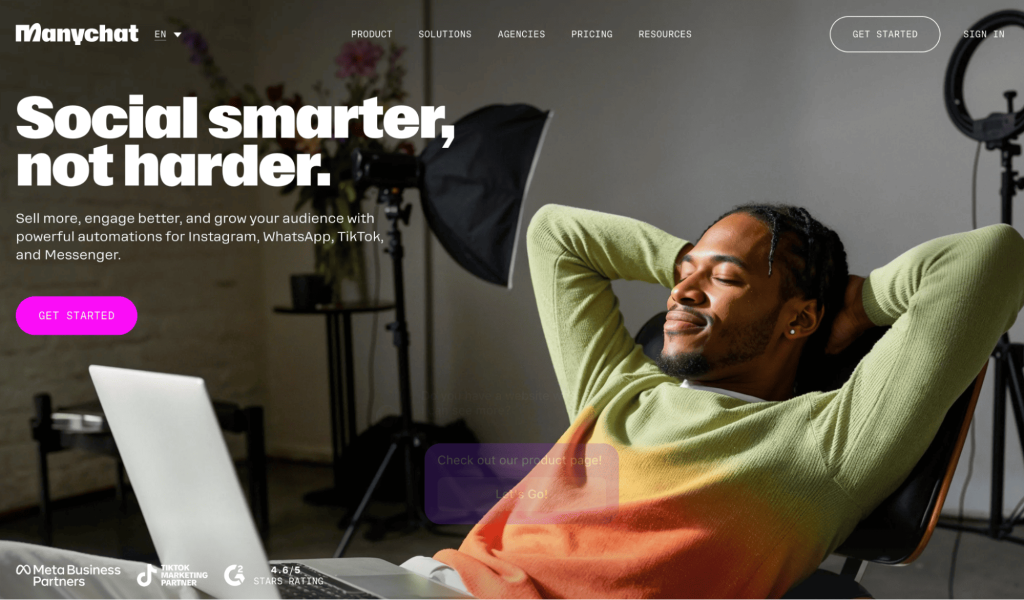
Manychat is an automation tool for chat marketing that works across popular social media platforms and messengers.
Best for: conversational marketing automation on Instagram, TikTok, and other platforms.
Key features: direct messages and comment automation.
Free plan: yes, comes with 25 active contacts per month, two channels, and up to four basic active automations, among other features.
Pricing: starts at $14 per month (billed yearly), with 250 active contacts per month, two channels, unlimited custom automations, and more.
Pros:
- Useful and affordable for Instagram affiliate marketing and other social media
- Many available channels, including Instagram, Facebook Messenger, TikTok, WhatsApp, Telegram, SMS, and email
- User-friendly interface
Cons:
- Doesn’t include a complete CRM system
- Complex automations might be harder to build
- Expensive at scale

Jessie Fiesta from Jessie on a Journey and Epicure & Culture blogs, the founder of Travel Blog Prosperity and NYC Photo Journeys
Jessie uses Manychat as a bridge between her Instagram and newsletter, making email list-building more efficient:
Manychat has been transformative for Instagram conversions. My weekly carousel promoting my paid newsletter has driven consistent subscriber growth. If you’re not using Manychat for email list growth, it should be a priority.
4. HubSpot
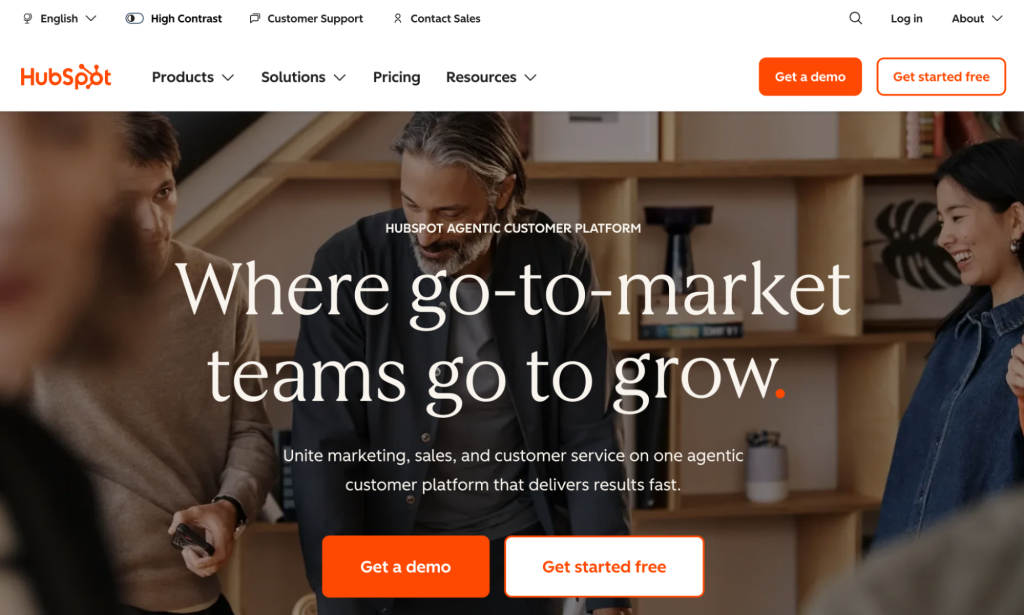
HubSpot is a customer management platform with sales, marketing, support, and automation features.
Best for: managing your content, client base, and email marketing in one place.
Key features: CMS (content management system) for your website, email marketing and automation, CRM system, AI agents, social media and Google Ads campaign creation and launch, sales automation, forecasting.
Free plan: yes, HubSpot offers some marketing, sales, service, content, data, and revenue tools for free.
Pricing: customizable, product-based pricing. Starts at $7 a month (billed yearly) for Marketing Hub features.
Pros:
- CMS, CRM, and marketing automation features in one platform
- Customizable features
Cons:
- High and complex pricing
- Beginners may find it difficult to navigate
- Lower email deliverability
5. Travelpayouts Drive
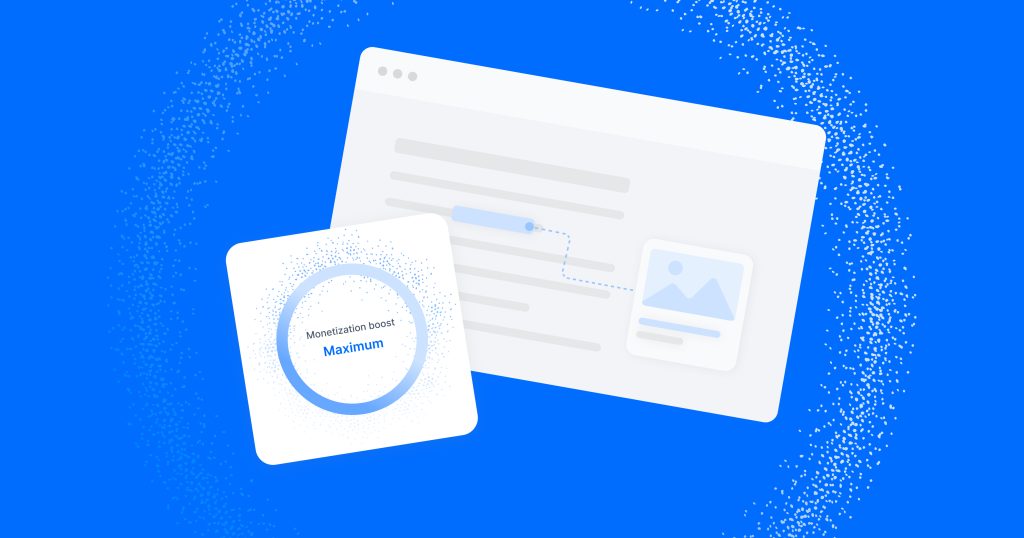
Travelpayouts Drive is an AI-powered monetization system for travel creators.
Best for: automating and optimizing content monetization.
Key features: automatic keyword linking, contextual recommendations, interactive link previews, targeted offers for interested customers in background tabs.
Free plan: yes, Drive is completely free to use.
Pricing: free for everyone, no fees or commissions.
Pros:
- Easy to use
- Doesn’t impact your website’s SEO and doesn’t interfere with other scripts
- Customizable: you can manually choose website pages and Drive functions to use
Cons:
- Only works for websites
6. GetResponse
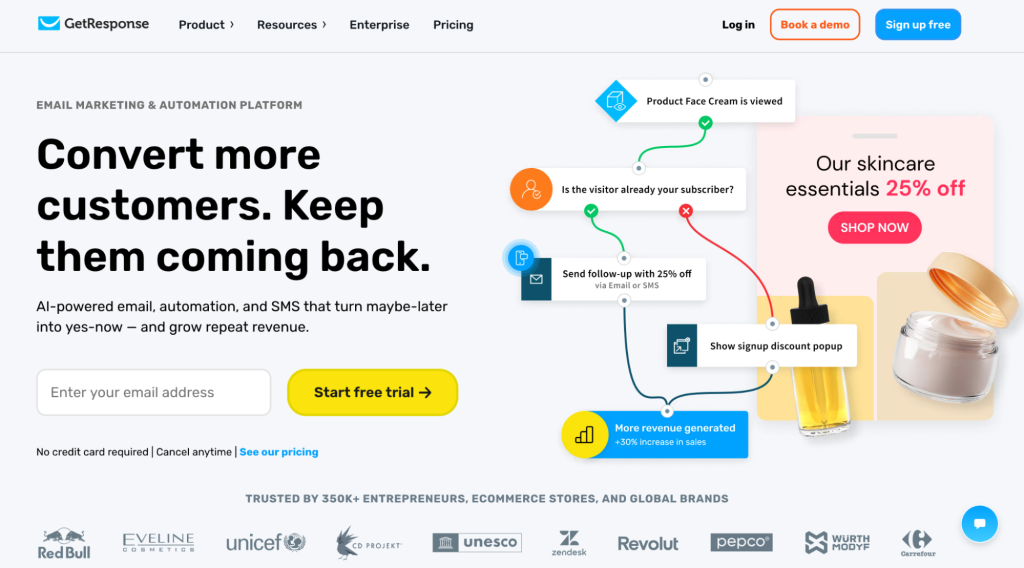
GetResponse is an AI-powered email and marketing automation platform.
Best for: email marketing communication, selling courses, and hosting webinars in one integrated platform.
Key features: email marketing and automation, landing page and website builder, e-commerce integrations, course creator, and webinars.
Free plan: yes, comes with 500 contacts, 2,500 monthly emails, one landing page, and a 14-day trial of premium features.
Pricing: starts at $15.58 per month (billed yearly) for 1,000 contacts, unlimited emails, one custom automation, and more.
Pros:
- Integrated automation, webinar, and course creation features
- Easy to use
Cons:
- Lacks advanced automation and CRM features
- Paid newsletter, courses and webinars, and other helpful features are available only on higher-tier plans
7. Canva
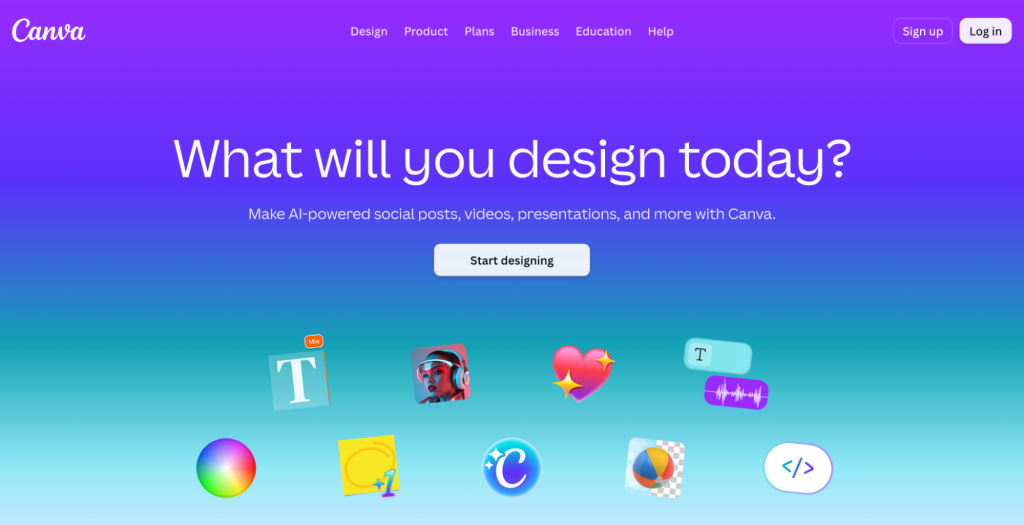
Canva is a design platform for social media, email, print, and more, working with both images and videos.
Best for: AI content creation and coding, quick and precise editing across formats.
Key features: image and video editing and AI generation.
Free plan: yes, comes with the editor, free templates, and up to 200 Standard AI uses, or 20 premium AI uses.
Pricing: starts at $18 per month for premium templates and tools, ten times larger AI allowance, Canva AI 2.0 for on-brand content generation, and more.
Pros:
- Easy to use with an intuitive drag-and-drop editor
- Generous free plan
- Many templates for different use cases
Cons:
- Can be slow when working with complex designs
- Lacks advanced design and customization features other professional design software offers
8. Midjourney
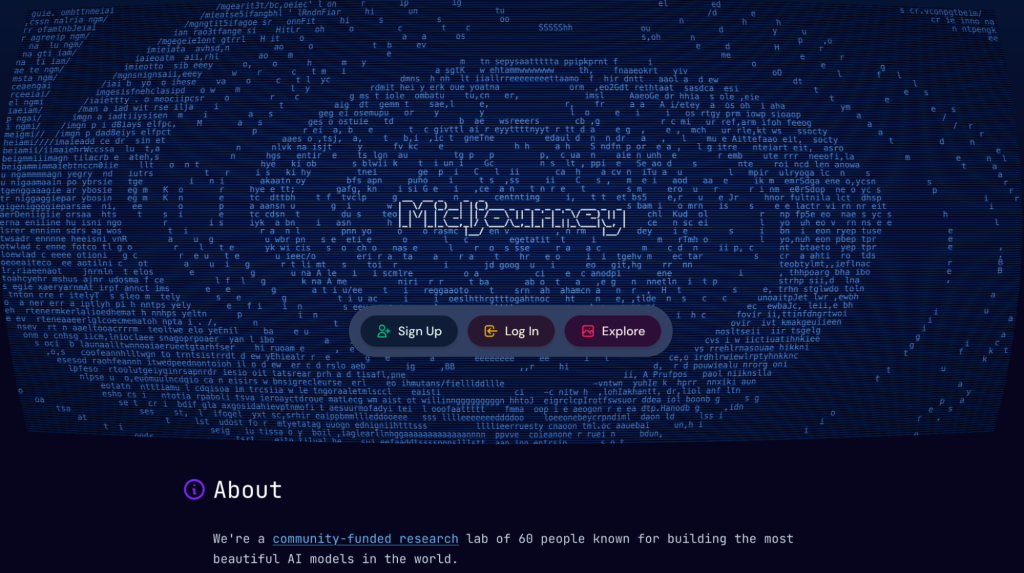
Midjourney is an AI image generation platform that you can also use to make five- to 21-second videos.
Best for: creating detailed images based on prompts.
Key features: image generation.
Free plan: no, a limited free trial is available via the niji · journey app.
Pricing: starts at $8 a month (billed yearly) for 3.3 hours of fast GPU Time (time to process a task), 3 concurrent image prompts, General Commercial licence, and more.
Pros:
- Realistic and detailed image generation
- Responsive to detailed prompts
Cons:
- Requires careful prompt engineering for desired results
- Expensive at scale
- All AI-generated works are made public unless you pay for premium subscriptions
9. invideo
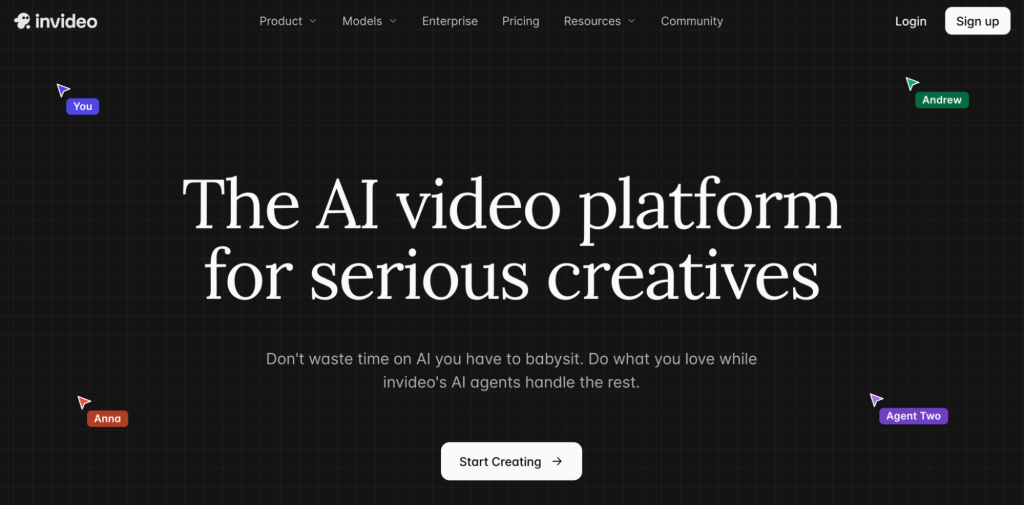
invideo is an AI video creation platform that also allows users to edit images.
Best for: end-to-end social media and ad campaign video generation, from visuals to music or voiceover.
Key features: AI video generation, AI avatars, image generation, voice and music generation, image and video editing.
Free plan: yes, comes with a limited number of credits.
Pricing: starts at $17 a month (billed yearly) for 75 credits for content generation, access to all AI models and workflows, 4 avatars and voice clones, and more.
Pros:
- Access to image, video, and audio generation in one platform
- Access to the most popular AI models on the market
- Big template library
Cons:
- Reviewers note that the platform rapidly consumes credits
- Generation can be slow
10. Claude

Claude is a chat-based AI assistant for various tasks, from writing to coding.
Best for: brainstorming, research, generating content drafts and outlines, competitor analysis.
Key features: web search, document generation, coding, integrations with other tools.
Free plan: yes, comes with limited usage and models.
Pricing: starts at $17 a month (billed yearly) for more usage and models, Cowork, Code, Design, and other features.
Pros:
- Biggest ChatGPT competitor with millions of users
- Versatile features, suits both beginners and advanced marketers
Cons:
- Can hallucinate
- Requires user training for advanced tasks
How to use AI tools for affiliate marketing
AI in affiliate marketing can support workflow automation across different stages of your strategy. From helping you find the best ways to promote affiliate links to giving you affiliate performance insights, learn how you can benefit from these tools.
Keyword research
Use ChatGPT or a similar tool to generate keywords for your niche and subniche, specifying buying intent. For example, your prompt can be something like “I’m looking to create content promoting products from outdoor affiliate programs. Provide keyword ideas for purchasing and how-to guides, comparisons, and specific product reviews. Prioritize keywords with a clear buying intent and avoid informational keywords.”
Once you have a list, check it against your SEO tool data, researching keyword difficulty, search volume, and other SERP (search engine results page) characteristics.
After that, you can use AI to create keyword variations and generate a list of long-tail keywords, pulling from forums like Reddit to match the customers’ actual language. You can also use AI to analyze buyer intent and their stage in the affiliate marketing funnel, then build topic clusters.
Content creation
For some, AI content creation has become part of their affiliate marketing strategy. You can use chatbots and specialized writing tools to find ideas, generate outlines, and even article drafts. However, there are compelling reasons not to outsource the process completely and instead use AI for smaller, lower-stakes tasks.
Jessie Fiesta from Jessie on a Journey and Epicure & Culture blogs, the founder of Travel Blog Prosperity and NYC Photo Journeys
Jessie notes that personal experience and audience trust act as differentiators. Plus, authenticity helps to build trust, which is essential to success in the best affiliate marketing niches:
AI can write accurate general information about a destination. It cannot write the thing I’d text to a friend. And trust itself – which is earned over time through consistency, specific recommendations, and being right. When someone has booked a trip based on my advice and had a great experience, that relationship exists between us. It doesn’t transfer to a model.
So instead of generating content from scratch, you can use AI tools to:
- Repurpose your blog content for other platforms, like social media
- Create bullet points for your content outlines
- Transcribe audio and videos
- Generate alt-text and captions
- Find ways to improve your content
- Look for affiliate marketing website examples for inspiration
SEO optimization
You can use Surfer SEO or similar tools to analyze your content and suggest heading improvements, identify content gaps, and create topic clusters to strengthen your authority. Another option is to directly compare your content to your competitors to find ways to outrank them.
Social media content
The simplest way to use AI tools for social media is to repurpose your long-form content, like creating short clips or posts. Other use cases include:
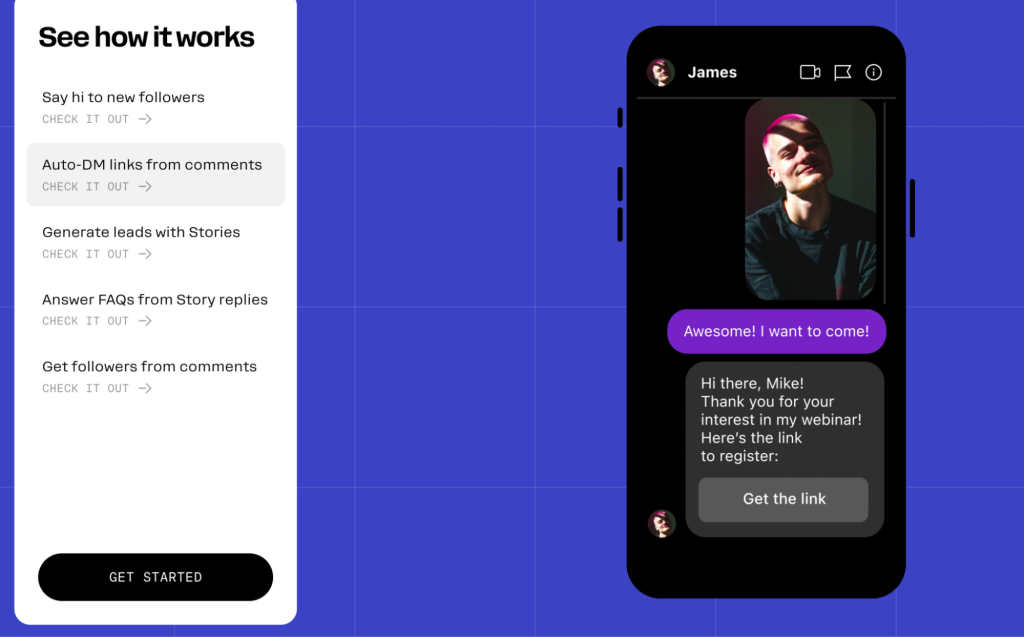
- Automating messaging and comment replies, running giveaways, building your email list, and generating leads via Manychat and similar tools
- Generating captions and transcripts
- Drafting video scripts
- Finding relevant hashtags to use
- Creating visuals or videos
Email marketing
For your own email newsletter, AI can add personalization, segment your subscribers, create sequences, and speed up A/B testing. Some platforms can also generate entire email layouts, analyze your content, and give recommendations.
AI tools can also speed up your email outreach to brands, adding a personal touch and scheduling follow-ups.
Performance analysis
AI can identify the patterns in customer behavior or content performance that you might have missed. Agents can compile data from different sources for a holistic view of your strategy, create reports, and help you improve your results. Based on these insights, you might decide to focus on the best affiliate programs for you and boost your earnings.
Paid advertising
With AI, you can create affiliate marketing ads faster and generate hook, visual, and CTA variations to test and improve your efficiency. You can also ask a chatbot for ideas based on audience segments, affiliate products, and trends.
Content monetization
AI can help you increase how much you earn with automatic product displays, linking, and retargeting those who were interested but haven’t made a purchase.
If you’re a travel creator, Travelpayouts Drive can help you automate keyword linking, turn regular links into affiliate ones, and more. Bloggers use Drive to earn more from their traffic, like Hong Chen from Yuriself Media, who tripled his income thanks to this AI system.
Best AI tool by task
AI chatbots may seem universal, but dedicated tools can work better for specific tasks. Here’s a table you can use for reference:
| Task | Recommended AI tool |
| Writing | ChatGPT |
| Keyword research | Surfer SEO |
| Images | Midjourney |
| Design | Canva |
| Video | InVideo |
| Email marketing | GetResponse |
| Social media | Manychat |
| Content monetization | Travelpayouts Drive |
How to choose the right AI tool
The AI industry has boomed, and it can be challenging to find a suitable tool. Here are some aspects you should consider:
- Budget. If you’re starting affiliate marketing with no money, look for free or affordable platforms to test out the approach. You can always scale when you achieve your first results.
- Features. Depending on your prompting skills and needs, you can either use a dedicated tool or find one that handles multiple tasks.
- Integrations. If you already use other affiliate marketing tools, check whether the new one can connect to them. For example, if you have a CRM, your email marketing platform and chat marketing automation tool should work together.
- Ease of use. Read and watch reviews to see the AI platform in action. If it’s intuitive and user-friendly, you can add it into your routine quicker.
Common mistakes when using AI for affiliate marketing
Though AI tools can simplify your work and help you make money with affiliate marketing, they can also worsen your relationship with your audience and hinder your success. When adding AI and automation to your strategy, watch out for the following mistakes:
- Publishing AI text without editing. AI output lacks a human touch and your personal perspective. Often, it’s the sensory details and other specifics only you know that make the content appeal to readers.
- Relying on one tool. Different tools have their own unique strengths and weaknesses. If you only use one, chances are, you’re missing out on important context and industry developments.
- Ignoring EEAT. Google’s standards for content that ranks should be your priority whenever you work on something. Without these essentials, you won’t get search traffic.
- Copying competitors. Don’t just apply the techniques your competition uses. They might not fit your audience and jeopardize your audience’s trust.
- Not fact-checking AI output. AI can hallucinate and produce errors, especially when it comes to product characteristics. Always double-check the claims in the output.
If you need more guidance, consider affiliate marketing coaches or courses.
FAQ
What is the best AI tool for affiliate marketing?
The best AI tool for affiliate marketing depends on your goal and specific tasks you want to automate. For example, Surfer SEO works well for SEO optimization, while GetResponse can help you optimize your email marketing campaigns.
Are free AI tools enough for affiliate marketing?
Yes, free AI tools can be enough for affiliate marketing. If you’re just starting out or your audience is small, many platforms offer free plans that may suit your needs until you’re ready to scale up.
Can AI write affiliate articles?
Yes, AI can write affiliate articles. However, AI output tends to be generic, and as more and more creators use the same tools, generating articles loses its advantage. Consider using AI for smaller writing-related tasks, like creating article outlines or giving SEO optimization recommendations.
Can AI improve SEO?
Yes, dedicated AI tools can improve SEO. They can help you with keyword and competitor research, creating SEO-friendly article outlines, and more.
Which AI tool is best for beginners?
For beginners, chatbot tools are the best way to start using AI. Consider ChatGPT, Claude, or Google Gemini for broad and copy-related tasks, and Canva for designing.
Can AI replace affiliate marketers?
No, AI can’t replace affiliate marketing. Human judgment, expertise, and personal experience are still at the foundation of successful affiliate content.
Final thoughts
If you’re an affiliate marketer, AI tools can help you in many different areas of your strategy, from SEO optimization to content creation and analytics. This allows you to focus on what you truly enjoy – writing, filming, and interacting with your community.
Used well, AI can become your affiliate marketing partner. For travel creators, Drive can streamline monetization with automatic keyword links, interactive previews, and background tabs for booking-ready viewers. Combined with your unique content approach, it can help you easily earn more from existing traffic.