



What is automated affiliate marketing?
Automated affiliate marketing uses software, AI, and ready-made workflows to automate routine, repetitive tasks so marketers can focus on the most important parts of their job. You can automate link management, content creation workflows, email marketing, campaign tracking, reporting, lead nurturing, and performance optimization.
Automation allows affiliates, even those without deep technical knowledge, to run efficient affiliate marketing campaigns.
New to affiliate marketing? Start with how it works.
Why automate affiliate marketing?
Affiliate marketing involves many different tasks, and automation can make your strategy more effective and increase your affiliate earnings. Typically, you need to create content that attracts traffic, capture and nurture leads, as well as monitor and optimize your campaigns.
There are many reasons why you should automate affiliate marketing. Here are the biggest ones:
- Save time. Manually adding affiliate links to every blog article can take hours. With automation, you can do this in minutes.
- Reduce manual errors. People are prone to mistakes, but with AI and automation software, you can avoid them or catch them before anyone sees them.
- Scale campaigns. With affiliate marketing automation, you can run multiple email sequences at the same time, A/B test faster, and more.
- Improve consistency. Same with avoiding errors: automation software can help you keep track of campaign timing, calls to action, publication schedule, etc.
- React faster to performance changes. Automatic reporting and testing provide clarity and help you adjust your affiliate marketing strategy if something’s not working.
- Centralize data. Affiliate software streamlines your processes and keeps all necessary project context in one place.
- Personalize communication. Dynamic content, targeted offers, and behavior- and demographics-based personalization rely on automation. These approaches, in turn, make your content more relevant to your target audience.
7 ways to automate affiliate marketing
Many tasks can become less of a chore for you, with so much affiliate automation software available today. Here are seven main ways to automate your affiliate marketing business.
1. Automate affiliate link management
Affiliate links are essential to any affiliate campaign because they let brands and marketers track clicks and attribute sales. They directly affect your income, and if they’re broken or expired, you might lose conversions. However, as your platform and content grow, it can be hard to keep up with everything on your own.
Automation software can help you create, organize, and shorten links. For example, you can use Travelpayouts Drive to automatically convert all your links into monetized affiliate ones. This way, you can instantly start earning from them and see all your revenue in one dashboard.


Hao from Just a Traveler
Blogger Hao from Just a Traveler explains that the free Switch Links feature inside Travelpayouts Drive helped him manage affiliate links from different programs in one place:
It was very easy to enable. I only had to slightly adjust some of my old affiliate links from various programs so Switch Links could correctly detect and convert them.
Automation tools can also help you create deep links that take your customers to specific products or pages in mobile apps and simplify link tracking.
Plus, WordPress plugins like PrettyLinks can automatically monitor your website for broken links and set up site-wide redirects if an affiliate program changes their tracking system.
2. Automate content workflows with AI
Content is king when it comes to driving traffic and attracting leads to your affiliate marketing website. The only issue is that creating and optimizing content takes a lot of time and effort.
AI tools can help boost your content marketing strategy in several ways:
- Generating ideas for blog posts
- Creating blog outlines
- Repurposing your existing articles for other channels, like social media or email
- Assisting with drafts
- Supporting your SEO strategy
You can use ChatGPT or Copy.ai for these and other tasks, like creating headline variations, keyword research, etc. Or, you can try SEO-focused tools, like Surfer for a narrower purpose.

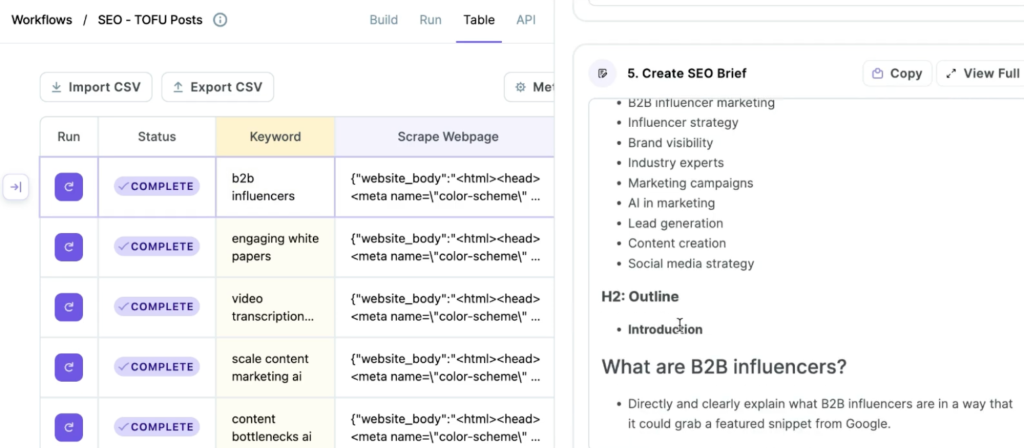
However, you need to supplement AI content generation with proper research and editing to ensure it fits your audience and contains no errors.
To learn how to use these and other AI content tools to write engaging and SEO-friendly blog posts, download our free guide.
3. Automate email marketing
Once you’re done building an email list, you can use this channel to nurture leads and promote affiliate links with relevant content. To save time and make your campaign more efficient, automate your email marketing process.
The right email marketing software can automatically send premade email sequences based on trigger events. For example, once someone subscribes to your list, you can send a welcome sequence that sets expectations for what comes next.
Many automation workflows use customer behavior, like viewing a particular website page or ignoring the last emails. These strategies correspond to stages of the affiliate marketing funnel and help you nurture your subscribers.
You can also set up periodic or seasonal affiliate promotions months in advance, so you don’t have to do it manually. When customers express interest but don’t purchase, automatic follow-ups help them reconsider.
Finally, email marketing platforms can suggest ways to segment your list. You group subscribers by demographics, interests, or past behavior (like purchases on your website) and send only relevant emails. This makes your messages more personal and brings higher engagement and fewer unsubscriptions.
Use GetResponse, Kit, or other platforms with automation and AI features to make your email marketing strategy more effective.
4. Automate social media publishing
Affiliate marketing on Instagram and other social media platforms is a great way to build your brand, reshare content, and engage with your audience. Automation makes the process a lot easier, as you can:
- Schedule your content, so you don’t have to log in and post manually.
- Repurpose existing articles, podcast transcripts, or videos with the help of AI.
- Cross-post to several channels at the same time using a centralized content calendar.
Tools like Buffer, Hootsuite, or Sprout Social also have features for content creation and in-depth analytics for all the platforms you use.

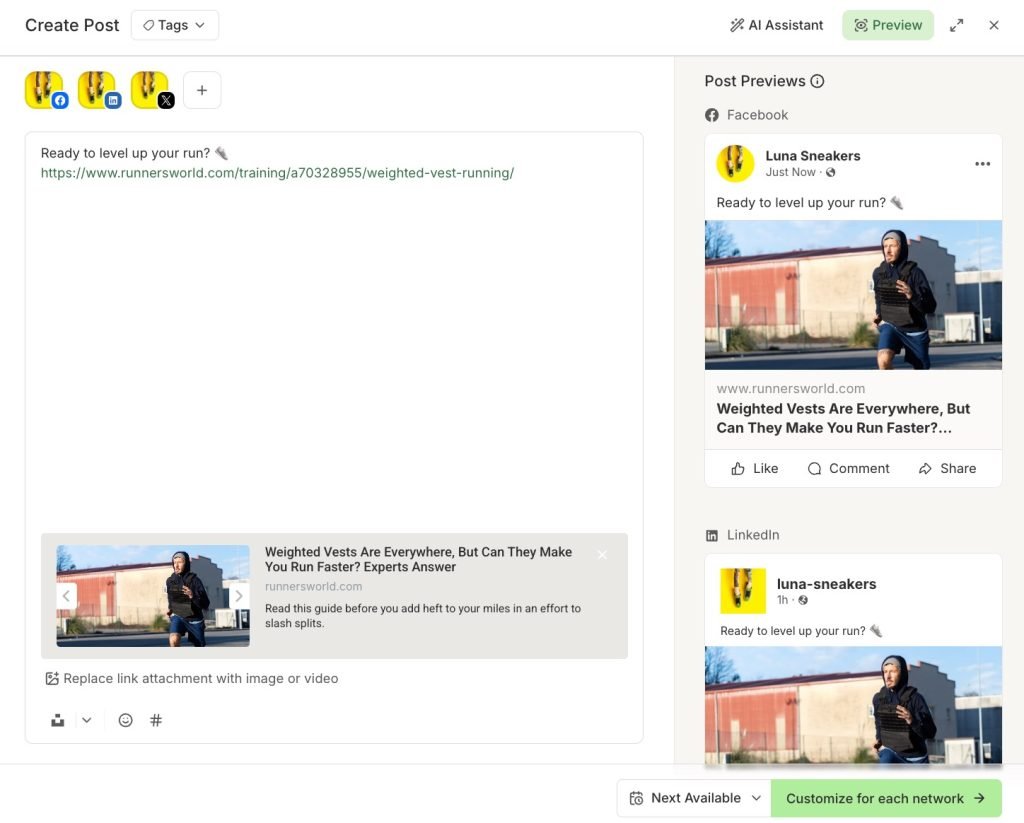
Although it can be tempting to post more, you should avoid publishing just for the sake of it. Impersonal, automatic posting can alienate your audience, who value authentic content.
5. Automate campaign tracking and reporting
Campaign tracking is a reliable way to see how effective your affiliate marketing strategy is and note your progress over time. However, monitoring key metrics like clicks, conversions and conversion rate, EPC (earnings per click), and revenue can take a lot of time, especially if you’re using several marketing channels and affiliate programs.
Instead of manually checking each source, use automation tools to access data in one place and get performance insights. Dashboards in analytics software provide a comprehensive view across several platforms, often supplemented with recommendations. You can both view your real-time performance and schedule daily, weekly, or monthly reports.
For example, Affilimate can pull data from different affiliate networks into one dashboard, Voluum helps track the performance of paid ads and optimize them, and Google Analytics gives you a detailed view of your website’s metrics.
6. Automate lead nurturing and customer communication
Your audience might count thousands of people, but each of them expects a level of personal communication. Automation software makes this personalization possible. Here are some examples:
- Segmentation. Email software can automatically group customers based on their interests, behavior, or demographics, so you can send them different content. So people exploring Asian destinations get a guide to China, while those looking for a European getaway receive a packing list for a week in Paris.
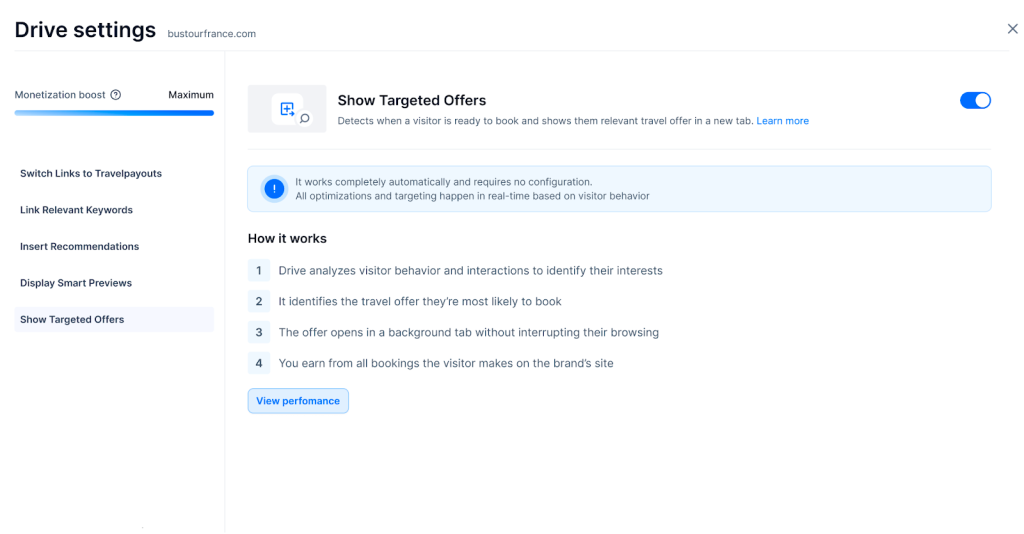
- Product recommendations. Automation software can pull the right offer for the right kind of person, and when a website visitor sees a relevant product, they’re more likely to make a purchase. For example, Travelpayouts Drive can open a background tab with an offer for interested customers.

- Automated responses. When a potential customer comments something on your lead magnet post or subscribes to your newsletter, Manychat, Chatfuel, or your email software of choice can automatically send a reply with requested content. This saves you time, offers new promotion tactics, and keeps your audience engaged even when you’re not working.
- Chatbots. Chatbots are a staple in AI affiliate marketing because they can automatically answer common inquiries and recommend products based on users’ interests and behavior. Chatbots can also collect data about potential customers to help you better understand your audience and optimize your campaigns accordingly.
7. Automate performance optimization
Instead of manually updating your dashboards, you can set up automatic alerts for important events. For example, you can get notified of a conversion drop or spike, traffic surge, or sudden cost-per-click increases. This allows you to react quickly and adjust.
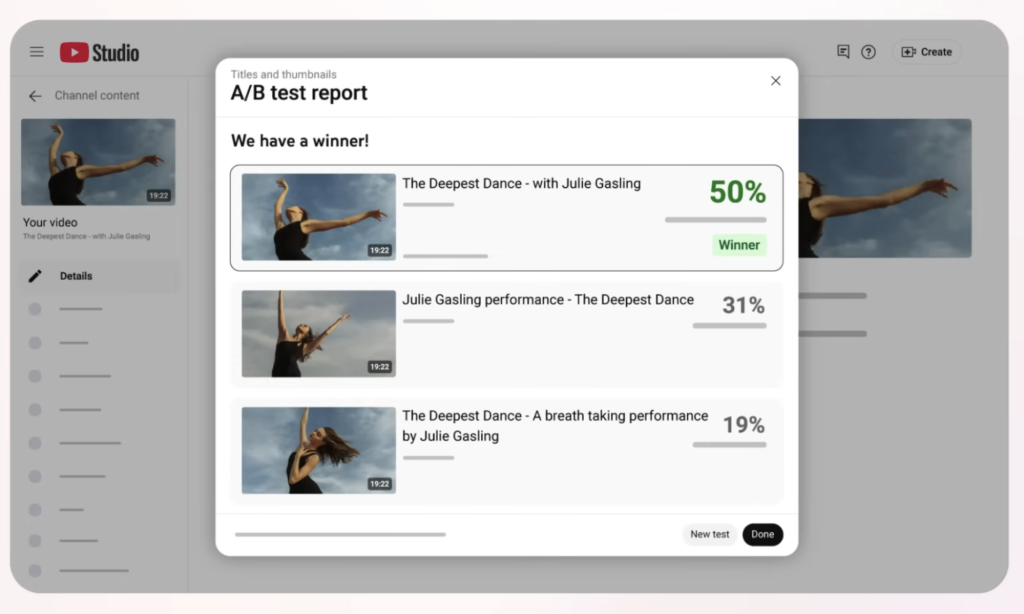
Automatic A/B testing workflows also work well for ads or social media content. On YouTube, you can test up to three thumbnails or video titles, and the platform will automatically choose the winning option after a set period. As a result, you get the most possible engagement.

If you’re using paid traffic, like Google Ads, the platform can automatically stop underperforming campaigns when cost-per-acquisition rises above an acceptable level or when an ad doesn’t drive conversions. For example, you can automatically pause campaigns you spent over $100 on that brought no conversions over a week. Another option is to automatically scale campaigns that perform well. Both strategies effectively allocate your campaign budget without extra effort on your part.
How to get started with affiliate marketing automation
Let’s now go over the steps to take if you want to make your routine work easier and more efficient.
1. Identify repetitive tasks
Start with a simple question: What’s often on my to-do list that I can automate? If you’re new to workflow automation, start with a smaller task. Here are some examples:
- Adding affiliate links to your blog articles
- Creating SEO-friendly post descriptions for Pinterest marketing or YouTube
- Repurposing podcast transcripts for your text-based content
- Creating welcome emails, promotional emails, follow-ups
- Publishing content on social media
- Replying when followers comment a keyword to get a lead magnet
- Tracking performance across several affiliate networks and direct programs
Don’t try to automate everything at once – this will make the process more challenging and harder to track. One of the easiest and most impactful changes to start with is link management. It’s the foundation of making money with affiliate marketing, so it directly affects your revenue.
2. Choose the right automation tools
Consider your needs and pick suitable automation and AI tools for affiliate marketing. Shortlist options and compare them based on price, features, and integrations. Though you won’t need it right away, check whether the tool can grow with you and has more than one application.
3. Test, monitor, and scale
Next, adjust your processes using the tool you picked. Test it in use and experiment with different tactics and approaches. Start small, and don’t scale until you confirm the automation works correctly. For example, schedule content for only one social media profile at first, or use automated DMs for only one lead magnet campaign.
Once the automation workflow is in place, track time spent on automated tasks now vs. before, compare conversions, click-through rate, and revenue for automated monetization, and engagement for social media.
Monitor these metrics over time and scale if the results are positive. You can explore other automation use cases or expand within one part of your strategy.
Best automated affiliate marketing software
Here are some of the best tools to help affiliate marketers automate their tasks. Start with this list for solid recommendations.
| Tool | Best for | Free plan | Pricing | Main automation |
| PrettyLinks | Link management on WordPress | Yes | From $249 per year | Branded short links on your domain, click and unique-click tracking |
| Travelpayouts Drive | Travel affiliate marketers | Completely free | Completely free | Change links to affiliate ones, add links and widgets, track revenue and other metrics |
| Claude | Content marketing | Yes | From $17/mo (billed yearly) | Brainstorming, drafting, repackaging existing content |
| Manychat | Conversational marketing automation on social media | Yes | From $17/mo for 250 contacts | Auto-replies, auto-DMs, giveaways, FAQs |
| Kit | Email marketing automation | Yes (limited automation features) | From $39/mo for 1,000 subscribers | Automated email sequences |
| Buffer | Social media management | Yes | From $6/mo for one channel | Content planning and scheduling across platforms |
| Voluum | Paid ads tracking and optimization | No | From $149/mo | Tracking data across channels, AI-powered traffic distribution, autobidding |
Prices checked September 30, 2026.
What you should not automate
It might be tempting to automate every part of your affiliate marketing strategy, but some tasks you should still do yourself.
Don’t fully automate these parts of your affiliate marketing workflow:
- Product selection. No matter how good your software is, you know your audience best. Matching affiliate programs and products to their interests, ensuring that the quality is good, and making the recommendation authentic should be done manually.
- Personal recommendations. Outsourcing experience-based content to AI quickly erodes trust. Your audience follows you for your expertise and unique takes, so keep them human.
- Fact-checking. Don’t rely on AI to fact-check information. You can automate initial checks, but always return to verify the product features, prices, and compliance.
- Brand voice. AI content often sounds the same, and that’s an issue if you want to grow your following. Develop your style yourself and stick to it.
- Relationship building. Replies to comments and personal messages establish a connection between you and your audience. Don’t fully automate them, or you risk losing your readers’ trust and sounding robotic. The same applies to initial brand partner outreach.
- Final content approval. Published content is part of your reputation, so you should double-check any output you get from AI. Also, don’t let it publish something you haven’t read on your behalf, even if it’s a simple follow-up email.
- Strategic decisions. Use automation software to get the data you need to make decisions, but don’t rely on it for strategy. Use your knowledge and skills or consult an affiliate marketing coach instead.
Common affiliate marketing automation mistakes
Automation is a great affiliate marketing hack, but it can also harm your progress if done poorly. So avoid making these mistakes while adding new tools to your routine:
- Automating too much too early. If you’re just getting started with affiliate marketing, take your time to learn the basics before you implement complex automation. Then, start with just one tool and one part of your workflow. Make sure it benefits you before exploring more use cases.
- Using too many disconnected tools. Switching between tools adds unnecessary complexity. Plus, without a centralized data hub, you might get conflicting information. Start with one tool, connect it to your other software, and add more only after you’ve confirmed it works.
- Publishing raw AI content. Affiliate marketing is all about trust, and people trust other people. To maintain a good relationship with your audience, don’t publish raw AI-generated content. Edit, fact-check, and share your authentic experience.
- Not checking tracking. If you have tracking issues, no automation workflows will help. Make sure your affiliate links work as intended across browsers and devices before automating link management.
- Ignoring data quality. Automation software and AI tools rely on good data. Unless you provide context and integrate them with your other tools, you’ll get generic results.
- Automating poor processes. Automation only makes sense when you already have an effective workflow. Automating a process without a proven success rate adds another challenge, not simplicity.
- Choosing software before defining the problem. Automation tools you’re considering should have a clear application. If you start from the software side, you might end up changing your processes to fit the features. This defeats the purpose of automation in the first place.
FAQ about automated affiliate marketing
When should you start automating affiliate marketing?
You can start automating simple affiliate marketing tasks like link management right away. For more advanced strategies, like centralized performance tracking and automated email campaigns, wait until you get stable traffic and first sales.
Can affiliate marketing be fully automated?
No, affiliate marketing can’t be fully automated. Although you can use AI and automation tools across your strategy, the voice and authentic experience should still come from you. Your personal brand is what brings customers in and persuades them to make purchases based on your advice.
How much does affiliate marketing automation cost?
The cost of affiliate marketing automation depends on the scope and scale of your work. For example, some tools are completely free or have free limited plans. Then, the cost will depend on the number of marketing platforms, subscribers, followers, etc.
Can beginners automate affiliate marketing?
Yes, beginners can automate affiliate marketing, starting from link management and using free tools for content creation, email marketing, and conversion optimization.
Do you need coding skills to automate affiliate marketing?
No, you don’t need coding skills to automate affiliate marketing. Most tools have visual automation builders or let you describe ideas in plain words. Advanced and custom automation workflows do require coding, but they aren’t necessary for everyone.