
How to start affiliate marketing for beginners: step-by-step
Affiliate marketing is a fast-growing, multi-billion-dollar business that helps brands market products and webmasters earn passive income. It may seem complicated at first, but once you learn the basics, you can start earning recurring commissions. This post is your go-to guide for beginners who want to learn how affiliate marketing works, create content, and start earning revenue.
Now that you know what affiliate marketing is, let’s break down the process for beginners, step by step, so you can get started with clarity and confidence.
Step 1: Choose a profitable niche
The first step towards establishing a successful online business is choosing a niche. A niche is a market segment with its own target audience, best practices, and products to promote. It is not easy to change your niche later, and your choice will define how your business grows. Be sure to choose wisely.
How to choose the right niche
Consider the following points when researching the market:
- What niches interest you? You’ll invest significant time learning about your topic, so pick one that interests you. Existing expertise is a plus.
- Who will your target audience be? Identify your potential customers’ pain points and interests.
- Is the niche profitable? It is good to search for statistics, market analysis, etc., to see some numbers. Try to pick a niche with moderate competition that still features great brands and attracts customers who are ready to buy.
Beginner-friendly niche ideas
Choosing a niche is a critical decision for affiliate marketers. Instead of broad categories, focus on areas where you offer unique value using specialized tools. Here are profitable, beginner-friendly niches for 2026:
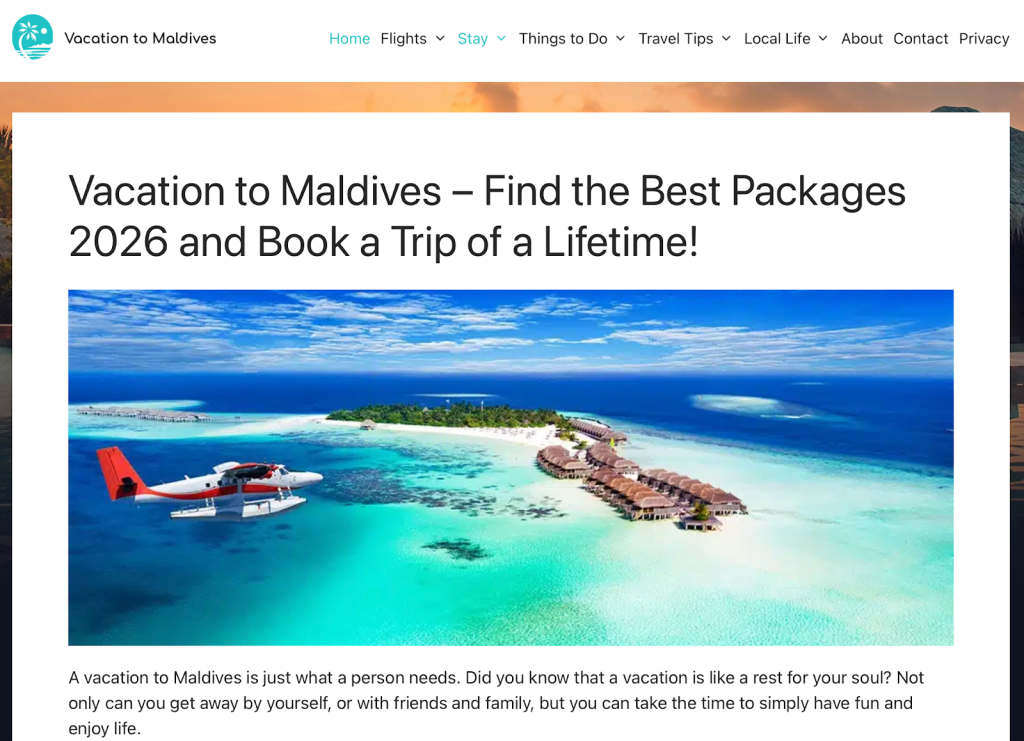
- Travel has steady demand and predictable seasonal peaks, like Thanksgiving in the US. Since many people travel, your audience is global. Earn commissions on flights, hotels, car rentals, and more by joining Travelpayouts. They offer widgets and tools to help beginners create effective content.
- E-commerce is ideal for beginners. Recommend products you use in your niche, from travel gear to home offices, matching offers to your audience.
- Education and digital services: The online learning space is perfect if you want to build authority by helping others learn new skills. You can promote online courses, language apps, or travel-related workshops. Many of these programs offer competitive payouts for every new student you refer.
Step 2: Join an affiliate program
Choosing partners is about more than high commissions – it’s about alignment. Success relies on offering what your audience needs at every stage. Whether you focus on budget or luxury, your choices should solve readers’ problems and earn their trust.
In this section, we’ll explore how to find the perfect match for your niche and which programs offer the best tools for beginners. Take action by researching and joining the program that aligns best with your audience’s needs.
How to choose an affiliate program
Now is the time to research your niche for a relevant affiliate program. Consider the following points:
- Brand reputation. Check online reviews to find trustworthy partners. Promote only high-quality products and services to build a loyal audience.
- The program’s commission. Check commission rates across various programs in the niche to get a general picture and determine whether the program’s commission rate is above average.
- Conversion rate. Even a program with a high commission rate might not be lucrative if it doesn’t convert well. Conversion rates also depend on your audience and promotion strategies, which is something you will learn in practice.
- Partner tools. Interactive tools, such as banners and widgets, are effective ways to drive traffic and capture your audience’s attention.
Best affiliate programs for beginners
Choosing the best program depends entirely on your audience. Offer only products your readers need. For example, if you cover transport, start with established programs like Omio or 12Go.
However, the best strategy is to look beyond the obvious. Think about the entire travel experience. If your audience is interested in cruises, they will likely need extra activities during their port stops. This is where you can add programs like Viator or GetYourGuide to your content.

A key advantage in travel affiliate marketing is cross-selling. Offer a full travel package to one person, including:
- Cruises and flights
- Hotels and rentals
- Tours, activities, and local experiences
- Car rentals and transfers
By diversifying your offers on a single trip, you increase your chances of earning multiple commissions from a single traveler.
Travel affiliate marketers can view the travel programs available on Travelpayouts via this link.
Step 3: Create content that converts
The key to creating a successful affiliate marketing business is top-quality, search-engine-optimized content that delivers value to your audience.
Best content types for affiliate marketing
Diversifying content helps you reach more people, as travelers have different preferences. Prepare various types of content, such as:
- Blog posts
- Listicles
- How-to guides
- Infographics
- Videos
- Podcasts
- White Papers
- eBooks
- Product reviews
- Email newsletters
- And more!
This diversity helps you target more people, as everyone prefers different content types.
How to plan your content
A solid content plan ensures your marketing efforts and publishing schedule work together smoothly, helping you attract more visitors and build credibility faster. Following a structured approach from the start gives you the best chance to stand out and start seeing results quickly.
- Find blog post ideas: Start with keyword research to understand what your audience is searching for. Focus on “low-hanging fruit” – specific questions that haven’t been fully answered by competitors.
- Analyze the best travel blogs: Don’t reinvent the wheel. Study successful creators to see which formats (e.g., itineraries, reviews, or top-10 lists) resonate most with their readers.
- A content calendar ensures consistency. It’s better to publish one strong post per week than five weak ones per month.
Even if you don’t have experience, building a content strategy is easier than it looks. Start planning and writing today – explore our dedicated guides to learn how to write content to increase your traffic or how to find writers for your blog, including free article writers. Don’t wait – begin building your content strategy now!
Step 4: Add affiliate links and tools
To help publishers generate sales, most affiliate programs provide affiliate links and interactive tools, such as banners, widgets, API, and other advanced solutions. Now, let’s take a look at the most common affiliate tools.
Affiliate links
Basically, an affiliate link is a URL to a product or service page that includes the affiliate’s unique ID. When you use this link, the ID tracks your clicks and purchases, which allows you to support the affiliate at no extra cost to you.
When you join Travelpayouts, you automatically receive your unique affiliate ID, which you can find in the upper-right corner of the dashboard.
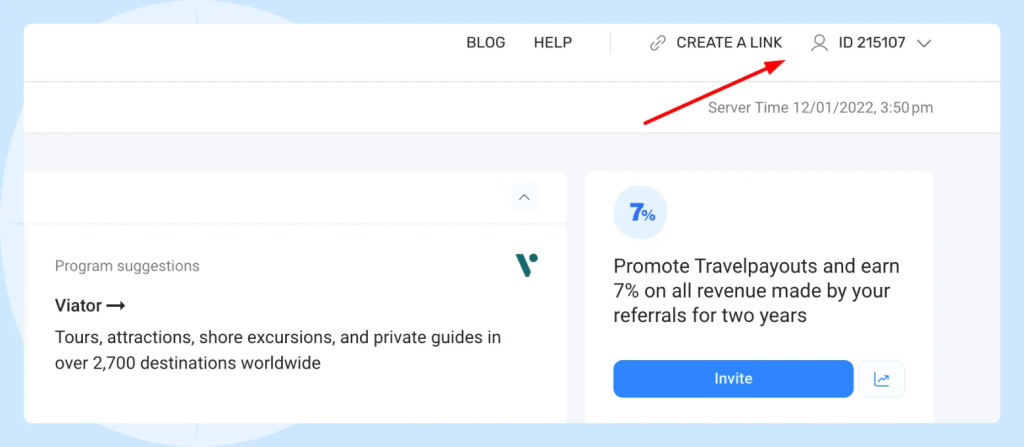
Then, you can join affiliate programs of your choice. In the “Tools” section of each program, you will find a link with an affiliate ID. All you need to do is copy the link and paste it on your website.
Using the Deep Link Generator, you can create an affiliate link to any page of the brand’s website so that you can send visitors to the exact offer.
How to place affiliate links efficiently? Here are some of the best practices:
- Shorten your links. Long links often look suspicious to audiences. With Travelpayouts’ built-in URL Shortener, you can create short partner links in no time!
- Use anchor text. It is common practice to tie an affiliate link to a relevant word or phrase rather than just pasting the link as is. For example, when you link to a page with hotel search results, use an anchor like “book a hotel” or “find a hotel stay,” so users understand what kind of page they will be opening.
- Provide context. Make sure to set the context and introduce the brand or product before you share a link. Otherwise, it might look like an advertisement.
Find more best practices on how to place affiliate links on our blog – and start implementing them to maximize your earnings today!
Widgets and tools
To catch the audience’s attention, many partners use widgets on their sites. Widgets are affiliate tools that allow users to interact with content. For example, a search form may allow users to fill in travel dates and destinations to get search results on the spot.
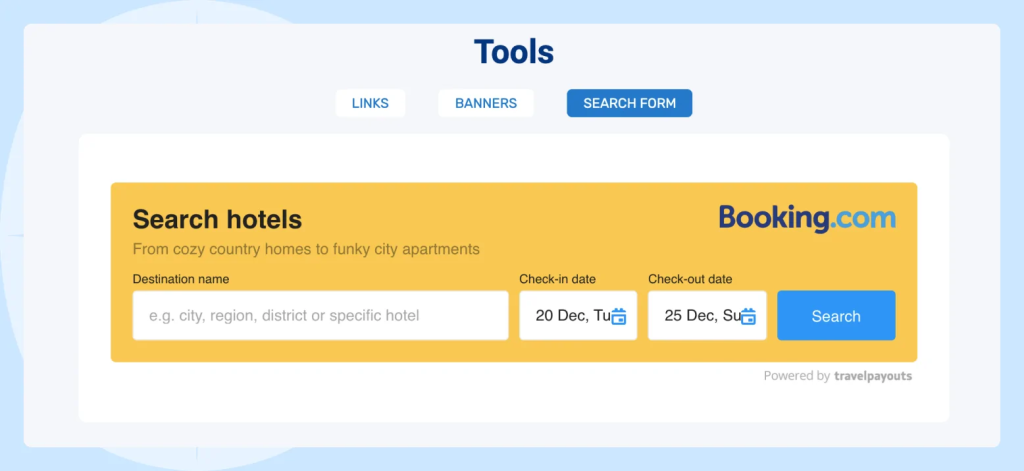
Widgets often deliver higher conversion rates than affiliate links, but it is better to use both in your content.
The most common widget types include:
- Search forms
- Availability and Calendar widgets
- Popular routes (to) and (from) widgets
- Offer widgets
- Map widgets
You can find a detailed description of each widget type, along with best practices for optimizing your content with widgets, in our guide.
Best practices for placement
To maximize your revenue, it’s not enough to just add a link; you need to place it where your readers are most likely to take action. Effective placement balances visibility with a smooth user experience. Here are the best practices to follow:
- Above the fold: Place your most important affiliate link or a search widget in the first few paragraphs. Many readers scan the beginning of a post and might not scroll to the very end.
- Contextual linking: The highest conversion rates usually come from links placed naturally within your narrative. For example, if you mention a specific hotel you stayed in, link its name directly to the booking page.
- High-intent sections: Place widgets and links near sections that help users make a decision, such as “Where to stay” or “How to get there”.
Step 5: Drive traffic to your affiliate content
Your work doesn’t end when you publish a post with your affiliate link. For most affiliate marketers, this is just the first step in learning how to start affiliate marketing for beginners. Now, it’s time to promote the content that delivers value to your audience and drive traffic to a website or social media page to generate conversions.
If you want to make money and earn commissions, you need a clear strategy to build trust in your niche. Learning how to build your authority is essential so you can successfully promote affiliate products and other products or services. Done right, this is how beginners can make real money and eventually enjoy passive income from their affiliate efforts. Here are some of the best strategies to boost affiliate marketing clicks for beginners.
SEO
Google is the main search engine for around 90% of Internet users, making it important to rank your page on the platform. In addition, Google is a reliable and long-term traffic source, so investing in SEO will eventually pay off. To drive more traffic, follow the best optimization practices:
- Create unique content. Google, like other search engines, frowns upon plagiarism. No matter how well you promote your content, it will not work unless your blog posts are unique and bring value to your audience. Top-quality materials also generate backlinks from other blogs, so this should be your first step towards efficient SEO.
- Make your text readable. Divide text into smaller paragraphs (ideally up to 70-80 words) and don’t write sentences that are too long. Use bulleted and numbered lists to present equal items or share step-by-step instructions. Use headings and subheadings (H2, H3, etc.) to lay out the text hierarchy.
- Use visuals. Images, videos, infographics, graphs, etc., can illustrate your point better than words and catch the reader’s attention for longer. Make visuals clickable and redirect the user to the product page or another relevant post. Add alt text and captions to each image to improve SEO.
- Add keywords. Keywords are terms that people use to research a specific topic on search engines. Adding relevant keywords can significantly improve your Google ranking.
- Optimize for mobile users. As more users surf the Internet on their smartphones, it is crucial that your website is optimized for mobile devices.
If you are not familiar with SEO yet or want to improve your skills, you can join our free course on how to boost travel affiliate revenue using SEO. In this course, a famous travel blogger and SEO expert, Sharon Gourlay, shares her best tips and tricks to grow your business’s search engine presence and ultimately increase your revenue. You will learn:
- How to use search intent and leverage the buying cycle.
- What types of posts work best for travel affiliate marketers?
- How to conduct proper keyword research.
- How to help your articles convert.
Social media
Another popular traffic source for most bloggers is social media (and for good reason). Here are some of the advantages that social media can provide to marketers:
- On most platforms, you can connect directly with your audience. This will help you analyze your following, increase brand recognition, create a solid marketing strategy, and receive feedback.
- Provide customer service. More and more brands prefer to answer their customers’ inquiries on social media because it is easy, doesn’t require additional software, and lets them quickly connect with users.
- Build links and grow traffic. High-quality social media content often gets shared and reposted, which can drive more backlinks and traffic.
With so many networks available, it is important to research your audience and niche to identify the best social media platform for reaching potential customers. For that, you need to consider several factors, such as your audience’s interests and demographics, the types of content that you share, your campaign goals, the marketing features of each platform, etc.
Email marketing
Email marketing allows you to build long-lasting relationships with your audience, grow your brand recognition, and reach users directly in their inboxes.
The secret to successful email marketing is building a subscriber base, delivering value with every newsletter, and driving traffic back to your website. Today, there are many cool email marketing tools to automate your campaigns and personalize your emails.
If you don’t feel confident enough to start a newsletter just yet, consider taking one of these email marketing courses to learn the best practices in the niche.
Paid ads
If you are willing to spend some money on your blog promotion, you can leverage advertising. Placing ads online will drive more traffic quickly and increase your brand recognition. Ads also allow you to reach a much wider audience. For cost-effective promotion, it is important to regularly review your analytics and make changes accordingly to avoid wasting money on inefficient strategies.
Step 6: Track results and optimize
Use Travelpayouts tools to gather analytics and continuously improve your content. Your personal dashboard is the perfect place to monitor your overall performance and identify what resonates with your audience.
To take your optimization to the next level, use our latest tool: Drive. It does more than just collect data from pages with Travelpayouts links and widgets. Drive automatically converts regular links into affiliate ones and provides link previews to boost your conversion rates. By tracking these insights, you can refine your strategy and grow your commissions more effectively.
Affiliate marketing tips for beginners
Just as with any other niche, affiliate marketing has its own features and best practices you should follow to succeed. Here are a few:
- Always disclose affiliate links. Contrary to common belief, disclosing your partnerships will not decrease your conversions but will actually help build your credibility and trust with your audience. Many bloggers add a small disclaimer at the beginning or end of each post explaining that they earn commissions from these affiliate links.
- Regularly check analytics. To optimize campaigns, identify the most converting programs, and develop a killer marketing strategy, it is important to track your results. For example, Google Analytics is a free tool that provides many useful metrics, including traffic sources, audience demographics, conversions, and more.
- Network with other bloggers. Networking will help you grow your readership, generate more traffic, and build meaningful connections with niche influencers.
Common mistakes beginners should avoid
Several common pitfalls can stall your progress:
- Promoting too many programs: Focusing on multiple offers without sufficient traffic results in weak performance. It is better to start with a few relevant programs and scale later.
- Buying paid tools too early: You don’t need expensive services for email marketing or keyword research at the start. Most tools offer free plans or trials that are perfectly sufficient for beginners.
- Expecting instant results: Affiliate marketing takes time, especially when relying on free traffic sources. Consistency is key to seeing your first commissions.
FAQ About affiliate marketing for beginners
How do I start affiliate marketing as a beginner?
To start as a beginner, focus on a niche where your personal interests align with market demand. Stick to simple content formats, as these are the most effective ways to build trust and generate your first commissions.
Do I need a website to start?
No, you can start affiliate marketing with or without a website. Your choice depends entirely on your strategy and where your audience spends their time. While a website serves as a dedicated hub for your content, you can successfully generate commissions using social media, email newsletters, and video platforms like YouTube or TikTok. The key is to choose a platform that best fits your content style and lets you share affiliate links naturally.
Can beginners really make money with affiliate marketing?
Yes, beginners can realistically earn between $0 and $1,000 per month. Your actual income depends on your chosen niche, the affiliate programs you partner with, and how consistently you provide value to your audience.
What is the easiest way to start?
The easiest way to start is to choose a beginner-friendly niche, such as travel or e-commerce, and focus on simple content formats like product reviews or listicles. You can then drive traffic using free promotion methods, such as social media or SEO-optimized blog posts, to earn your first commissions without a large initial investment.
Final thoughts: How to get started with affiliate marketing
Starting an affiliate marketing venture is becoming increasingly popular due to its cost-efficiency, flexibility, and the fact that no investment is required to get started. Along the way, you will learn best practices and build authority in the niche, driving more traffic to your website.
If you are ready to become a travel affiliate marketer today, you can join Travelpayouts and get access to over 100 travel affiliate programs, detailed analytics, efficient partner tools, and 24/7 support in a single dashboard.